Opening and running a barbershop in the US is a high-reward venture, but success depends on a granular understanding of the total capital required. From the initial cost to open a barbershop - which typically ranges from $50,000 to $150,000 for a standard setup - to the recurring monthly overhead, every dollar spent must be an investment in long-term barbershop management. Whether you are budgeting for a luxury studio in New York or a community shop in a suburban area, the variation in real estate, labor laws, and state-specific fees will directly impact your profit margins.
A comprehensive financial plan must account for both one-time startup fees and the ongoing cost to run and own a barbershop. Key initial expenses include high-end furniture, professional-grade tools, and the mandatory barber license cost, which can involve tuition fees between $10,000 and $20,000 depending on the state. Additionally, navigating the legal landscape requires budgeting for business permits and health department certifications, which are essential for maintaining compliance and professional standing.
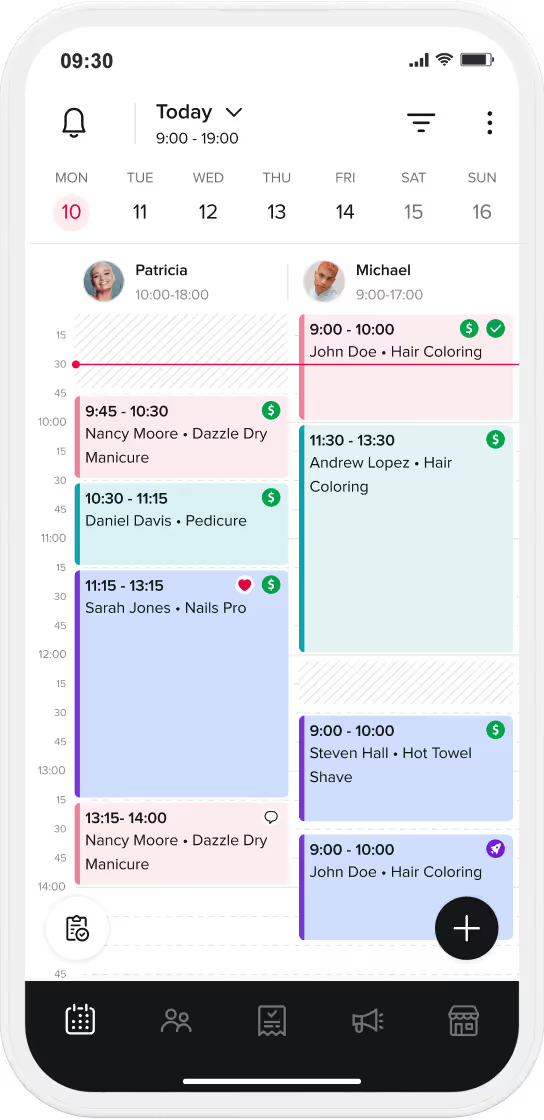
In this guide, we break down the financial requirements of the modern grooming industry, from barbershop advertising costs to inventory replenishment. We also analyze how geographical location influences your bottom line and why implementing the right barbershop appointment software is the most effective way to justify your initial fixed costs. By mastering your budget today, you ensure your shop remains profitable and scalable in the competitive US market.
The first major cost to consider when opening a barbershop is the initial investment. This includes expenses such as securing a location, renovating the space, purchasing equipment and supplies, and obtaining necessary licenses and permits. The exact cost will depend on factors such as the size and location of the barbershop, as well as your local market conditions.
When it comes to securing a location for your barbershop, there are several factors to consider. The size of the space you choose will greatly impact the cost. A larger space may require more investment in terms of rent or mortgage payments, while a smaller space may be more affordable. Additionally, the location of your barbershop will also play a role in the cost. If you choose a prime location in a busy area, you can expect to pay a premium for the rent or purchase price.
Renovating the space to fit your barbershop's needs is another expense to consider. This can include things like installing barber chairs, mirrors, and sinks, as well as creating a comfortable waiting area for your clients. Depending on the condition of the space you choose, the cost of renovations can vary greatly. It's important to budget for these expenses and factor them into your overall investment.

Purchasing equipment and supplies is another significant cost when opening a barbershop. You will need to invest in high-quality barber chairs, barber poles, clippers, scissors, and other tools of the trade, it varies but can go up to $2,000 to $5,000. Additionally, you will need to stock up on various hair care products, such as shampoos, conditioners, and styling products. The cost of these items can add up quickly, especially if you are aiming to provide a high-end barbershop experience with top-of-the-line equipment and products.
In order to legally operate a barbershop, you will need to obtain the necessary licenses and permits. This can include a business license, barber license, and health department permits. The cost of these licenses and permits will vary but it can go up to $100 - $1,000 depending on your location and the specific requirements of your state or municipality. It's important to research and budget for these costs to ensure that you are operating your barbershop legally and in compliance with all regulations.
It's important to note that the cost of opening a barbershop can vary widely. In some areas, you may be able to find a small space for a relatively low price, while in others, the cost of real estate may be significantly higher.
Before you can officially open your barbershop, you will need to obtain a barber license. The cost of obtaining a barber license can vary depending on the state and local regulations. In some states, you may need to complete certain training hours and pass an exam to become a licensed barber. These requirements can add up to both time and money.
Obtaining a barber license involves a series of costs that vary by state and choice. Training expenses differ based on the program you select, with some comprehensive courses spanning from basic to advanced techniques. Costs can range from a few thousand to tens of thousands of dollars. Beyond the initial training, it's imperative to invest in high-quality barbering tools like scissors, clippers, and razors. The price of these tools largely depends on the brand and quality chosen, but remember, investing here means ensuring superior service to your clients.
After completing the training, candidates face the licensing exam which usually costs between $100 to $200. This covers exam administration, grading, and sometimes study resources. Upon passing, acquiring the license incurs a fee that varies by state and is recurrent due to mandatory periodic renewals, typically ranging between $50 to $200. It's essential to understand the specifics of your state and budget accordingly. Also, don't forget other critical expenses like barbershop rent, insurance that can range from $500 to $2,000, and barbershop marketing efforts. Ensuring a profitable barbershop operation demands thorough financial foresight and planning
Embarking on your barbershop journey comes with myriad ongoing costs to ensure its smooth operation. First and foremost, fixed costs such as rent or mortgage are pivotal; these are influenced heavily by your shop's location. A prime spot in a bustling area might demand a premium, but it's a trade-off for increased visibility and foot traffic. On the employee front, salaries, benefits, and taxes are substantial expenses. Their totals are tethered to the size of your establishment and the number of professionals you employ. It's crucial to strike a balance: offer competitive salaries to attract top talent, but also maintain profitability.
Utilities, including electricity, water, and heating, are recurring costs whose extent depends on the size and equipment of your shop. Embracing energy-efficient habits and tools can yield long-term savings. Insurance, which encompasses general liability, property, and workers' compensation, is non-negotiable. Its cost hinges on several factors, such as the size of your barbershop and workforce. And let's not forget supplies: from hair care products to cleaning tools, these essentials require regular replenishment. Opting for quality and purchasing in bulk can lead to both cost savings and satisfied customers. Moreover, other crucial expenses include marketing initiatives, professional services, equipment maintenance, and periodic upgrades. Being cognizant of all these costs is the cornerstone of a successful and financially stable barbershop.
In order to attract and retain customers, barbershops often need to invest in advertising and marketing initiatives. Advertising costs can include print and online ads, social media promotions, signage, and other promotional materials. The exact cost will depend on the scale of your advertising efforts and the channels you choose to utilize but can go up to $500 up to $5,000.
It's important to note that while advertising can be an effective way to increase visibility and attract customers, it can also be a significant expense. It's crucial to carefully track the return on investment (ROI) of your advertising campaigns to ensure that you are getting the desired results.
It's important to recognize that the costs of opening and running a barbershop can vary significantly depending on the state in which you operate. Factors such as real estate prices, labor costs, and licensing fees can all vary from state to state.
For example, opening a barbershop in a densely populated urban area may come with higher rental costs compared to a suburban or rural location. Similarly, licensing fees can differ greatly depending on the state's requirements.
In order to make informed decisions about where to open a barbershop, it's essential to research and compare the costs associated with operating in different states. This will help you understand the potential financial implications and make strategic choices based on your budget and target market.
In conclusion, opening and running a barbershop in the US involves a range of costs, from the initial investment to ongoing expenses. Understanding these costs and budgeting accordingly is crucial for the success of your barbershop venture. By considering factors such as the cost to open, barber license requirements, operational expenses, advertising costs, and state-specific variations, you can make informed decisions and set yourself up for success in the barbershop industry.
The two largest recurring expenses are Rent/Lease Payments for the physical location and Payroll (employee salaries, taxes, and benefits). These two categories require the most rigorous budgeting.
A significant budget category is required for essential tools, chairs, and shop fixtures. Investing in high-quality barber chairs, clippers, and initial product inventory is non-negotiable for service quality.
The primary financial requirement is the cost of mandatory training or barber school hours, which is the largest upfront investment before paying for the state-administered licensing exam and renewal fees.
The cost category associated with legal compliance includes obtaining the General Business License, the Barber License, and necessary Health Department Permits from the state and local municipality.
Costs vary dramatically because factors like real estate prices (rent), labor costs (wages), and licensing fees are all subject to different state and local market regulations and prices.
Software, which includes scheduling and POS features, maximizes revenue by ensuring the chairs are full, reducing no-shows, and streamlining operations, thus justifying the significant initial fixed costs.