An esthetician salary represents the total compensation earned by a licensed skincare specialist through base hourly wages, service commissions, retail product bonuses, and client tips, with national average annual earnings ranging from $43,200 to $78,500+ depending on state geographic density, advanced certifications, and employment structure.
Location dictates baseline earning capacity due to regional differences in cost of living, client density, and local market demand for premium skincare treatments.
Estheticians operating in major metropolitan areas command higher service menu prices ($120 to $250 per classic facial) compared to rural salon environments ($60 to $90 per service). High client density in urban centers supports full daily appointment books, reducing non-billable station downtime.
State cosmetology boards mandate varying educational training requirements affecting service authorization. States requiring 1,000+ training hours (such as Utah or Washington) grant advanced master esthetician licenses authorizing chemical peels, microneedling, and laser therapies. States with 600-hour licensing thresholds restrict technicians to basic surface treatments, lowering average hourly billing rates.
Specializing in advanced dermatological modalities or launching an independent suite practice increases earning potential above baseline general esthetician wages.
Medical estheticians operating within dermatology practices, plastic surgery centers, or medical spas earn higher base salaries due to the clinical nature of treatments. Administering medical-grade chemical peels, laser skin resurfacing, intense pulsed light (IPL) therapy, and radiofrequency microneedling requires advanced certification and physician oversight. Physician offices pay an average hourly wage of $26.00 ($54,080 annually) prior to gratuities.
Day spa estheticians focus on wellness, relaxation, and non-invasive skin maintenance. Compensation models in resort and hotel spas combine hourly base wages ($18.00 to $23.00) with automatic 18% to 20% service gratuities added to guest folios. High seasonal volume generates consistent tip revenue, offsetting lower base commission tiers.
Renting a salon suite or operating an independent studio transfers full financial control to the practitioner. Independent estheticians retain 100% of service revenues, deducting fixed weekly booth rent ($250 to $600 per week), product backbar inventory, and software expenses. Calculating opening capital requirements parallels launching a beauty salon; review our guide on the cost to open a nail salon to model startup overhead costs.
Managing direct scheduling, intake forms, and client retention software simplifies independent suite operations. Compare leading digital management tools in our detailed review of the best software for hair stylists and hairdressers.
Esthetician pay structures fall into three primary categories: hourly wages, tiered commission plans, and booth rental models.
Entry-level technicians often receive a guaranteed hourly base wage ($15.00 to $20.00/hour) plus tips. Commission-based salons pay technicians 35% to 50% of the gross service cost. Under commission agreements, performing a $150 advanced facial yields $60 to $75 in direct commission income before client tips.
High-volume spas utilize sliding commission scales to incentivize productivity. Achieving monthly service revenue targets (e.g., exceeding $8,000 in monthly sales) elevates the technician's commission split from 40% to 50%, adding direct performance bonuses to bi-weekly paychecks.

Maximizing overall esthetician income requires combining direct service billing with high-margin retail product sales, service add-on upgrades, and gratuities.
Recommending homecare skincare regimens generates secondary revenue without extending treatment room labor hours. Salons pay technicians 10% to 20% retail commission on professional product lines (vitamin C serums, hyaluronic acid formulations, chemical sunscreens). Generating $12,000 in monthly retail sales adds $1,200 to $2,400 in direct commission income to a technician's monthly earnings.
For suite owners purchasing wholesale stock directly from distributors, retail product markups reach 100% ( keystone pricing ), retaining $50 gross profit on a $100 retail moisturizer.
Integrating 15-minute treatment add-ons increases average ticket size without taking up full appointment slots. High-margin facial upgrades include:
High client retention drives consistent annual earnings. Top-earning estheticians maintain rebooking rates between 60% and 75%, filling calendars 4 to 6 weeks in advance. Converting first-time facial clients into active 4-week maintenance recurring cycles eliminates client acquisition advertising costs.
Comparing esthetician retention benchmarks against adjacent personal care sectors reveals similar income mechanics. Review our comprehensive salary analysis on how much do hair stylists earn to evaluate cross-industry beauty earnings.
Automating rebooking reminders and loyalty programs accelerates repeat visits. Explore dedicated automation strategies in our guide to the best salon marketing software.
Maximizing net esthetician earnings requires leveraging digital management software to eliminate appointment no-shows, collect pre-service deposits, and streamline client rebooking flows.
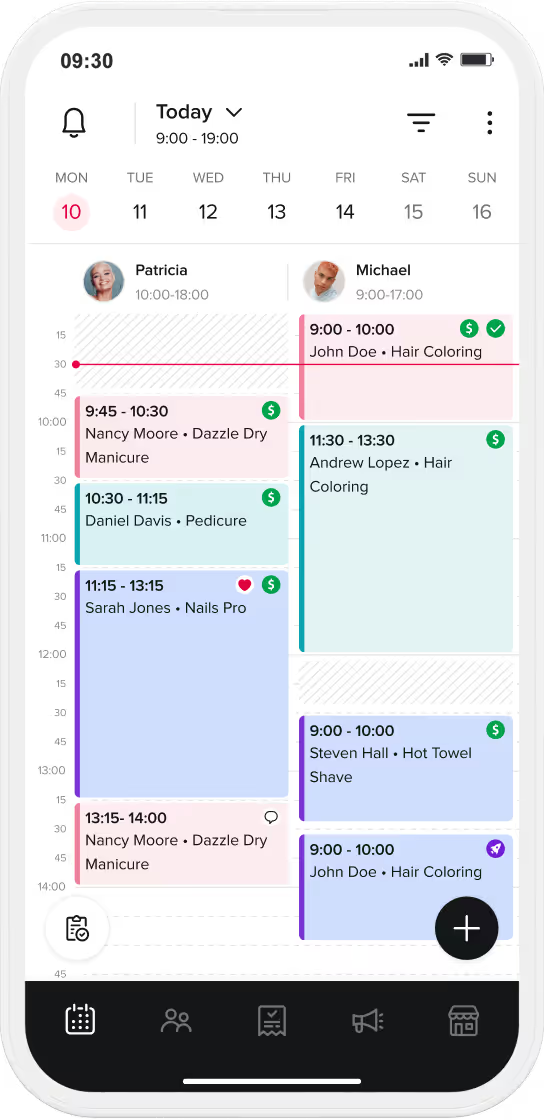
Unfilled schedule gaps directly reduce daily commission earnings and inflate suite rental overhead costs. Utilizing salon scheduling software like Booksy Biz enables independent estheticians and spa managers to enforce strict cancellation policies.
Requiring upfront service deposits (20% to 50%) or card-on-file cancellation protection mitigates last-minute no-shows, securing baseline revenue even when clients forfeit scheduled appointment times.
Automating 24/7 online booking through Booksy Biz captures client reservations outside standard treatment room working hours. Digital client intake forms securely record medical history, skin conditions, and product allergies prior to arrival, allowing technicians to focus 100% of room time on high-ticket service delivery and retail recommendations.
Yes, estheticians earn competitive incomes, with national median earnings averaging $43,200 ($20.77 per hour) and top 10% industry performers generating $85,000 to $120,000+ annually through advanced medical certifications, high-margin retail commissions, and independent suite ownership.
Medical estheticians and independent salon suite owners achieve the highest earnings in the skincare industry. Medical estheticians operating in clinical practices earn $54,000 to $80,000 annually, while independent suite owners setting direct menu pricing retain $75,000 to $135,000+ in net revenue.
Entry-level estheticians typically earn between $15.00 and $18.50 per hour ($31,200 to $38,480 annually) in baseline wages, supplemented by client gratuities (tips) and entry-level retail sales commissions as they build an active client base.
Client tips account for 15% to 25% of an esthetician's gross take-home pay. In high-end day spas and resort settings, gratuities add an extra $5.00 to $15.00 per working hour to baseline commission checks.
Independent business ownership yields higher profit potential because operators retain 100% of service ticket sales and 40% to 50% retail product markups, though owners assume overhead expenses including booth rent, backbar inventory, insurance, and marketing software.