Transitioning from an employee or commission-based stylist to an independent beauty professional is one of the most profitable career moves in the personal care industry. Searching for a salon booth rental near you represents the bridge between working for someone else and running your own enterprise without the crushing overhead of leasing an entire commercial building. However, securing the right space requires evaluating lease agreements, verifying utility coverage, inspecting state cosmetology board infrastructure, and calculating break-even occupancy rates.
A salon booth rental is a commercial leasing arrangement where a licensed beauty professional—such as a hair stylist, barber, nail technician, or esthetician—pays a fixed weekly or monthly fee to a salon owner to operate an independent business within a designated station or private suite.
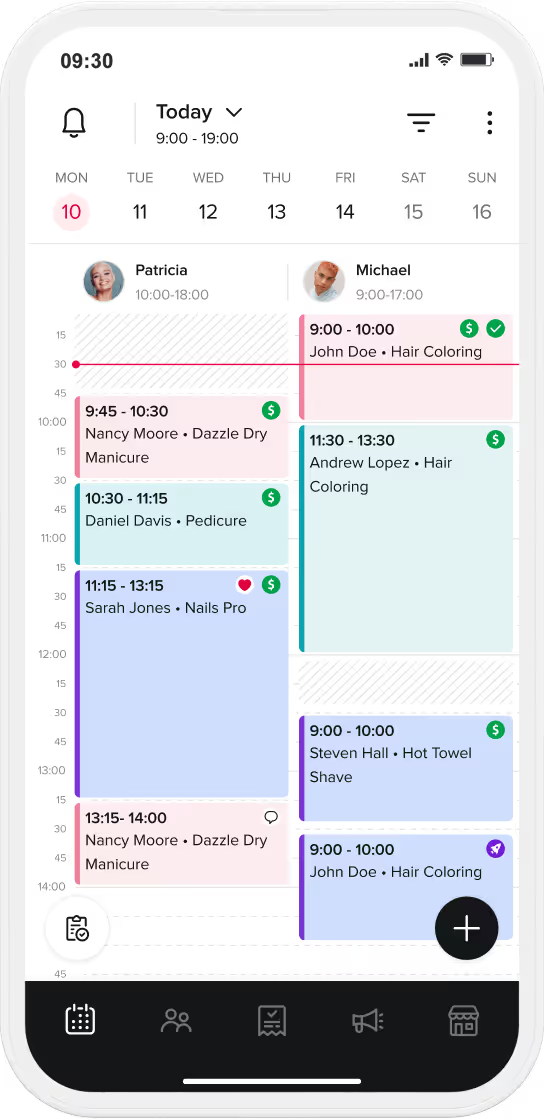
Quick Answer: Finding the best salon booth rental near you requires auditing three essential operational factors: the total cost of occupancy (including common area maintenance and utilities), specialty-specific infrastructure (such as chemical ventilation for nail techs or hydraulic reclining chairs for barbers), and foot traffic accessibility. Because booth renters operate as 1099 independent contractors, pairing the physical station with dedicated salon software like Booksy Biz is critical to manage appointments 24/7, process client payments securely, and protect client records independently from the salon landlord.
Before committing to a physical space, beauty professionals must understand the financial and operational mechanics dividing booth rental, private salon suites, and traditional commission employee setups:
In a standard commission salon, the owner provides the chair, backbar products, front-desk reception, and marketing. In return, the stylist splits gross service revenue—typically 40% to 50% going to the technician and the remainder retained by the salon. While commission requires minimal financial risk for beginners without a following, established pros quickly cap their earnings and lose autonomy over their work schedules.
Renting a booth inside an established multi-chair salon gives you the freedom of self-employment at an accessible price point. You pay a flat weekly or monthly rent to the salon owner, buy your own backbar supplies, set your own prices, and keep 100% of your service profit and tips. You benefit from existing salon foot traffic and peer camaraderie while operating completely as your own boss. The primary operational requirement: you must handle your own appointment scheduling, client communication, and tax obligations.
A salon suite is an enclosed mini-salon with four walls, a lockable door, and private plumbing. While booth rental places you on an open salon floor alongside other renters, a suite provides total creative control over music, decor, client privacy, and retail merchandise displays. However, suites command higher overhead (typically 20% to 40% more expensive than an open-floor booth) and require self-reliance to drive foot traffic, as suite facilities rarely generate organic walk-ins.
The standard benchmark for transitioning from commission to booth rental is having a recurrent client base that fills at least 60% to 70% of your weekly calendar. If your weekly service billing averages $1,200 and you give up a 50% commission ($600), switching to a flat $250 weekly booth rental immediately puts an additional $350 per week directly into your business account. When your existing client retention covers the flat weekly rent within the first two working days, booth rental becomes significantly more lucrative than commission.
Signing a lease on an unsuitable workstation can result in failed State Board of Cosmetology inspections, costly equipment retrofits, or service disruptions. Every beauty discipline operates under distinct physical and regulatory demands. Inspect these technical specifications before committing to any rental agreement:
Hair professionals handle high water volumes and chemical processors daily. Ensure your prospective station provides:
Barbershops require robust hardware capable of handling hot lather shaves and continuous clipper fading:
State boards increasingly mandate strict air quality protocols for manicurists and nail artists:
Skincare and lash extension services require a serene, sterile, and fully enclosed environment:
Micropigmentation and body art fall under municipal Departments of Health and Bloodborne Pathogen (BBP) regulations:
A booth rental lease is a binding commercial contract. Ambiguous terms can leave independent pros on the hook for major expenses. Clarify these five contractual clauses before signing:
Always verify whether the stated rent is a "gross lease" or a "triple net (NNN) / CAM-inclusive" lease. In a gross lease, water, electricity, Wi-Fi, HVAC, and common area cleaning are fully included. In NNN leases, the landlord may bill you extra every quarter for property taxes, trash removal, hallway lighting, or commercial water usage surges.
Standard security deposits range from one to two weeks’ rent. Watch out for automatic annual rent escalations (such as fixed 5% to 10% annual hikes). Request that rental rate locks remain stable for at least 12 months, or seek month-to-month transitional terms.
If you take time off for vacation, does your rent continue at 100%, or does the salon offer a "maternity / vacation rent freeze" after one year of tenure? Furthermore, if you plan to hire an assistant or apprentice, confirm whether your lease permits an assistant at your chair without triggering an extra workstation fee.
Under US federal labor laws (FLSA), an independent 1099 booth renter cannot be treated as an employee. If the salon lease dictates your minimum working hours, mandates specific uniforms, controls your service pricing, or forces you to use the salon’s front-desk card terminal, the IRS and state cosmetology boards may classify you as a misclassified employee. Maintain total operational sovereignty over your business hours and client pricing.
Locating open chairs and available private suites requires combining national commercial platforms with local beauty networking:
#salonboothrental[city] or #[city]hairstylist to scout the physical condition, team culture, and cleanliness of local studios.One of the most dangerous operational errors an independent booth renter can make is relying on the salon landlord's appointment book or front-desk point-of-sale terminal. As a 1099 contractor, your client list, formulas, and transaction records represent the core equity of your business. Sharing software with the salon owner creates legal ambiguity, exposes your client data, and complicates tax separation. Deploying a dedicated personal salon management app like Booksy Biz guarantees total business autonomy:
When you use your own Booksy Biz profile, your client phone numbers, booking history, formula records, and inspiration galleries belong exclusively to you. If you decide to relocate to a private suite or open an independent studio down the street, your clients remain in your pocket, eliminating the risk of a disgruntled salon landlord withholding your appointment books or contacting your regulars.
Independent renters cannot afford to pause a haircut or chemical peel to answer incoming calls or negotiate calendar openings via text message. Booksy Biz operates as a 24/7 automated virtual front desk. Clients browse real-time chair availability, select specialized add-ons, and book their appointments directly from the Booksy app or your customized web link, capturing bookings while you work or sleep.
Because booth renters pay a fixed weekly overhead regardless of client attendance, empty slots directly drain personal profit. Booksy Biz integrates secure, PCI-compliant payment processing with built-in No-Show Protection. You can mandate upfront non-refundable booking deposits or enforce automated late-cancellation fees, ensuring you are compensated even if a client fails to arrive.
When relocating to a new booth rental space, announcing your move swiftly is vital to maintaining retention. Booksy Biz features automated Message Blasts via SMS, push notification, and email. You can instantly notify your entire client base of your new address, parking instructions, and station details with a single click, keeping your calendar completely filled through the transition.
Renting a salon booth represents the ultimate foundation for building long-term wealth, personal autonomy, and artistic freedom in the beauty and grooming industry. By thoroughly evaluating physical station infrastructure, vetting lease agreements for hidden operational fees, and powering your independent business with Booksy Biz, you establish a resilient, highly profitable operation capable of thriving in any market.
Ready to take full control of your independent beauty business? Start your free 14-day Booksy Biz trial today.
To find booth rentals in your specific city, use specialized directory platforms such as Sola Salon Studios, My Salon Suite, and Salon Renter, which allow you to filter by zip code and neighborhood. Additionally, searching local Facebook groups (e.g., "[City] Stylists & Booth Rentals") and exploring local Instagram location tags are effective ways to uncover unlisted chair vacancies in established neighborhood salons.
Salon booth rental costs generally range from $150 to $450 per week ($600 to $1,800 per month), depending on location, local foot traffic, and specialty trade. Hair stylist and barber stations in suburban areas average around $200 to $300 weekly, while luxury metropolitan booths or private esthetician suites in high-demand cities can command $400 to $550+ per week.
A booth rental gives you an individual styling chair or table on an open, shared salon floor alongside other independent professionals, providing lower weekly overhead and access to natural salon foot traffic. A salon suite is an entirely private, enclosed room with a lockable door, private plumbing, and full control over decor and acoustics, typically costing 20% to 40% more in weekly rent.
Yes, provided the salon space complies with state cosmetology board regulations and local municipal zoning laws. Estheticians generally require an enclosed room with door privacy and a dedicated sink with hot and cold running water. Nail technicians must ensure adequate source-capture chemical ventilation to satisfy OSHA and board air-quality standards.
Yes. Because booth renters are legally classified as independent contractors (1099), they are not covered under the salon owner's general liability policy. Renters must maintain their own professional and general liability insurance, register their independent business entity, and display their state professional license along with any mandatory booth renter permits.
Sharing the salon landlord's booking system compromises client data privacy, creates IRS worker misclassification risks, and leaves independent renters vulnerable if they decide to relocate. Operating your own independent booking software like Booksy Biz ensures that you retain 100% ownership of client records, direct payment processing, and automated scheduling control.