In 2026, a successful barber must transition from traditional word-of-mouth to a data-driven growth engine with barbershop marketing strategies. This guide outlines the frameworks for filling empty chairs, increasing booking frequency, and outpacing local competition through SEO, social engineering, and automated retention.
The Three Pillars of Modern Barbershop Marketing
- Unique Selling Proposition (USP): Define if you are a high-energy social hub or a luxury executive retreat. Every touchpoint from Instagram aesthetics to automated "Thank You" messages must reinforce this identity.
- Audience Segmentation: A message for everyone speaks to no one. Segment your marketing between Trend-Driven Youth (TikTok/Fades), Executives (Punctuality/Beard Maintenance), and Niche Markets (Texture specialists).
- The Funnel: Move clients from Awareness (SEO/Social) to Consideration (Reviews), Booking (Low-friction CTA), and Loyalty (Automated rewards).
Local SEO: Dominating City Search
How to promote a barbershop? If you aren't in the Google "Local Pack" (the top three map results), you are losing revenue.
Google Business Profile (GBP) Optimisation
- Data Consistency (NAP): Ensure your Name, Address, and Phone number are identical across Google, your website, and Booksy.
- Category Engineering: Use "Barber shop" as the primary category, but add "Hair Salon" or "Facial Spa" as secondary categories to capture broader queries.
- Keyword Engineering: Use high-intent entities like "precision skin fade" or "hot towel shave" in your description rather than just "haircut".
The Review Engine
For barbershop marketing strategies, reviews are a top ranking factor.
- Keyword-Rich Feedback: Encourage clients to name specific services in reviews (e.g., "Best beard trim in Manchester").
Automated Collection: Use your booking software to trigger review requests immediately after a service to maintain "Review Velocity."
| GBP Element |
Weight |
Action Item |
| Business Name |
Critical |
Use exact brand name only |
| Primary Category |
High |
Set to "Barber shop" |
| Review Velocity |
High |
Aim for 3-5 new reviews weekly |
Social Media: Content that Converts
In 2026, your social media is a functional portfolio and an important part of your barbershop marketing plan. Every post must move the viewer closer to a booking.
Dynamic Video Strategy
Static photos are no longer enough.
- Hero Moment Reels: Focus on the "final reveal" of a transformation to trigger saves and shares.
- Educational Authority: Post "How-to" content (e.g., home styling) to position yourself as an expert, not just a service provider.
- Strategic Quotes: Use authoritative industry quotes to define your shop’s voice and share client testimonials on Stories to build trust.
Metadata & Tagging
- The 3-Tier Hashtag Method: Combine broad tags (#barberlife), niche tags (#skinfade), and hyper-local tags (#LondonBarber).
- Location Stickers: Use specific neighbourhood tags on every Story to appear in local discovery feeds.
Digital Advertising: Scaling with Paid Media
While SEO provides stability in your barbershop marketing plan, paid ads provide speed.
Meta Ads (Instagram/Facebook)
- Radius Targeting: Limit ads to a 3–5 mile radius of your shop to avoid wasting budget.
- Visual Hooks: Use high-energy Reels as ad creative; these typically achieve a lower Cost Per Click (CPC) than images.
Google Search Ads (PPC)
- High-Intent Keywords: Bid on "barber near me" or "same day haircut appointment".
- Negative Keywords: Block terms like "barber school" or "cheap haircuts" to protect your premium brand image.
Retargeting
Target "window shoppers" who visited your booking page but didn't commit. A "Your chair is waiting" reminder can recover lost revenue at a very low cost.
Client Retention as a Marketing Function
Increasing retention by 5% can boost profits by over 25%. In 2026, retention is automated.
- Rebooking Reminders: Set your barbershop software to send an SMS 21 days after a service: "Time to freshen up that fade?"
- Win-Back Campaigns: Target "lost" clients (60+ days since last visit) with a tailored "We Miss You" offer.
- Tiered Loyalty: Reward consistency. Offer "VIP" perks like priority booking for clients who visit 12+ times a year.
- Personalisation: Use CRM notes to record technical preferences (guard sizes) and personal details (favourite sports team) to ensure a bespoke experience.
Technical Integration: Removing Friction
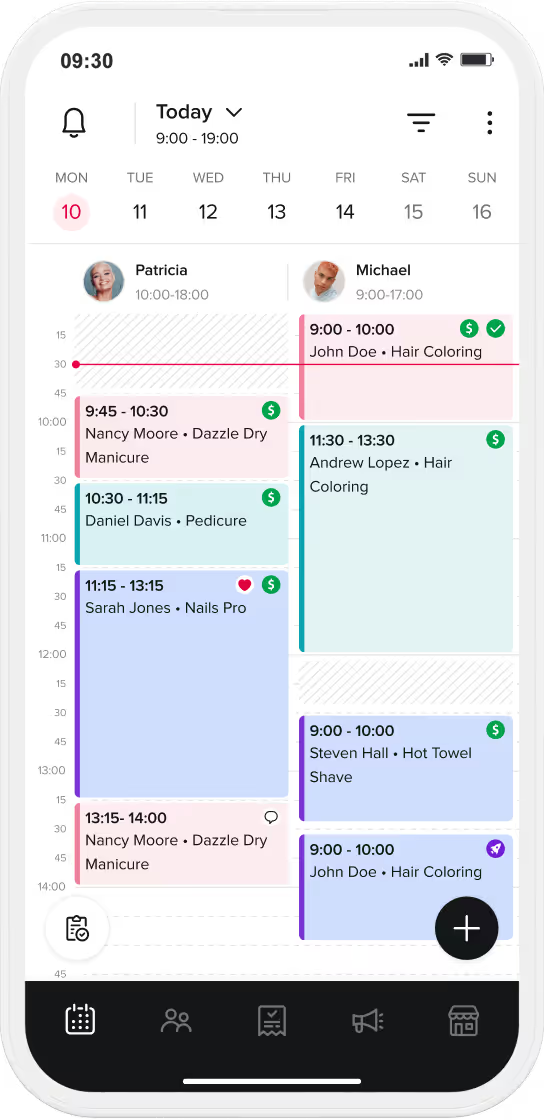
Your Babershop marketing and booking software must function as one.
- The 3-Click Rule: A client should be able to book within three clicks of finding your profile.
- Action Buttons: Integrate "Reserve" buttons directly onto your Facebook and Instagram profiles.
- Tracking ROI: Divide total marketing spend by new clients to find your Cost Per Acquisition (CPA). Ensure the Lifetime Value (LTV) of a client significantly exceeds the cost to acquire them.
30-Day Action Plan
- Week 1 (Audit): Optimise GBP and ensure NAP data is consistent everywhere.
- Week 2 (Identity): Prepare a 7-day content calendar using Reels and authority quotes.
- Week 3 (Acquisition): Launch a hyper-local Meta Ad campaign (3-mile radius).
- Week 4 (Retention): Activate automated rebooking reminders and "Thank You" sequences.
Your Essential Checklist for Barbershop Success
- Budget: Allocate 5-10% of monthly gross revenue to marketing.
- Website: Mandatory for SEO authority; social media alone is not enough for Google ranking.
- No-Shows: Use automated SMS reminders combined with a secure deposit system.
- Posting Frequency: Aim for 3-5 high-quality posts per week, including at least 2 Reels.
- How do I measure the success of my barbershop marketing? Success should be measured by Customer Acquisition Cost and Lifetime Value . If the revenue generated by a client over six months is significantly higher than what you spent to acquire them through ads or SEO, your marketing strategy is successful and scalable.





.png)


![Best Barber Scheduling & Booking Software in the UK [2026]](https://cdn.prod.website-files.com/65e78d77c85e6169e48b2f17/66711a30f49f21acb7145071_7755-barber%20booking%20app.jpg)
