A salon policy is a structured operational and legal framework that establishes client booking standards, cancellation timeframes, financial refund limits, employee workplace conduct rules, and health and safety requirements to ensure service consistency and liability protection.
| Policy Category |
Core Target Audience |
Primary Operational Objective |
Risk Protection Benefit |
| Financial & Booking Rules |
All booking clients |
Establishes cancellation cut-offs and payment methods. |
Protects daily service revenue against empty chair slots. |
| Service Expectations |
In-salon clients |
Defines arrival grace periods and child safety rules. |
Maintains daily appointment timing and atmosphere. |
| Liability & Health Rules |
Clients & staff members |
Outlines sanitation protocols and right-to-refuse triggers. |
Prevents legal disputes, safety hazards, and harassment. |
| Employee Conduct Rules |
Salon staff & contractors |
Regulates attendance, phone use, and professionalism. |
Ensures internal operational order and team consistency. |
TL;DR: Summary of Essential Salon Rules
- Protect Business Revenue: Enforcing strict 24-hour or 48-hour cancellation rules safeguards daily staff wages and operational margins.
- Establish Client Expectations: Clear policies regarding late arrivals, refunds, and payments eliminate front-desk arguments.
- Standardize Staff Conduct: Outlining internal employee rules regarding attendance, phone usage, and cleanliness maintains professional service quality.
- Maintain Legal Compliance: Including health, safety, and right-to-refuse clauses protects staff from intoxication or workplace harassment.
- Automate Policy Consent: Utilizing salon software displays terms during online booking automatically. Review client management rules in our guide to hair salon rules for clients.
1. Strategic Importance of Formal Salon Rules and Policies
Implementing written salon policies establishes operational transparency, protects business finances, and regulates workplace standards for both clients and staff members.
Master List of 12 Essential Salon Policy Templates
A comprehensive salon policy manual spans 12 critical operational areas categorized by client management and internal staff rules:
- Cancellation Policy: Defines notice timeframes and penalty fees for cancelled appointments.
- Latecomer Policy: Establishes grace period thresholds (e.g., 10 minutes) before rebooking is required.
- No-Show Policy: Outlines fee penalties and booking restrictions for unannounced absences.
- Kid & Guest Policy: Regulates children and non-serviced guests in service areas for safety.
- Service Refund Policy: Outlines correction procedures and non-refundable cash terms.
- Privacy Policy: Explains customer data collection, security, and marketing communication rules.
- Right to Refuse Policy: Grants authority to deny service for intoxication or abusive conduct.
- Health & Safety Policy: Establishes hygiene, sanitation, and contagious illness protocols.
- Product & Tool Return Policy: Defines exchange terms for opened retail goods and faulty electrical tools.
- Pricing Policy: Communicates consultation mandates and service price adjustment rules.
- Payment Policy: Details accepted payment methods, surcharges, and mandatory booking deposits.
- Employee Conduct Rules: Regulates staff attendance, cell phone usage, dress code, and professionalism.
Protecting Business Operations and Managing Liability
A formal policy framework protects beauty businesses against financial loss and legal liability. Unannounced absences, late cancellations, and refund demands cause direct financial strain when unmanaged. Clear terms establish binding boundaries regarding payment forfeiture, service corrections, and safety standards before services commence.
Establishing Dual Boundaries for Clients and Staff
Salon management requires managing two separate operational categories:
- External Client Policies: Public-facing terms governing online scheduling, cancellation windows, deposit requirements, payment methods, and conduct.
- Internal Employee Policies: Staff handbook rules regulating attendance punctuality, station sanitation, mobile phone usage, and professional conduct.
2. Client-Facing Policy Templates and Rules
Establishing clear public-facing salon policies prevents administrative disputes, clarifies service boundaries, and safeguards business revenue prior to appointment execution.
| Policy Topic |
Copy-and-Paste Client Template |
Enforcement Window |
Operational Goal |
| Appointment Cancellation |
In the event you need to cancel your appointment, please notify us no later than 24 hours prior to your scheduled time. Late cancellations incur a 50% service charge. |
24 Hours Prior |
Protects staff time and allows calendar rebooking. |
| Late Arrivals |
Arrivals exceeding 10 minutes past the scheduled start time require rescheduling and incur a late cancellation fee. Services end at original booked times. |
10-Minute Grace Period |
Prevents schedule delays for subsequent clients. |
| Unannounced No-Shows |
Unannounced absences are subject to a 100% service fee. Repeat no-shows must prepay full service amounts prior to securing future bookings. |
Immediate Absence |
Deters chronic absenteeism and recovers lost income. |
| Refunds & Corrections |
We do not offer cash refunds on completed services. If you are unsatisfied, notify us within 7 days to schedule a complimentary adjustment session. |
7-Day Correction Period |
Eliminates monetary dispute risks while ensuring quality. |
| Children & Guests |
To guarantee comfort and safety, children are not permitted in the service area unless receiving a booked treatment accompanied by an adult. |
In-Salon Stay |
Maintains a tranquil atmosphere and safety standards. |
| Right to Refuse Service |
Our establishment reserves the right to refuse service to anyone under the influence of drugs or alcohol, or exhibiting aggressive behavior toward staff. |
At Discretion |
Safeguards employee health, safety, and workplace respect. |
Customizing Essential Client Management Terms
Applying clear wording across distinct policy categories maintains client alignment and protects business revenues.
Cancellation and Cut-Off Window Standard
"In the event you need to cancel your appointment, please notify us no later than 24 hours prior to your scheduled time. Failure to notify us in time will incur a cancellation fee."
Detailed parameters and enforcement guidelines can be found in our comprehensive guide to salon cancellation policies.
Latecomer Grace Period Standard
"Please arrive on time for your scheduled visit. Arrivals exceeding 10 minutes past your appointment time require rescheduling and are subject to a late cancellation fee."
Service Corrections and Satisfaction Standard
"Due to the custom nature of beauty services, cash refunds are not issued. If you are dissatisfied with your result, contact management within 7 days for a complimentary adjustment."
Health, Safety, and Sanitation Standard
"The health of our clients and team is our priority. If you experience symptoms of contagious illness, please reschedule your visit. Masks or temperature screenings may be required upon request."
Pricing and Service Consultation Standard
"Salon pricing is subject to change based on hair length, density, and custom technical requirements. For precise estimates, request a complimentary in-salon consultation prior to service execution."
Payment Methods and Deposit Requirement Standard
"Mandatory booking deposits are required for lengthy or high-value services. Accepted payment methods include cash, Visa, and Mastercard. Credit card processing fees and surcharges apply where applicable."
Product, Tool, and Retail Goods Return Standard
"Opened retail products, lotions, and creams are non-refundable. Faulty electrical tools may be exchanged within 14 days of purchase with an original receipt."
Customer Privacy and Data Protection Standard
"Client record information is strictly utilized for service improvement, appointment notification, and internal marketing. Personal data is never shared with third-party entities."
3. Employee Rules and Workplace Conduct Standards
Establishing clear internal employee policies standardizes salon operations, protects team morale, and maintains consistent service execution across all staff members.
| Conduct Area |
Employee Handbook Rule Statement |
Enforcement Standard |
Operational Benefit |
| Attendance & Punctuality |
Staff members must arrive 15 minutes before their first appointment, fully prepared to start work. Unexcused tardiness leads to formal disciplinary review. |
15 Mins Prior |
Guarantees on-time service starts for every client. |
| Station Sanitation |
Stylists are required to clean, disinfect, and reset their work stations and tools immediately following each completed client service. |
Post-Service Reset |
Maintains professional hygiene and health compliance. |
| Mobile Phone Usage |
Personal mobile phone usage is strictly confined to designated staff break areas. Using personal devices during client appointments is prohibited. |
Break Areas Only |
Eliminates staff distraction and projects professionalism. |
| Sick Leave & Absences |
When calling in sick, employees must notify management at least 4 hours prior to salon opening to allow coverage or client rescheduling. |
4 Hours Notice |
Provides management time to adjust daily schedules. |
| Professional Appearance |
Staff members must adhere to the salon dress code, maintaining clean, professional attire, groomed hair, and appropriate footwear at all times. |
Daily Inspection |
Reinforces high-end brand image and client trust. |
Standardizing Team Conduct and Onboarding Procedures
Integrating employee expectations directly into your staff handbook ensures smooth daily management and simplifies staff onboarding.
Attendance and Punctuality Standard
"Staff is expected to arrive on time and ready to start work 15 minutes prior to their first booking. Multiple unexcused late arrivals will result in disciplinary action."
Mobile Device and Personal Conduct Standard
"Cell phone usage is strictly permitted during personal break times only. Personal calls, texting, or social media browsing on the service floor is prohibited."
Workplace Respect and Professionalism Standard
"Professionalism is required at all times. Staff members must refrain from arguing with customers or colleagues and treat all individuals with respect."
4. Automating Salon Policy Consent and Communication with Booksy Biz
Enforcing salon policies requires integrating rules directly into your online booking software to automate client agreement and streamline operational compliance.
Automating Digital Terms and Conditions Consent
Relying on verbal agreements or physical signage creates administrative friction during payment disputes. Configuring digital policy settings in your booking app requires clients to review and accept cancellation windows, late fees, and refund rules before confirming an appointment slot.
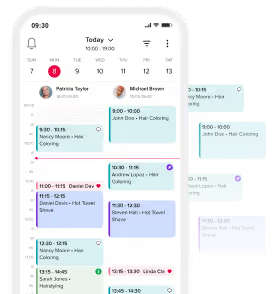
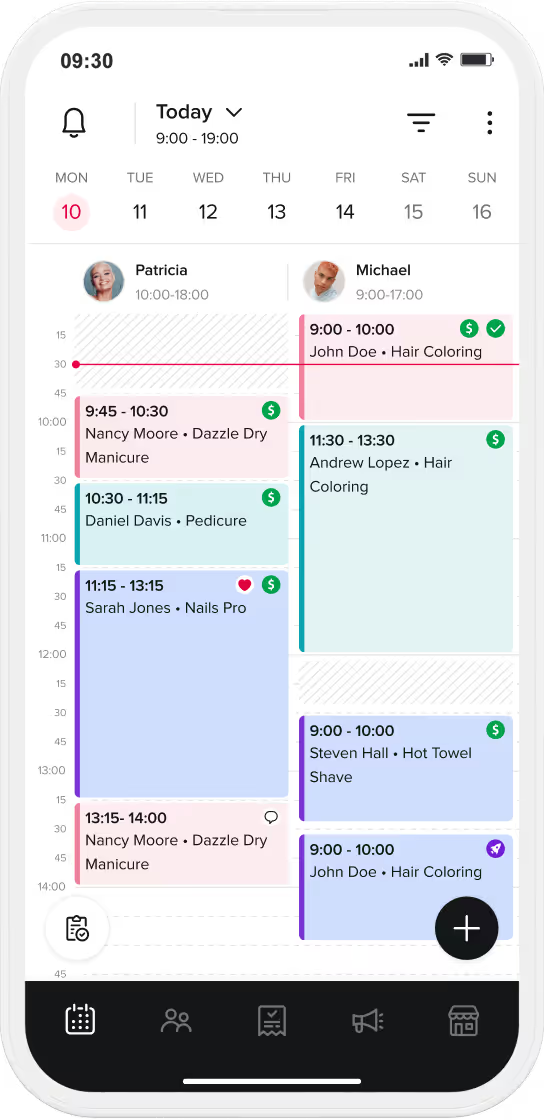
Utilizing dedicated no-show protection tools within Booksy Biz enables salon owners to collect upfront deposits, process automated late fees, and embed policy terms directly within automated confirmation emails and booking widgets.
Streamlining Communication Across Digital Touchpoints
Communicating salon rules clearly minimizes policy friction. Displaying cancellation thresholds on your booking profile, linking policies in text message reminders, and posting employee standards in breakrooms maintains consistent operational boundaries.
Frequently Asked Questions About Salon Policies
What are salon policies and why are they important?
Salon policies are structured rules guiding business actions that protect salon revenue from unannounced absences and clarify expectations for staff and clients.
Which client policies should a salon owner prioritize?
Salon owners should prioritize cancellation windows, late arrival limits, no-show penalty fees, and refund or re-do terms to safeguard daily scheduling efficiency.
What is a standard salon cancellation policy notice window?
A standard cancellation notice window requires 24 hours advance notice for standard appointments and 48 hours notice for lengthy chemical or specialty services.
Why should a salon enforce a Right to Refuse Service policy?
A Right to Refuse Service policy provides legal authority to deny service to clients exhibiting intoxication, harassment, or behavior threatening staff safety.
How can salon owners ensure clients agree to salon policies?
Salon owners can ensure compliance by requiring clients to accept digital terms and conditions during online booking and including policy summaries in automated confirmation emails.