Salon Manager Duties and Responsibilities: Job Description & Complete Guide
by
Booksy Team
7
minutes read
January 7, 2026
Table of Content
A salon manager is a beauty business professional responsible for overseeing daily salon operations, team leadership, client retention, and retail performance. While many beauty entrepreneurs launch their businesses juggling every role—acting as master stylist, receptionist, inventory clerk, and bookkeeper—scaling past 4 to 6 chairs requires transitioning toward structured salon management.
A salon manager oversees daily salon workflow by managing staff schedules and payroll, tracking retail and backbar inventory, upholding sanitation compliance, resolving escalated client disputes, and driving business profitability.
Executive Summary: A salon manager bridges executive business strategy and daily front-of-house execution. The role balances two primary domains: Operational Systems (inventory, cash flow, hygiene, digital booking workflows) and People Leadership (stylist recruiting, shift scheduling, commission tracking, and client de-escalation).
Management Pillar
Core Daily Responsibilities
Primary Business Objective
Staff Leadership & HR
Hiring, onboarding, shift rotas, and commission auditing
Reduce stylist turnover and maintain team morale
Operational Logistics
Stock auditing, backbar supply orders, state board hygiene
Maximize average ticket size and chair utilization
What Does a Salon Manager Do?
The salon manager acts as the operational co-pilot to the salon owner. While the owner focuses on long-term expansion, commercial leases, and brand vision, the manager ensures that the engine of the salon runs reliably every single day. The role divides into two interconnected domains:
Operational Systems: Managing technical facilities, inventory control, cash flow, appointment systems, and regulatory health standards.
Interpersonal Leadership: Guiding team dynamics, hiring, training apprentices, coaching stylists on retail metrics, and handling delicate client disputes.
Operational Responsibilities of a Salon Manager
Operational excellence ensures that stylists have the clean tools, products, and schedule stability required to focus on technical artistry. Core operational duties include:
Inventory Auditing & Restocking: Monitoring product consumption across backbar chemicals (color, bleach, developer) and retail shelves to prevent stockouts while avoiding tied-up cash in excess inventory.
Hygiene & Safety Enforcement: Ensuring all stations, shampoo bowls, pedicure tubs, and esthetician rooms comply strictly with local health department and State Board of Cosmetology sanitation regulations.
Appointment Scheduling Optimization: Supervising the master calendar, managing waitlists, and eliminating schedule gaps to maximize daily chair utilization rates.
Daily Financial Balancing: Reconciling daily register drawers, tracking cash vs. card receipts, and supervising daily transaction settlement.
Facility & Equipment Maintenance: Scheduling preventative repairs for dryers, hydraulic chairs, wash basins, and HVAC ventilation systems.
Operational KPI Reporting: Pulling weekly performance reports for the owner, tracking Average Ticket Size, Retail Attachment Rate, and Client Retention Rate.
Interpersonal & Staff Leadership Duties
Salons run on creative energy, and interpersonal dynamics can quickly deteriorate without firm, fair, and empathetic leadership. The interpersonal responsibilities of a salon manager include:
Team Scheduling & Rota Management: Creating balanced monthly shift rotas that match peak client booking windows while managing vacation requests, sick leave, and chair-share arrangements.
Commission & Payroll Preparation: Tracking service hours, calculating sliding-scale service commissions, factoring in retail sales bonuses, and auditing timesheets for payroll processing.
Recruiting & Onboarding: Reviewing portfolios, conducting interviews, running practical model trials, and integrating newly hired stylists or assistants into salon workflows.
Service Conflict Resolution: Stepping in immediately when a client is dissatisfied with a cut, color, or wait time, deploying de-escalation scripts, and arranging corrective fixes before negative reviews are posted.
Stylist Mentorship & Goal Setting: Conducting one-on-one monthly reviews to help stylists hit retail sales targets, rebooking quotas, and continuing education milestones.
Dual Responsibilities of a Salon Manager Matrix
Operational (Process & Logistics)
Interpersonal (People & Culture)
Automating stock tracking and wholesale chemical reorders.
Constructing balanced stylist shift rotas and managing time-off.
Supervising local marketing campaigns and social media portfolios.
De-escalating in-salon client disputes and technical complaints.
Generating financial statements, chair yields, and P&L reports.
Recruiting, interviewing, and onboarding new stylists and assistants.
Enforcing State Board sanitation and equipment sterilization.
Setting performance KPIs and calculating tiered stylist commissions.
Salon Manager Job Description Template (Copy & Paste)
If you are ready to recruit a salon or spa manager, use this customizable job description template for your hiring posts on job boards, social media, and your careers page:
Job Title: Salon & Spa Manager
Location: [City, State / On-Site] Employment Type: [Full-Time / Part-Time / Working Manager] Compensation: [$48,000 – $65,000 Base Salary + Performance Bonuses / Retail Commission]
About Us:
[Salon Name] is an established, high-volume salon dedicated to delivering exceptional client experiences and technical artistry. We are seeking an experienced, organized, and people-first Salon Manager to lead our front-of-house team, manage daily logistics, and mentor our talented stylists.
Hiring a full-time, non-service salon manager represents a substantial payroll commitment (typically $45,000 to $65,000 annually, depending on salon size and location). For small studios with 1 to 4 chairs, hiring a dedicated manager prematurely can erode operating profit.
Many independent salon owners bridge this transition through two distinct approaches:
The Working Manager: A senior stylist who handles management duties 8 to 12 hours a week while spending remaining hours servicing their own high-ticket clientele behind the chair.
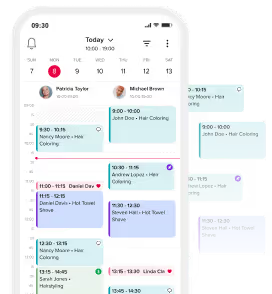
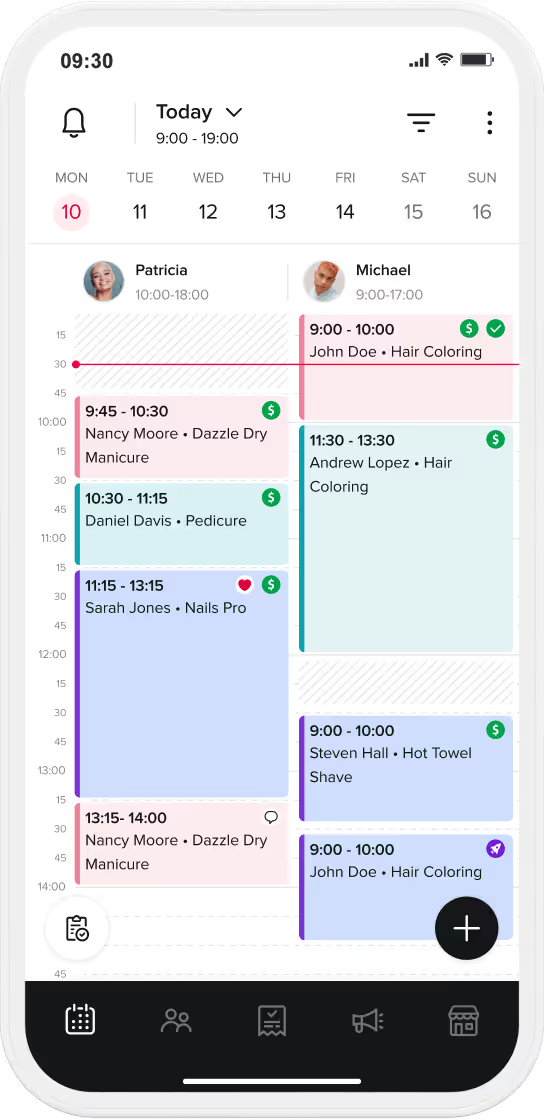
Digital Automation via Salon Software: Automating time-consuming operational tasks using platforms like Booksy, allowing the owner to oversee multi-chair operations without a full-time administrative hire.
Human Manager vs. Salon Automation Software
Operational Task
Human Manager Advantage
Booksy Software Automation
Appointment Booking
Accommodates VIP requests and manual phone bookings.
24/7 self-service scheduling with zero double-bookings.
Conflict Resolution
Provides empathy, active listening, and in-person de-escalation.
Enforces cancellation terms and deposits objectively.
Inventory Control
Visually inspects product damage and expiration dates.
Automatically deducts backbar usage and alerts low stock.
Staff Payroll & Rotas
Balances individual staff requests and personality fits.
Calculates tiered commissions and tip payouts automatically.
Supercharging Your Salon Management with Booksy
The most successful salons pair an exceptional human manager with robust digital automation. Rather than forcing your manager to spend 15 hours a week manually tallying inventory sheets, entering appointment reminder texts, or calculating commissions by hand, Booksy automates administrative friction:
Real-Time Commission & Performance Tracking: Stylists and managers can view daily revenue targets, tips, and tiered commissions directly in the mobile app.
Integrated POS & Inventory Management: Every retail purchase immediately updates live stock levels, preventing product shortages before peak weekends.
Empowering your salon leadership with the right digital tools frees your team to focus on what truly grows the business: elevating client experiences and mentoring top-tier stylists.
A salon manager's duties include supervising staff schedules, managing payroll and commissions, auditing backbar and retail inventory, enforcing sanitation standards, overseeing appointment scheduling, and resolving customer complaints.
What should be included in a salon manager job description?
A comprehensive salon manager job description should outline the business overview, operational responsibilities (inventory, health compliance, scheduling), people leadership duties (hiring, rotas, de-escalation), required qualifications (2+ years experience, software proficiency), and the compensation structure.
What is the difference between an operational duty and an interpersonal duty?
Operational duties are systems-focused tasks such as inventory control, financial balancing, and sanitation compliance. Interpersonal duties are people-centric responsibilities, including staff recruiting, coaching, shift coordination, and client de-escalation.
Can a salon manager also work as a hair stylist?
Yes. Many salons employ "working managers" who service clients behind the chair while dedicating 8 to 15 scheduled hours per week to administrative and supervisory responsibilities.
How does salon software support a salon manager?
Salon management software like Booksy automates repetitive administrative duties—such as appointment reminders, stock tracking, and commission calculations—allowing the manager to dedicate more time to staff development and guest hospitality.
What qualifications are needed to become a salon manager?
Key qualifications include 2+ years of salon or hospitality management experience, deep familiarity with hair and beauty services, working knowledge of retail inventory systems and bookkeeping, and strong interpersonal de-escalation skills.