The beauty landscape has shifted. While some full-service salons struggle with massive overhead, the specialized nail bar has emerged as the high-yield champion of the industry. Opening a nail salon is about building a high-frequency, high-margin machine designed for a new generation of clients who value speed, hygiene, and specific technical artistry above all else. If you are researching how to start a nail business, the foundations you lay before the first bottle of polish is opened will determine if your business scales or stalls.
However, the barrier to entry has evolved. Success today isn't found in a pretty storefront; it’s found in the blueprint. From air quality engineering to seat utilization math, this guide is your technical roadmap to ensuring that your salon is built for long-term profitability in a competitive modern market.
1. The Strategic Foundation: Developing Your Nail Salon Business Plan
A business plan is not just a document for the bank; it is your financial GPS. Margins are often made or lost in the details of small, recurring costs.
Market Analysis: Finding the "White Space"
Before choosing a name, you must identify a gap in your local market. Do not try to compete with every salon; find the one thing they are failing to provide.
- The High-Speed Express: Is there a business district nearby full of professionals who need a 30-minute high-quality gel refresh during their lunch break?
- The Specialized Art Studio: Is the local market saturated with "basic" salons, leaving an opening for high-ticket services like 3D gel art, extensions, or Russian manicures?
- The Wellness Boutique: Is there a growing demographic of health-conscious clients seeking toxic-free, "waterless" manicures and high-end organic spa treatments?
Financial Forecasting: The Seat Utilization Math
Your revenue is capped by your physical capacity. Don’t guess when forecasting; take time to calculate your Revenue Per Seat.
- Station vs. Pedicure Throne: Manicure stations typically have a faster turnover but lower price point. Pedicures take longer but command a higher premium and often lead to more retail sales.
- The Break-Even Analysis: Calculate exactly how many manicures per day are required to cover your fixed costs (rent, insurance, utilities). In a healthy nail bar model, you should aim to hit your daily break-even point by the middle of the afternoon, leaving the evening hours for pure profit.
| Station Type |
Turnover Rate |
Average Ticket Value |
Primary Profit Driver |
| Manicure Desk |
High (45-60 mins) |
Moderate |
Nail Art & Technical Upgrades |
| Pedicure Throne |
Moderate (60-75 mins) |
Premium |
Luxury Add-ons & Home-Care Retail |
Defining Your USP (Unique Selling Proposition)
In 2026, being good at nails is the baseline, not a strategy. Your USP is the specific reason a client will choose you over the salon two blocks closer to their house.
- Technology-Driven: "Book in 2 clicks, out in 45 minutes."
- Hygiene-Obsessed: "Medical-grade sterilization and source-capture ventilation for every guest."
- Trend-Leading: "The only studio in the city offering the latest seasonal pigments from Japan and Korea."
2. Location & Layout: Designing for Revenue per Square Foot
In the nail industry, your floor plan is your primary engine for revenue. Unlike a hair salon, where clients spend long periods in one chair, a nail salon thrives on movement and multitasking. To maximize Revenue per Square Foot, your layout must be designed to prevent "traffic jams" while maintaining a premium, non-cramped atmosphere.
The "Flow" Architecture: Optimizing the Client Journey
A 5-star experience is often invisible—it’s the result of a layout where the client never feels lost or in the way. In 2026, the most profitable nail salons use a "zonal" approach to separate different types of energy and noise:
- The Dry Zone (Manicure): Position these stations near natural light but away from the high-traffic entrance to minimize dust and noise.
- The Wet Zone (Pedicure): This should be a sanctuary. Grouping pedicure thrones together allows for easier plumbing installation and creates a social, "spa-like" environment that encourages group bookings and high-margin "Pedi-Party" packages.
- The Retail Transition: Place your retail shelves between the service area and the exit. This ensures that as a client waits for their polish to set or moves to checkout, they are browsing your high-margin home-care products at the exact moment they are most inspired by their results.
| Salon Zone |
Ideal Placement |
Atmosphere/Vibe |
Business Purpose |
| Dry Zone (Mani) |
Near natural light, mid-salon |
Focused & conversational |
High-volume technical production |
| Wet Zone (Pedi) |
Quiet rear area, grouped plumbing |
Relaxing sanctuary / Spa-like |
Premium packages & group bookings |
| Retail Transition |
Between service floor and exit |
Clean, boutique, highly visible |
Impulse high-margin retail sales |
Ergonomics of Profit: Caring for the Technician
Your technicians are your most valuable assets. If they are in pain, their speed drops and their error rate rises. Every inch of your workstation should be designed to support their physical longevity.
- Adjustable Heights: Invest in manicure desks and pedicure stools that adjust to the height of the technician, not just the client. Reducing back and neck strain directly increases the number of clients a staff member can handle in a day.
- Lighting Precision: Shadow-free, high-CRI (Color Rendering Index) lighting is essential. If a tech can’t see the true color or the cuticle detail clearly, the service takes longer, and the risk of an expensive redo increases.
Space Optimization: The Commercial vs. Home Model
Choosing the right physical footprint is the most significant financial decision you will make.
- Commercial High-Street: Focuses on walk-in visibility and "Volume per Hour." Your layout must prioritize a fast-flow reception and high-density manicure rows.
The Specialized Studio: Often located in home-based or suite-style settings. Here, the layout focuses on privacy. The goal is to create a 1-on-1 experience where the lack of foot traffic is replaced by higher service premiums and specialized technical art.
3. Equipment & Infrastructure: Investing in Longevity
In a nail salon, your equipment is either an asset that accelerates work or a liability that creates bottlenecks. Professional grade means more than just durability; it means integrating health, safety, and digital efficiency into the physical workstation. Choosing the right infrastructure during the build-out phase prevents expensive retrofitting costs later.
The Ventilation Standard: Health as a Brand Asset
Dust and chemical vapors are the primary environmental challenges in a nail bar. If your salon smells like monomer, you are losing high-end clients and increasing staff turnover. Modern nail salon management treats air quality as a premium feature.
- Source-Capture Systems: Standard room fans or open windows are insufficient. Your blueprint must include source-capture ventilation built directly into the manicure tables. These systems pull dust and fumes away from the breathing zone of both the technician and the client before they can circulate.
- The "Fresh Air" Premium: Promoting your advanced air filtration isn't just about safety—it’s a marketing tool. It allows you to position your salon as a wellness-first destination, justifying a higher price point than traditional discount shops that lack proper air scrubbing technology.
Hardware Essentials for High-Volume Success
Cutting corners on the tools that touch the client leads to service failures and reputational damage. One equipment failure can derail an entire day's schedule.
- Medical-Grade Sterilization: A medical-grade autoclave is the industry gold standard. Visible sterilization of metal tools builds immense trust and protects the business from the legal nightmares of infection claims.
- Professional E-Files & LED Lamps: Invest in high-torque, brushless E-files and wide-entry LED lamps with consistent curing power. Cheap lamps often lead to "under-curing," which causes service breakdowns and requires expensive, non-billable "fix-it" appointments.
- Ergonomic Manicure Desks: Select desks with built-in dust collectors and integrated power outlets. Every inch of the desk should be designed to keep the technician's tools within a 180-degree reach, cutting vital seconds off every phase of the service.
The Digital Backbone: Your Business Tech Stack
Your physical hardware is only as effective as the software that manages its usage. Your management system must handle the logistics so your artists can stay focused on the nails.
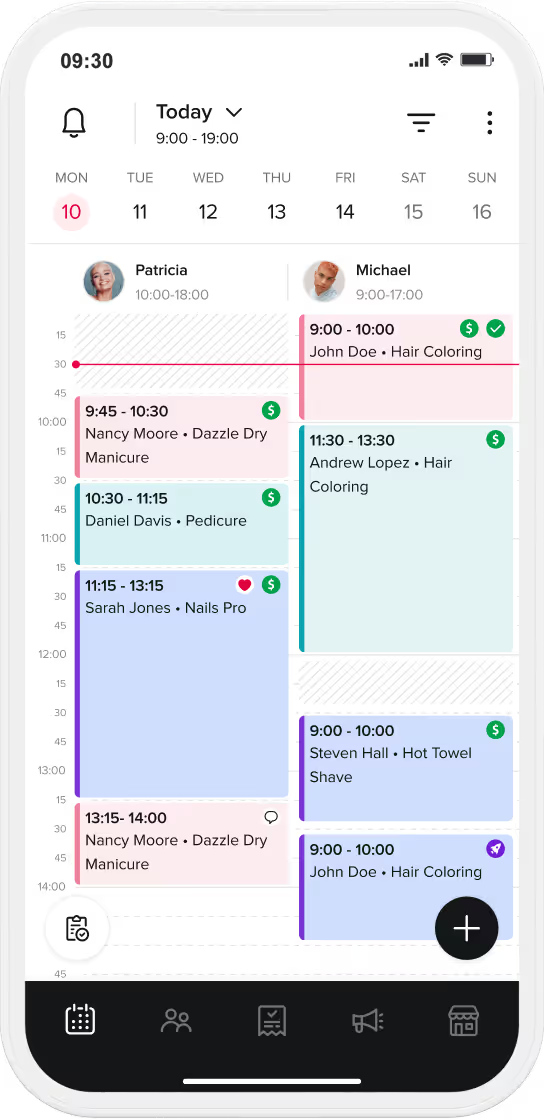
- The Deposit Engine: To prevent revenue gaps, your nail salon software must have a robust "No-Show Protection" feature. Requiring a deposit at the time of booking ensures that your chairs remain a source of income, not a source of lost time.
- Inventory Automation: Choose a system that links your Point of Sale (POS) to your backbar inventory. When a technician finishes a bottle of base coat or a pack of files, the system should log it automatically, helping you maintain perfect par levels without manual weekly counting.
- Automated Client Profiles: Every client's history—favorite colors, allergies, and typical service duration—should be accessible to the technician in seconds. This data-driven personalization is what turns a one-time visitor into a lifelong regular.
4. Legal, Permits & Insurance: Building a Bulletproof Business
Navigating the regulatory landscape isn’t glamorous, but it is critical for survival. A single compliance failure or an uninsured accident can shut down a business before it reaches its first anniversary. Being bulletproof means moving beyond basic requirements and establishing a rigorous standard for legal and operational safety.
Licensing & Compliance: The "Ready-for-Inspection" Standard
State boards and health departments have become increasingly strict regarding chemical handling and cross-contamination. Your business blueprint must include a centralized system for maintaining legal compliance.
- The Compliance Folder: Maintain a digital and physical repository containing every staff member’s current license, your establishment permit, and up-to-date Safety Data Sheets (SDS) for every chemical used—from acetone to specialty gel builders.
- Self-Audit Protocols: Don’t wait for an inspector to find a violation. Conduct monthly "mock inspections" focusing on tool sterilization logs, the proper labeling of secondary containers, and the cleanliness of pedicure whirlpool filters.
Nail Salon Insurance: Protecting Against Industry-Specific Risks
Standard general liability insurance is rarely enough for the specific risks of the nail industry. You need a policy tailored to the "high-touch" nature of the business.
- Professional Liability (Errors & Omissions): This protects you if a client claims they developed a fungal infection, suffered a chemical burn, or had their natural nails damaged due to improper technique.
- Product Liability: As a salon owner, you are responsible for the reactions clients may have to the products you apply. Ensure your nail salon insurance covers allergic reactions to monomers, adhesives, or UV-cured resins.
- Workers' Compensation: In a high-volume environment, repetitive strain injuries (like carpal tunnel) are common. Proper coverage is not just a legal requirement in most states; it’s a vital safety net for your team’s longevity.
| Coverage Type |
Specific Risk Protected |
Why General Liability Misses It |
| Professional Liability |
Infections, nail damage, or chemical burns from services. |
GL only covers slip-and-fall physical accidents, not technical mistakes. |
| Product Liability |
Severe allergic reactions to monomers, gels, or resins used. |
Salons are legally liable for chemical interactions of products they apply. |
| Workers' Compensation |
Repetitive strain injuries (e.g., carpal tunnel) among technicians. |
Mandatory safety net needed for physical team longevity. |
Employment Law & Contract Clarity
The "booth rental vs. employee" debate is a frequent legal trap for new owners. Misclassifying workers can lead to massive back-tax penalties and legal fees.
- Clear Worker Classification: If you control their schedule, provide their equipment, and set their prices, they are likely employees (W-2), not independent contractors (1099). Ensure your business plan reflects the correct tax and insurance obligations for your chosen model.
- Non-Compete and Confidentiality: Protect your "Digital Blueprint"—your client list and proprietary SOPs. While non-compete laws vary by state, having clear confidentiality agreements helps prevent staff from taking your entire booking database to a competitor across the street.
5. The Grand Opening Strategy: From Zero to a Full Book
A grand opening is a multi-week campaign designed to build momentum and ensure that when your doors finally open, your technicians aren't sitting at empty stations. The most successful launches rely on a staged entry that allows you to refine your operations before the general public arrives.
The "Soft Launch" Protocol: Refining Your Operations
Opening your doors to the public on day one is a recipe for operational chaos. A soft launch—typically a 3-to-5-day period for friends, family, and local business owners—acts as a stress test for your blueprint.
- Workflow Audit: Use this time to see if your "Flow Architecture" actually works. Do technicians have enough space? Is the ventilation as quiet as promised? Are there bottlenecks at the pedicure stations?
- Staff Calibration: A soft launch allows your team to get used to the equipment and the lighting without the pressure of a full-paying client. It’s better to discover a faulty LED lamp or a plumbing leak when a friend is in the chair rather than a new customer.
The Digital Hype Cycle: Building the Waiting List
Your nail salon marketing should begin at least 30 days before your grand opening. The goal is to build a digital wait list so you can open your calendar with 50% of your slots already filled.
- The Tease Content: Don’t just show the finished salon. Post "behind-the-scenes" content of your high-tech ventilation being installed or your medical-grade autoclave being set up. This signals to professional, safety-conscious clients that your salon is different from the competition.
- Early Access Incentives: Offer a "Founder’s Club" discount or a free luxury add-on for the first 100 people who sign up for your mailing list or follow your booking profile. This creates a sense of exclusivity and urgency.
The Booking Push: Launching the Calendar
The transition from "coming soon" to "now booking" must be seamless. Any friction in the booking process during your launch week will result in lost revenue.
- Go-Live Synchronicity: Your "Book Now" buttons must be live across Instagram, Google Business, and TikTok simultaneously. Ensure that your management software is fully configured with correct service durations and technician availability.
- The Grand Opening Event: On your official opening day, host a 4-hour "Open House." Offer quick polish changes or hand massages to walk-ins to give them a taste of the experience. The primary goal of the event isn't immediate profit—it is to have every visitor book their first full-price appointment through your app before they leave.
Your 30-Day Launch Countdown
Scaling from a concept to a high-yield nail salon requires a balance of artistic vision and engineering precision. By following this blueprint—focusing on revenue-per-square-foot, investing in health-standard infrastructure, and building a data-driven management foundation—you are setting your business up for a decade of growth rather than a year of struggle.
The Final Countdown:
- 30 Days Out: Finalize your business plan, secure your insurance, and start your social media hype.
- 14 Days Out: Install all nail salon equipment, test your ventilation, and train staff on your management system.
- 7 Days Out: Conduct your "Soft Launch" and calibrate your operational speed.
- Day 0: Open the doors, activate your "Last-Minute" booking push, and begin your journey as a salon owner.
Frequently Asked Questions
The initial investment varies based on location, but a professional-grade salon in 2026 typically requires between $75,000 and $150,000 for build-out. The largest expenses are often the specialized plumbing for pedicure thrones and high-performance source-capture ventilation systems, which are essential for long-term compliance and branding.
Do I need a business degree to open a nail salon?
No, but you do need "financial literacy." Success in the nail industry depends on understanding margins, seat utilization, and labor costs. Using a dedicated management system from day one can help bridge the gap by providing the analytics and reporting you need to make informed decisions without a background in finance.
What is the most important piece of equipment for a new salon?
While aesthetics are important, your ventilation system is your most critical infrastructure investment. Proper air filtration protects the health of your staff, ensures you pass health inspections, and creates a premium environment that allows you to charge more than discount competitors who don't prioritize air quality.
How do I choose the best location for a nail bar?
Look for "complementary foot traffic." Positioning your salon near high-end grocery stores, fitness studios, or coffee shops ensures you are visible to a demographic that already values self-care and has the disposable income for regular, 3-week maintenance cycles.
How long does it take for a new nail salon to become profitable?
With a strong "Grand Opening" strategy and automated rebooking systems, a well-managed salon can reach its break-even point within 6 to 12 months. Maximizing your retail-to-service ratio and keeping seat utilization above 70% are the fastest ways to accelerate this timeline.