In the world of professional nail care, management is not a soft skill; it is a game of minutes. Nail salons operate on high volume and tight margins, where a short delay or an unoptimized schedule doesn't just cause stress; it evaporates your daily profit. In 2026, the transition from being a talented nail tech to a successful nail salon owner requires a mindset shift.
The market has reached a tipping point: high-performing salons are embracing technical automation. To survive and scale today, you must prioritize seat utilization, precision staffing, and data-driven decision-making. This guide is your manifesto for building a salon that runs like clockwork, allowing you to scale your revenue without being tied to the front desk.
1. Staffing & Recruitment: Building a High-Performance Nail Team
The biggest bottleneck in nail salon management is rarely a lack of clients; it is a lack of high-performing, reliable talent. With the rise of booth rentals and solo studios, your salon must offer more than just a paycheck to attract the best. You need to recruit for speed and retain through professional growth.
The Technical Speed-Test: Accuracy Under the Clock
When you are hiring new staff, an Instagram portfolio is only part of the equation. To build a profitable team, you must implement a live speed test during the interview process.
- The Drill Down: Have candidates perform a standard gel manicure and a single accent nail of complex art.
- The Metrics: Do not just look at the cuticle work. Track their station readiness and their total time-to-completion. In 2026, a technician who produces a perfect set but takes 90 minutes for a 45-minute slot is a financial liability. You are looking for the sweet spot where technical precision meets operational speed.
| Service Type |
Target Duration |
Margin of Error |
Quality Non-Negotiables |
| Standard Gel Mani |
45 Minutes |
+/- 5 Mins |
Clean cuticles, no skin flooding |
| Gel-X / Extensions |
75 Minutes |
+/- 10 Mins |
Correct apex, symmetrical shape |
| Fills (Acrylic/Gel) |
60 Minutes |
+/- 5 Mins |
Structural integrity, flush growth |
Tiered Commission Structures: Incentivizing Efficiency
Flat commission rates often lead to stagnant performance. Modern management uses tiered pay to reward the technicians who drive the most value.
- Base + Upsell Bonus: Set a base commission for standard services, but offer a significantly higher percentage for nail art or speciality treatments (like structured manicures or luxury spa add-ons).
- The Speed & Satisfaction Tier: Reward technicians who maintain a high Average Ticket Value (ATV) and a rebooking rate above 70%. When your staff sees a direct mathematical link between their efficiency and their paycheck, they become partners in your nail salon's profitability.
The Culture of Retention: Ergonomics and Education
Retention is your greatest cost-saver. To keep your A-Players from leaving for a private suite, you must provide benefits they cannot get on their own.
- Ergonomics as a Benefit: Invest in the highest-grade equipment, specifically ergonomic stools and advanced dust collection systems. A technician whose back doesn't hurt at the end of the day is a technician who is more likely to stay with you for years.
- In-House Masterclasses: High-performers crave growth. Host monthly workshops on 2026 trends, such as 3D gel art or E-file techniques. Position your salon as a place of higher learning, making the "solo life" look stagnant by comparison.
2. The Nail Salon Business Blueprint: Concepts & Foundations
Starting a nail business in 2026 requires a strategic launch plan that balances luxury with high-volume output. Whether you are building a commercial powerhouse or a high-end boutique, the legal and physical foundations of your space will dictate your long-term profitability.
Choosing Your Model: Brick-and-Mortar vs. Home-Based
Before signing a lease or purchasing your first professional pedicure chair, you must decide which business model aligns with your growth goals. This decision impacts everything from your tax structure to your daily management style.
- The Commercial Powerhouse: Best for owners who want to scale, manage a large team, and capitalize on high-volume walk-in traffic in retail centers.
- The Home-Based Studio: Ideal for specialists focusing on low overhead and a highly curated, private client experience.
Deep Dive Resources:
Nail Salon Equipment & Ventilation: The Health-Safety Brand
Air quality is a core part of your brand identity. Clients are more aware than ever of the chemical exposure associated with nail services.
- Source-Capture Ventilation: Invest in high-performance ventilation systems that capture dust and vapors directly at the manicure table. A salon that smells like fresh air rather than monomer creates an immediate premium feeling that justifies higher pricing.
- Durability Over Aesthetics: When selecting nail salon equipment, prioritize surfaces that can withstand medical-grade disinfectants. Porous furniture that absorbs chemicals is a liability that will look aged and unprofessional within months.
Legal & Insurance Essentials: Protecting Your Asset
A single slip-up or an allergic reaction can jeopardize years of work if you aren't properly protected. Professional nail salon management includes an annual audit of your legal safeguards.
- Specific Professional Liability: Ensure your nail salon insurance covers more than just slip and fall. You need coverage for professional errors (like infections or nail damage) and specific chemical liability.
The Compliance Folder: Keep a digital and physical record of all staff licenses and SDS (Safety Data Sheets) for every chemical used in the salon. In the event of a state board inspection, having these accessible in seconds demonstrates a level of professionalism that sets you apart from "discount" competitors.
3. Operational Efficiency: Maximizing Seat Utilization
The Gap-Filling Strategy: Eliminating Dead Time
Manicure services often create awkward 15- to 30-minute gaps that are too short for a full service but too long to ignore.
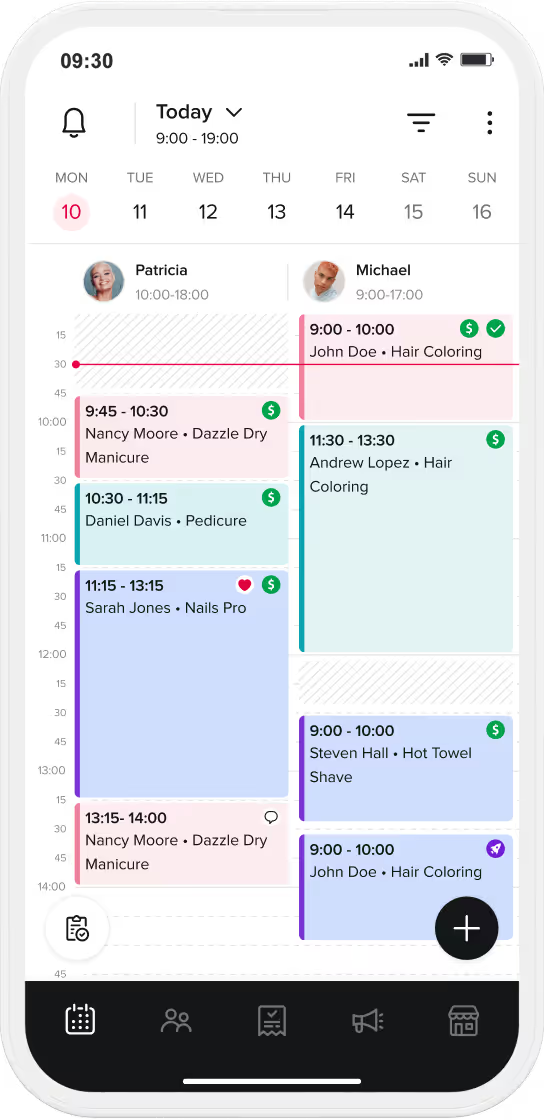
- Dynamic Padding: Use your scheduling software to eliminate dead air between bookings. Instead of fixed hour blocks, set your system to stack appointments tightly.
- Automated Last-Minute Add-ons: When a small gap appears, empower your staff to offer "Express Upgrades" to clients already in the chair. A 15-minute hand massage or a quick paraffin dip can turn a non-productive gap into a high-margin profit center.
Standard Operating Procedures (SOPs): The 5-Minute Reset
Profit is leaked when technicians spend 10 minutes hunting for a specific gel color or a clean set of nippers. Professional management requires a precision mindset for station preparation.
- The Universal Station Setup: Every desk should be organized identically. Whether a technician is at Station 1 or Station 5, they should know exactly where the lint-free wipes and the base coat are located.
- The Reset Protocol: Implement a strict 5-minute limit for cleaning and resetting between clients. By streamlining cleaning, you can realistically fit one extra client per technician, per day. Across a team of five, that’s 25 extra appointments a week.
Mobile-First Client Flow: Convenience as a Currency
If your management relies on a receptionist answering every call, you are creating a bottleneck.
- Online Booking & 2-Click Rebooking: Use a dedicated booking app that allows clients to secure their next 3-week fill in under 10 seconds.
- In-App Payments: Eliminating the checkout line at the front desk speeds up the client turnover. When a client can pay and tip via the app, the technician can begin their 5-minute station reset immediately.
4. Technical Integration: Managing via Data, Not Gut Feeling
Inventory Control: Stop Freezing Your Cash
With hundreds of gel shades and seasonal collections, it is easy for thousands of dollars to sit idle on your shelves.
- The Dead Color Audit: Use your software to track which colors haven't been picked in 90 days. Instead of reordering these dead assets, run a "Color of the Week" promotion to clear the stock and free up cash for high-demand trends like structured gels or new Chrome pigments.
- Automated Par Levels: Never pay for emergency overnight shipping again. Set your system to trigger an automatic reorder of essentials (like base coats and monomer) when they hit a critical low. This ensures your nail salon supplies are always in stock without over-purchasing.
| Stock Age |
Status |
Action Required |
Marketing Strategy |
| 0-60 Days |
Active |
Monitor Par Levels |
Standard Social Posts |
| 60-90 Days |
Stagnant |
Stop Reordering |
Staff "Add-on" Incentive |
| 90+ Days |
Dead Asset |
Clearance / Purge |
"Color of the Week" Promo |
Real-Time Analytics: Tracking Your "A-Players"
Not all revenue is equal. A technician who brings in $1,000 in basic manicures is often less profitable than one who brings in $800 but does it with high-margin art and high retail sales.
- Average Ticket Value (ATV) per Technician: Use your dashboard to see who is successfully upselling art and luxury treatments. This data allows you to provide targeted training for staff who are only performing entry-level services.
- Seat Utilization Rates: Track how many hours your stations are actually generating revenue versus sitting idle. If your utilization is consistently high but profit is low, it’s a sign that your service duration is too long or your pricing is out of sync with your overhead.
| Service Level |
Base Revenue (Est.) |
Time Spent |
Profit per Minute |
| Basic Manicure |
$35 |
40 mins |
$0.87 |
| Structured Mani |
$65 |
50 mins |
$1.30 |
| Mani + 3D Nail Art |
$95 |
60 mins |
$1.58 |
Data-Driven Performance Reviews
Transition from being a boss to being a coach. By sharing performance data with your team, you turn them into partners in the salon's financial success.
- Transparency is Motivation: When a technician can see their own rebooking rate and retail-to-service ratio compared to the salon average, they are naturally motivated to improve.
- Automated Commissions: Use an integrated scheduling software that calculates tiered commissions and tips automatically. This ensures 100% accuracy, builds trust with your team, and saves you hours of manual spreadsheet work every week.
5. Client Retention & Lifecycle Management
The 3-Week Loyalty Cycle: Closing the Rebooking Loop
Nail services have a built-in expiration date. After 21 days, a set of gels or an acrylic fill becomes a maintenance necessity. Effective nail salon management leverages this timeline to secure future revenue before the client even leaves the building.
- The Chairside Rebook: Train your technicians to treat rebooking as a professional recommendation, not a sales pitch. "To maintain the health of your natural nails, we need to refresh this set in exactly three weeks. Should we grab your usual 5:00 PM spot now?"
- Automatic Reminders: If a client doesn't rebook in-salon, your system should automatically trigger a "Time to Refresh" SMS or email 14 days later. This catches them just as they notice their regrowth, directing them back to your booking app before they look elsewhere.
Digital Loyalty Cards: Gamifying the Return
Paper punch cards are a relic of the past—they get lost, forgotten, or laundered. Loyalty must live in the client's pocket.
- Digital "Stamp" Cards: Use integrated loyalty features within your nail salon software. Clients earn stamps automatically for every qualifying visit.
- High-Value/Low-Cost Rewards: Instead of a flat 20% discount (which devalues your labor), offer rewards like a "Free Luxury Paraffin Upgrade" or a "Complimentary Accent Nail Art" on their 5th visit. These perks feel like a treat but cost you pennies in product and zero extra time.
The Art of the Review: Building Local Authority
When a potential client searches for the "best nail salon" in your area, Google prioritizes two things: the number of reviews and their freshness.
- The Post-Service Prompt: Use automated "Thank You" messages that include a direct link to your Google Business Profile. This should be sent 2 hours after the appointment, while the client is still admiring their fresh manicure and likely to take a "nailie" photo.
- Reputation Management: Every 5-star review acts as a silent salesperson. Responding to these reviews (even with a simple "See you in 3 weeks, Sarah!") shows Google—and future clients—that your salon is active, engaged, and professional.
The Manager’s Checklist for 2026
Mastering nail salon management means shifting your focus from the "art on the nails" to the "efficiency of the engine." To ensure your salon is optimized for maximum growth this year, use this high-performance checklist:
- [ ] The Speed-Test: Have you audited your technicians' service times this month?
- [ ] The 15.24 Stress Test: Is your current revenue justifying your rent and overhead?
- [ ] Ventilation Branding: Is your salon air fresh, and are you promoting your safety standards to clients?
- [ ] Inventory Audit: Have you identified and cleared out your "dead" polish colors?
- [ ] Automated Rebooking: Are your 3-week reminder triggers active and converting?
- [ ] Frictionless Booking: Is your "Book Now" button visible on Instagram, TikTok, and Google?
By combining professional-grade technology with a culture of efficiency, you build a business that doesn't just survive—it dominates. Start implementing these systems today, and turn your salon into the high-yield asset you deserve.
Frequently Asked Questions: Nail Salon Management
How do I balance speed and quality in my nail salon?
The key is implementing a Standard Operating Procedure (SOP) for every service. By ensuring each technician uses the same movement patterns and has a standardized station setup, you eliminate the wasted motion that slows down appointments. Quality is maintained through regular technical audits and masterclasses, while speed is achieved by removing the friction of a disorganized workspace.
What is the most effective way to pay nail technicians?
Moving away from flat salaries to a tiered commission structure is the most effective way to drive growth. By offering a base commission with higher percentages for nail art, luxury add-ons, and high rebooking rates, you incentivize your team to work more efficiently and focus on revenue per minute rather than just showing up for a shift.
How can I reduce the high cost of nail salon inventory?
Stop freezing your cash in colors that don't sell. Use your management software to track product usage and identify "dead" stock that hasn't been used in over 90 days. Implement a "Par Level" reordering system so you only buy what you actually use, and run promotions on slow-moving colors to clear shelf space and improve cash flow.
Why is a dedicated management system better than a paper book?
A digital management system acts as a "silent manager" that works 24/7. Unlike a paper book, it prevents double-bookings, automatically sends 3-week rebooking reminders, collects deposits to stop no-shows, and provides real-time data on your salon's financial health. In 2026, the data provided by these systems is what allows you to scale from a single studio to a multi-location brand.
How do I prevent my best technicians from leaving for solo studios?
Retention in 2026 is built on providing benefits that a solo technician cannot afford on their own. This includes investing in top-tier ergonomic equipment and medical-grade ventilation to protect their long-term health, offering continuous high-level education, and using a high-traffic booking platform that keeps their chairs full without them having to spend hours on social media marketing.
What should I look for when hiring new nail salon staff?
Beyond a strong visual portfolio, you must conduct a live "Speed-Test." Hire based on a technician’s ability to perform a high-quality service within your salon’s specific time blocks. A technician who is talented but consistently overruns their appointments will hurt your salon's seat utilization and overall profitability.
How often should I audit my salon's financial performance?
You should review your primary metrics—such as Average Ticket Value (ATV), Rebooking Rate, and Seat Utilization—on a weekly basis. This allows you to make surgical adjustments to your marketing or staff training mid-month, rather than waiting until the end of the quarter to realize you’ve missed your profit targets.