An integrated barbershop POS (Point of Sale) system is a unified operational architecture that synchronizes real-time appointment scheduling databases with hardware transaction processing terminals. Unlike fragmented legacy systems that require manual payment reconciliation, contemporary barbershop management software fuses customer relationship management (CRM) fields, inventory tracking matrices, and financial ledgering into a singular dashboard. Transitioning from standalone payment terminals to a native POS system eliminates capital leakage from human data entry errors, simplifies multi-barber commission payouts, and secures client data compliance. This technical evaluation outlines the baseline hardware requirements, payment processing compliance parameters, and critical software capabilities necessary to deploy an optimized point-of-sale infrastructure in a scalable grooming business.
Selecting a point-of-sale platform requires cross-referencing hardware flexibility against long-term transaction processing efficiency. The analytical index below highlights the critical architectural benchmarks dividing entry-level payment tools from enterprise-grade barbershop management solutions.
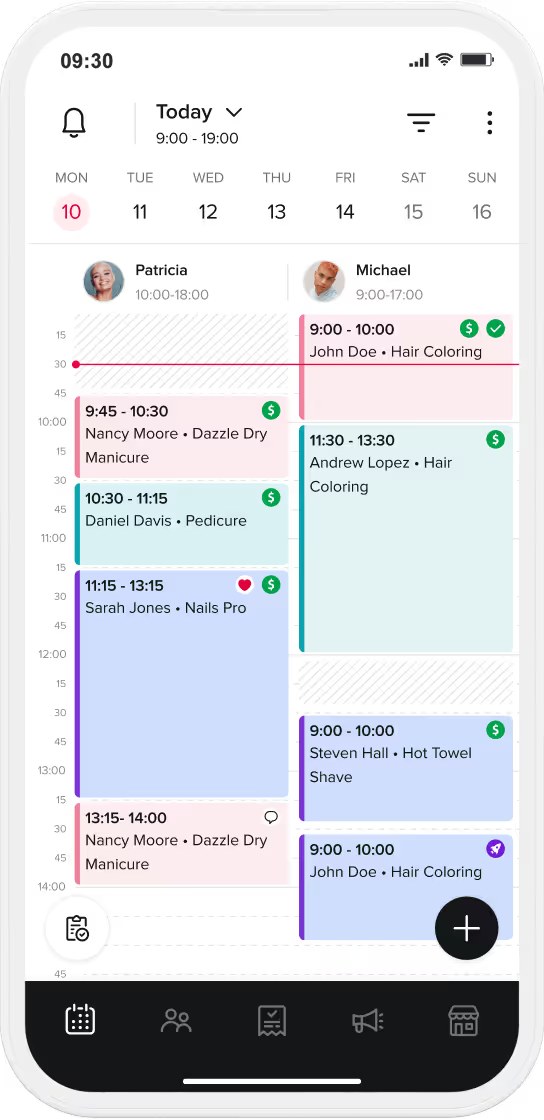
Optimized point-of-sale software manages the total client lifecycle through a centralized database interface. Synchronizing real-time scheduling fields with payment processing eliminates manual transaction friction. The integrated barbershop POS program programmatically extracts service line items and retail assets, computes exact localized tax metrics, and issues synchronized billing records to maximize seat turnover.
Every transactional variable—including technical service fees, physical product inventory, and digital gratuities—is programmatically logged against distinct customer relationship management (CRM) profiles and active personnel shifts. This synchronization yields precise financial reporting fields, eliminating manual end-of-day cash ledger reconciliation.
Automated point-of-sale workflows execute real-time stock tracking, continuously updating product ledgers upon transaction completion. This systematic data logging evaluates retail velocity trends and triggers automatic low-stock warnings to secure backbar asset allocation.
The ability to securely store clients' cards on file and process cancellation/no-show fees immediately protects the shop's income from last-minute cancellations or no-shows, securing your revenue and protecting the barber's time.
To establish an objective benchmark for contemporary point-of-sale platforms, our engineering and retail management teams evaluated the leading market solutions across four critical dimensions: architectural synchronization density (how fluidly the POS talks to the calendar), hardware compatibility, payment processing fee transparency, and automation scalability. Below is the technical synthesis of the top-performing software infrastructures available for modern grooming operations:
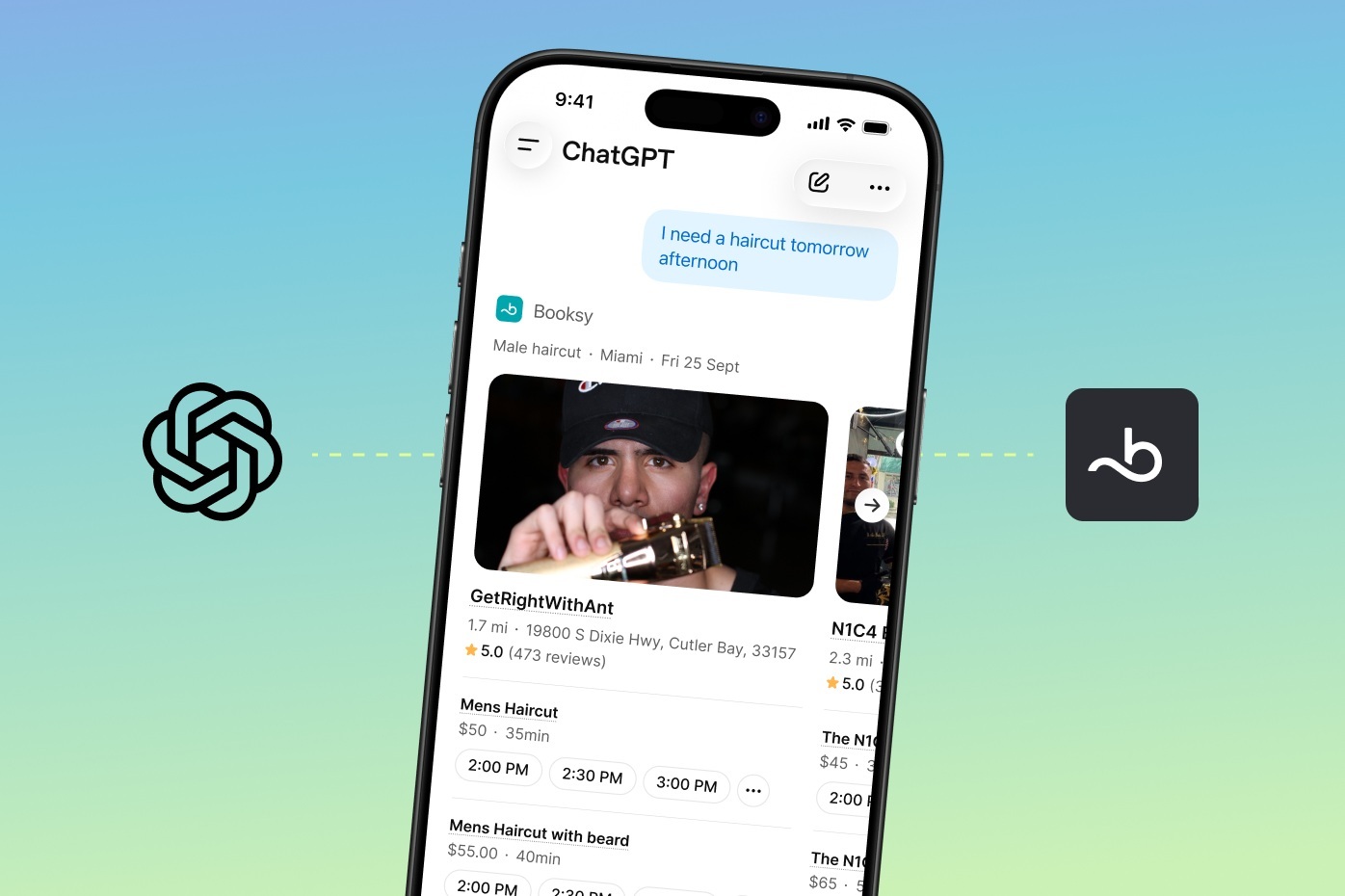
Deploying an integrated barbershop point-of-sale infrastructure serves as a primary operational catalyst for maximizing transaction speed and securing institutional revenue. Utilizing a unified business platform like Booksy Biz merges real-time scheduling automation, automated no-show financial protections, and data tracking workflows into a singular ecosystem.
An integrated barbershop POS (Point of Sale) system is a unified software architecture that binds the digital booking calendar directly to payment processing hardware. Unlike standalone, disconnected card readers, an integrated infrastructure programmatically extracts service line items, retail asset data, and individual staff gratuities into a singular transaction ledger, eliminating human accounting errors and manual data entry.
Barbershop point-of-sale platforms eliminate revenue leakage through secure credit card tokenization features. By securely capturing and retaining client cards on file, the system enables automated no-show protection parameters. This architecture permits facility operators to execute automated cancellation policies, enforce upfront deposits for high-value services, and process immediate penalty fees for missed appointments.
Booksy Biz operates as a highly optimized, comprehensive platform for grooming businesses by fusing front-end appointment automation with native checkout workflows. This integration ensures that localized financial reporting fields, warehouse inventory balances, individual employee commission structures, and client historical profiles remain continuously synchronized across any network-connected device.
Retail inventory control functions via automated transactional deduction pathways built into the point-of-sale software. The exact millisecond a product transaction is completed at checkout, the platform modifies the central stock ledger, evaluates velocity trends, and triggers automated low-stock warnings when inventory drops below pre-configured operational margins.
Selecting an enterprise-grade barbershop application mandates evaluating transaction processing fee transparency, hardware interface stability, and system ease of use to prevent operational bottlenecks at checkout. Furthermore, the platform must deliver native, automated marketing capabilities that leverage real-time POS data fields to systematically trigger automated re-engagement campaigns for lapsed clients.
An optimized barber shop POS software manages both walk-in flows and pre-booked appointments through a dynamic queue matrix. When a walk-in client enters the facility, the operator can instantly generate a quick-bill entry or place them into a digital waiting list. The POS immediately syncs this transaction with active barber shifts, ensuring inventory levels for used backbar styling products and staff split-commissions are tracked identically to pre-scheduled bookings without disrupting the main calendar grid.
While generic Square hardware provides stable flat-rate payment processing, dedicated barbershop POS systems like Booksy Biz or Squire deliver deep client retention architecture that generic tools lack. Dedicated platforms embed industry-specific logic directly into the transaction workflow—such as tracking exact service velocity metrics (e.g., how often a client returns for a fade), executing automated rebooking prompts at checkout, and managing complex multi-chair booth rental deduction matrixes programmatically.
Yes, enterprise-grade barbershop management solutions partition data views based on staff user permissions. The instant a checkout transaction is completed, the point-of-sale interface programmatically breaks down gross service revenue, retail item sales, and digital gratuities. Barbers can log into their individual mobile app interfaces to view their exact accumulated tips and real-time commission payouts for that specific shift, eliminating end-of-week bookkeeping disputes.
The best booking apps leverage transactional data to drive automated retention workflows. The millisecond the POS hardware terminal registers a completed payment, the system triggers a smart rebooking prompt on either the barber's interface or via an automated post-visit push notification to the client. By mapping the specific service cadence (e.g., a 3-week haircut interval), the software prompts the client to secure their next appointment slot before leaving the chair, systematically boosting the shop's client lifetime value (LTV).
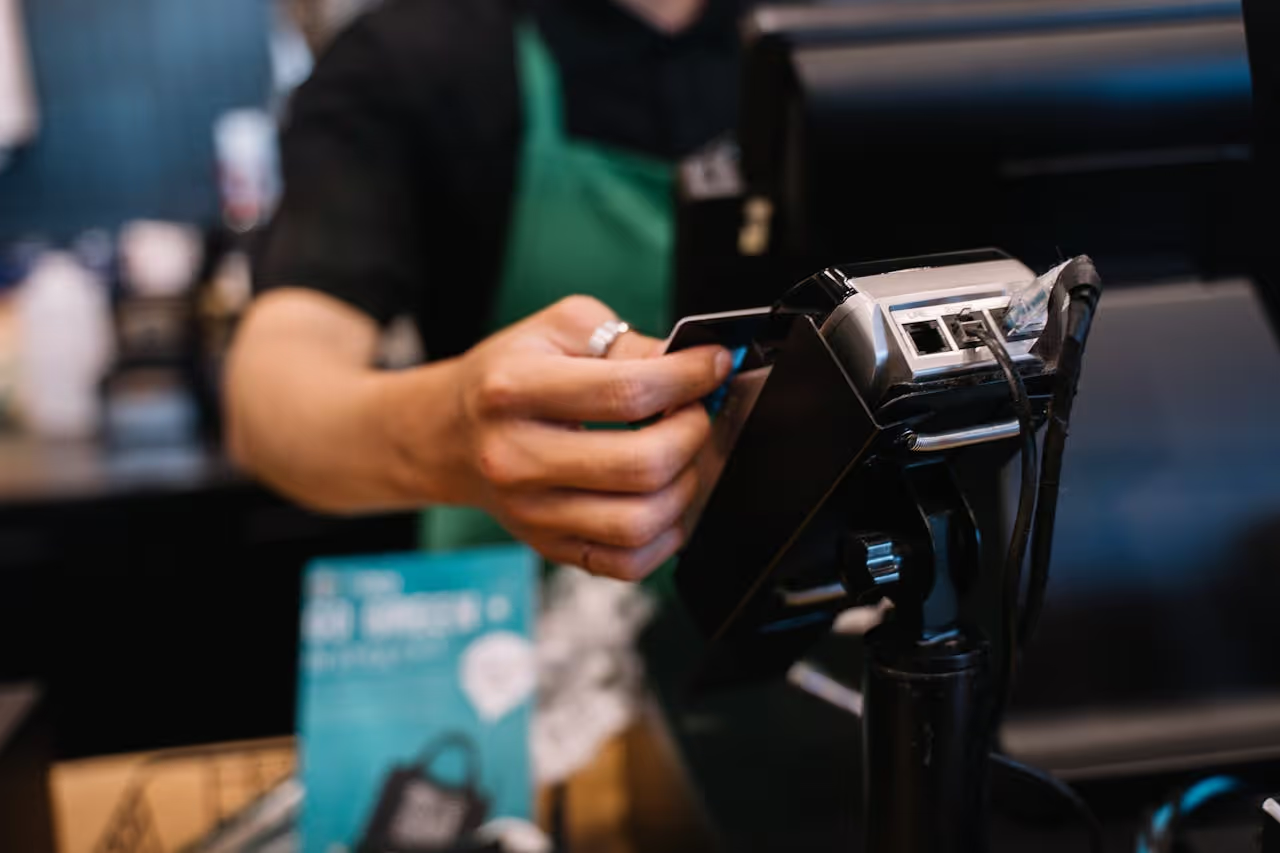
Modern cloud-based barbershop POS systems require active network connectivity to execute real-time calendar synchronization and secure remote EMV payment clearing. However, advanced hardware terminals feature offline processing modalities or cellular fallback capabilities (via built-in 4G SIM cards). This infrastructure ensures that if the facility's primary Wi-Fi network suffers a bottleneck, transaction data is safely encrypted and cached, processing the volume immediately upon connection restoration to prevent capital stagnation.