Analyzing the structural governance of a beauty or grooming enterprise requires a clear operational breakdown of professional labor classifications. Choosing between a standard W2 employment framework and alternative 1099 independent operational systems dictates a salon's statutory compliance profile, tax obligations, and macro fiscal stability. Navigating the regulatory boundaries of a booth renter vs independent contractor setup or a salon booth rental vs commission architecture is a critical prerequisite to avoiding severe classification audits. This technical assessment isolates the legal rights, structural overhead allocations, and operational parameters of each commercial salon business model.
A statutory salon employee operates under a formal W2 labor classification, executing services under the direct operational command of the facility operator. Compensation architectures for these practitioners are anchored in guaranteed hourly minimums, fixed salaries, or structured performance commissions managed through the corporate payroll ledger. The salon owner maintains complete behavioral control, legally mandating active operating shifts, setting service price floors, and supplying all technical backbar inventory and equipment assets.
New stylists entering the industry or those who prefer stability and don’t want to handle the responsibilities of running a business.
A dedicated booth renter functions as an autonomous business entity leasing dedicated physical square footage within a host facility. Operating under a 1099 commercial real estate model, these practitioners establish separate micro-enterprises that exist completely detached from the primary salon ledger. The arrangement is governed by a standard lease contract, granting the practitioner absolute ownership over client databases, scheduling velocity, and transactional revenue processing.
In most cases, booth renters are required to obtain a business license as they operate as independent businesses. The exact requirements depend on local and state laws, so it’s important to check with your local licensing authority.
Experienced stylists who are ready to take the next step in their career and operate independently without the overhead of owning a full salon.
The Independent Contractor Model
An independent contractor hair stylist operates as an unattached freelance entity retained by facilities or corporate clients to execute specific technical projects or temporary service workflows. The primary structural distinction in the booth renter vs independent contractor matrix centers on physical property leasing: independent contractors bypass fixed station monthly rents, instead utilizing per-diem arrangements, mobile treatment structures, or multi-location flat-fee configurations.
Stylists who enjoy freelancing, working in multiple locations, or specializing in mobile services.
Two of the most common models for salon owners are booth rentals and commission-based salons. Understanding these setups can help salon owners choose the right structure for their business while also helping stylists decide which model aligns with their career goals.
Optimizing facility profitability and career trajectory requires strict alignment with a mathematically verified labor configuration. Whether an enterprise deploys a fixed booth rent vs commission framework or manages decentralized freelance talent, maintaining transparent, legally verified contracts is a non-negotiable operational baseline. Operators must evaluate long-term financial scaling metrics, capital expenditure capacities, and regulatory risk thresholds before committing to a structural business format.
A statutory salon employee receives a standard W2 form, with income and payroll taxes automatically withheld by the employer's management ledger. A booth renter operates under a 1099 tax classification, assuming full responsibility for self-employment tax filings, quarterly estimated payments, and business operational write-offs.
Yes. Because a booth renter functions as an autonomous micro-business, they must secure a standalone local business license, an independent tax identification number (EIN), and active professional cosmetology licensing to satisfy regional statutory mandates.
The primary advantage of a booth rental layout is securing predictable, passive commercial rental income independent of stylist sales volume. The primary disadvantage is the total loss of behavioral control over branding consistency, service menu pricing floors, and facility aesthetic alignment.
A commission structure tethers facility revenue directly to stylist execution velocity, capturing a significant percentage (often 40% to 60%) of gross service sales. During high-density booking calendars, this model vastly outperforms flat-rate booth rental returns, though it carries higher overhead risks during off-peak windows.
The fundamental metric during a regulatory audit centers on behavioral and financial control. If a salon owner mandates specific operating shifts, forces a standardized dress code, or routes client credit card transactions through a central ledger, the state will reclassify the 1099 contractor as a W2 employee, triggering severe back-tax penalties.
Yes. True independent contractor status guarantees absolute geographic and scheduling autonomy. Restricting a freelance stylist from executing treatments at alternative facilities or mobile locations violates independent contractor guidelines and implies a statutory employment bond.
In a commission-based business structure, the salon corporation capitalizes and supplies all backbar product lines, equipment, towels, and physical infrastructure assets. In a booth rental framework, the independent contractor must independently source and fund 100% of their operational supplies.
Legally, both function as independent 1099 business operations. Structurally, a traditional booth rental involves leasing an open-air station chair within a shared facility floor, while a salon suite grants the practitioner a completely enclosed, lockable private room with higher baseline overhead requirements.
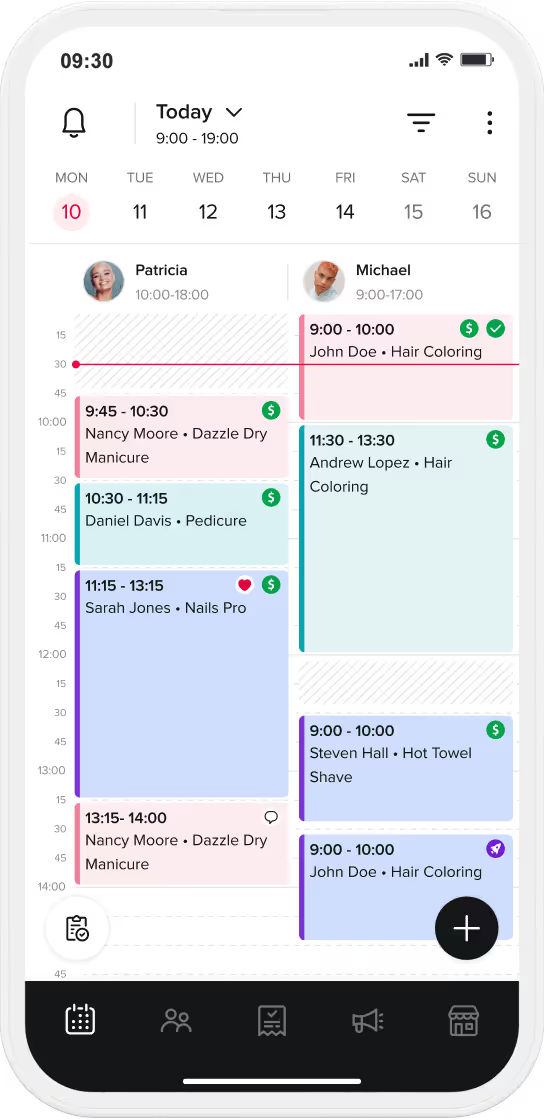
Utilizing separate booking and point-of-sale platforms like Booksy Biz ensures total data isolation. Commingling consumer client records, financial booking histories, or credit card processing metrics with the host salon’s primary central ledger compromises the contractor’s legal independence.
Misclassification triggers intense financial remediation metrics from the IRS and state labor departments. Salon owners face retroactive liability for unpaid federal insurance contributions (FICA), federal unemployment taxes (FUTA), worker’s compensation insurance gaps, and substantial civil financial penalties.