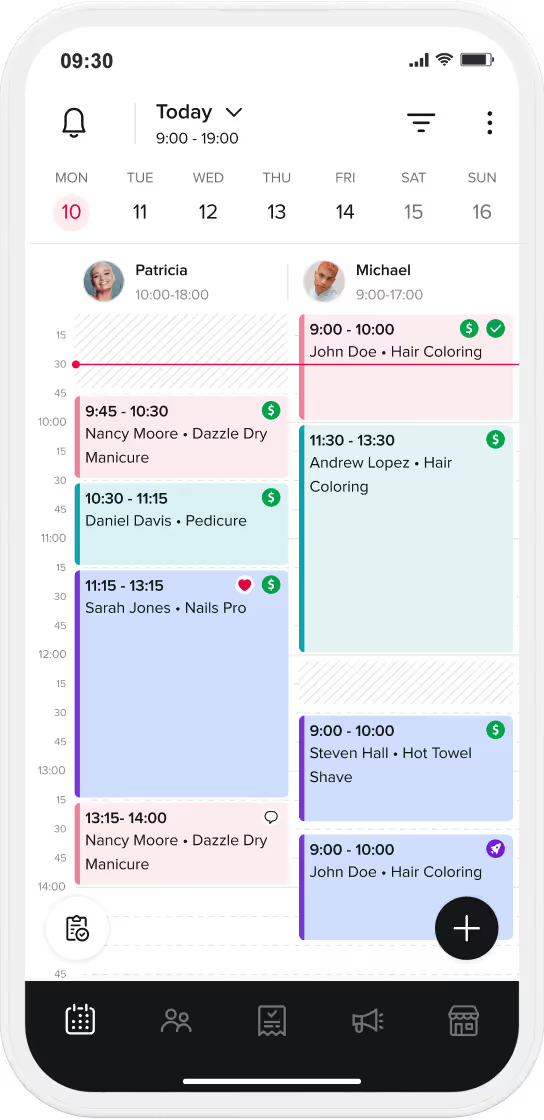
Managing retail stock, color tubes, and backbar treatments manually using paper logbooks or spreadsheets often leads to untracked wastage, stockouts, and administrative bottlenecks. Modern salon inventory management software solves this problem by connecting your point-of-sale (POS) checkout and service calendar to a real-time stock ledger.
Whether you run a high-volume hair salon, a growing spa, or an independent beauty practice, implementing automated inventory tools protects your profit margins and streamlines vendor reordering.
This guide evaluates the top salon inventory software systems in 2026 to help you optimize stock levels and prevent inventory shrinkage.
TL;DR: Quick Summary
- Automated POS Deductions: Dedicated salon software automatically adjusts stock levels at client checkout, eliminating manual product tallying.
- Backbar vs. Retail Tracking: Purpose-built hair salon inventory software tracks both retail sales and professional backbar consumption (e.g., hair color, developer, treatment serums).
- Shrinkage Reduction: Real-time stock auditing and low-stock alerts prevent product waste, unauthorized usage, and stockouts.
- The Integrated Advantage: All-in-one platforms like Booksy Biz connect inventory management directly to appointment scheduling, client records, and payment processing for unified operational oversight.
- System Diversity: Software choices range from simple checkout-linked inventory tools (e.g., Square) to advanced retail auditing platforms (e.g., Phorest) and multi-staff management systems (e.g., Vagaro).
Comparative Synthesis: Leading Salon Inventory Software (2026)
Note: All product capabilities and comparison details are based on standardized software features verified as of July 2026.
| Software Platform |
Primary Target Segment |
Core Inventory Capabilities |
Pricing & Value Model |
| Booksy Biz |
Hair Salons, Estheticians, Multi-Staff Salons & Solo Pros |
Automated POS retail deductions, backbar stock tracking, staff usage analytics, low-stock alerts, integrated booking & POS |
Flat monthly subscription + Native POS options |
| Square Appointments |
Solo Professionals & Booth Renters |
Barcode scanning support, basic stock count tracking, automated low-stock email alerts |
Free plan available; Paid tiers for multi-staff teams |
| GlossGenius |
Independent Estheticians & Solo Practitioners |
Custom visual catalog, integrated card reader checkout, basic inventory adjustment logs |
Flat monthly subscription fee |
| Vagaro |
Enterprise Franchises & Large Multi-Location Hubs |
Purchase order creation, multi-vendor contact management, service product consumption logs |
Tiered pricing scale based on staff count |
| Phorest |
High-Volume Retail Salons & Enterprise Chains |
Mobile barcode stock-take auditing, detailed stock shrinkage reports, automated supplier reorder triggers |
Custom quote / Enterprise tier |
What to Look for in the Best Salon Inventory Software
When assessing platforms for hair salons, estheticians, or multi-staff beauty businesses, prioritize these integrated features:
1. Automated Point-of-Sale (POS) Stock Deductions
Manual tallying after hours is inefficient and leaves too much room for error. Your system should automatically deduct retail inventory from your stock ledger the moment a transaction is processed at checkout.
- With Booksy Biz: Retail items scanned or added at checkout update your inventory ledger instantly, ensuring your stock levels stay accurate across all connected devices.
2. Professional Backbar & Consumption Tracking
Hair salons and esthetics practices consume significant stock internally during technical services (e.g., hair color, developers, lash adhesive, facial serums). Purpose-built hair salon inventory software distinguishes between retail products meant for resale and backbar supplies used in appointments.
- With Booksy Biz: Easily mark products for professional backbar use, tracking internal consumption separately from retail stock to maintain accurate profit margins on technical services.
3. Low-Stock Alerts & Vendor Reordering
Running out of high-demand retail items or essential backbar supplies interrupts client services and causes revenue loss. Automated platforms trigger notifications when stock drops below predefined minimum thresholds.
- With Booksy Biz: Receive automated low-stock warnings, enabling you to restock popular retail products and backbar inventory before stockouts occur.
4. Staff & Usage Auditing
Uncontrolled product usage during services increases cost of goods sold (COGS). Software that logs stock adjustments provides operational transparency across all booth renters, stylists, and treatment rooms.
- With Booksy Biz: Monitor product sales performance and usage trends by staff member, helping identify top sellers and optimize product allocation.
5. Sales & Margin Analytics
Understanding product turnover velocity enables data-driven purchasing decisions. Dedicated beauty salon inventory software provides detailed reporting on product margins, revenue per product line, and slow-moving items.
- With Booksy Biz: Access centralized reports detailing total product sales, gross margins, and inventory value alongside your appointment revenue.
The Best Salon Inventory Management Software Solutions
Use this overview of leading salon management and inventory software options, detailing their primary features and target operational segments.
1. Booksy Biz
- Best For: Multi-staff hair salons, busy estheticians, barbershops, booth renters, and growing beauty businesses seeking an all-in-one management, checkout, and inventory control platform.
- Key Inventory Features: Real-time retail inventory deduction at checkout, backbar consumption tracking, staff usage analytics, automated low-stock notifications, barcode scanning compatibility, and unified product sales reporting.
- Why It Stands Out: Booksy Biz seamlessly connects inventory tracking directly to your appointment calendar, team schedules, POS checkout, and client CRM. Stock updates automatically in real time across all staff devices as services and retail items are rung up, providing complete operational transparency for both solo operators and multi-staff teams.
2. Square Appointments
- Best For: Solo stylists and retail-focused studios requiring basic product catalog management tied to flat-rate card processing.
- Key Inventory Features: Digital catalog management, barcode scanning support, downloadable inventory level reports, and automated low-stock email alerts.
- Considerations: Advanced stock management tools, vendor purchase order management, and detailed cost-of-goods tracking require upgrading to paid Square retail plans.
3. Vagaro
- Best For: Full-service multi-staff salons, large spas, and wellness centers needing structured purchasing workflows.
- Key Inventory Features: Purchase order creation, multi-vendor contact tracking, automated product reordering alerts, and service product usage tracking.
- Considerations: Setup parameters and multi-tier feature configurations can present a higher learning curve for smaller teams.
4. Phorest
- Best For: High-volume hair salons and established multi-location businesses prioritizing detailed retail auditing.
- Key Inventory Features: Mobile barcode scanning for stock counts, separate retail and professional backbar stock tracking, purchase order generation, and multi-branch stock transfers.
- Considerations: System architecture and pricing structures are oriented toward larger, established salon environments.
5. Timely
- Best For: Appointment-based salons and aesthetic clinics looking for straightforward inventory tracking linked to client bookings.
- Key Inventory Features: Product usage logging per appointment, stock adjustment categorization (retail vs. backbar/waste), and supplier management.
- Considerations: Advanced inventory analytics and automated purchase ordering features may be more limited compared to specialized retail systems.
Why Integrated Salon Software Beats Standalone Inventory Tools
An integrated platform like Booksy Biz unifies your central database infrastructure:
- Real-Time Accuracy: Every retail product sold during appointment checkout automatically updates stock counts instantly across all connected mobile devices and registers.
- Financial Oversight: Product sales revenue, backbar consumption costs, and service earnings are consolidated into a single reporting dashboard.
- Client Personalization: Staff can view past retail purchases directly within client CRM profiles, allowing stylists and estheticians to recommend appropriate home-care products during appointments.
Frequently Asked Questions (FAQ)
What is the difference between backbar inventory and retail inventory in a salon?
Retail inventory consists of products packaged for resale directly to clients for home care (e.g., daily shampoos, retail serums). Backbar inventory consists of professional-grade products consumed internally by staff during service delivery (e.g., hair color, lighteners, developers, facial peels). Dedicated hair salon inventory software tracks these two categories separately to ensure accurate service profit margins.
How does automated salon inventory software increase profitability?
Automated inventory software protects profit margins by reducing product shrinkage, preventing retail stockouts of best-selling items, and identifying slow-moving inventory. By tracking automated deductions at checkout, salon owners maintain optimal reorder points without over-leveraging cash flow in excess stock.
Can hair salons track color formulas and product usage per stylist?
Yes. Modern salon systems allow staff to record technical notes and chemical formulas within client profiles while logging internal backbar product adjustments, providing complete visibility into product consumption by team member.
Why should small salon owners avoid manual spreadsheet inventory tracking?
Manual spreadsheet tracking requires hours of physical counting after business hours and fails to update in real time when products are sold or used. This creates discrepancies between recorded and actual stock, leading to unexpected stockouts or unrecorded product waste.
Methodology & Verification Notice
All product specifications, feature comparisons, and operational details reflected in this guide are based on publicly available service documentation and provider pricing plans as verified in July 2026. Feature availability and software updates may vary over time according to respective vendor terms.