Beauty service licensing exemptions are statutory regulatory provisions established by state cosmetology boards that permit the commercial execution of non-altering, non-chemical enhancement services without holding a full cosmetology or esthetician credential. Understanding exactly what beauty services can be legally performed without a license requires strict differentiation between biological alteration (such as chemical perms or dermal extractions) and surface-level enhancements. While major markets enforce independent frameworks, distinct occupational pathways exist for freelance makeup artistry, natural hair care, and specific dry-styling niches. This operational compliance guide outlines the updated 2026 state-board regulations, liability thresholds, and verification metrics necessary to launch an independent beauty operation legally.
Regulatory Compliance & Legal Disclaimer: The statutory data, licensing thresholds, and exemption parameters articulated in this document are compiled strictly for general occupational guidance and educational infrastructure. Because state cosmetology laws, administrative codes, and municipal ordinances undergo continuous legislative amendments, practitioners hold sole accountability for executing final cross-verification with their respective State Board of Cosmetology or local licensing authority. Booksy disclaims all vicarious liability for operational actions instituted based upon this structural synthesis.
The regulation of beauty services in the United States is primarily handled at the state level. This means that the specific requirements for licensing, as well as the definitions of different cosmetology-related fields, can vary considerably depending on where you operate. Generally, services that involve cutting, coloring, chemically treating, or significantly altering the structure of hair, skin, or nails typically fall under the purview of state licensing boards. These boards are in place to protect public health and safety by ensuring practitioners have met certain standards of education and competency. It's crucial to understand that there is no single national standard for cosmetology licensing. Therefore, while this article provides general guidance, it is absolutely essential to check the specific laws and regulations of your particular state and locality to ensure you are operating legally. Familiarizing yourself with your state's cosmetology board website is the first and most important step.
Services directly impacting the structure or color of hair usually require a cosmetology license or a specialized hair license. However, some basic hair-related services might be permissible without one, depending on your state's regulations:
In many states, shampooing and conditioning hair are often considered entry-level tasks that may not require a full cosmetology license. For example, in Maryland, while a full cosmetology license is needed for styling, cutting, and chemical treatments, some salons may hire shampoo assistants who might need a specific registration or permit rather than a full license. However, the specifics can vary, and it's crucial to check the Maryland Board of Cosmetologists for the exact rules.
Licensing boundaries for hair styling strictly depend on chemical utilization. Non-chemical styling—including mechanical blowouts, temporary hot-tool curling, and surface-level updos that exclude structural alterations—is legally categorized as an exempt service in specific state jurisdictions, whereas permanent chemical restructuring universally mandates formal licensure. However, if the styling involves chemical products, permanent changes, or intricate cutting or shaping, a cosmetology license is certainly required. Always check your state's definition of cosmetology practices. For instance, Texas defines cosmetology broadly, so even some styling services might fall under their licensing requirements.
Regulations surrounding braiding and natural hair care services have evolved in many states. Recognizing that these practices often don't involve the same chemical treatments as traditional cosmetology, some states like Florida and Georgia have created separate, less extensive licenses specifically for braiders or have even exempted certain natural hair care services from traditional cosmetology licensing requirements altogether. This can include services like braiding, cornrows, twisting, and extensions that don't involve cutting or coloring the client's natural hair. However, licensing or registration may still be required, so it's vital to research your state's specific laws regarding natural hair care. For example, while Texas has a separate braiding license, it still requires registration and adherence to specific health and safety standards.
The installation and superficial styling of pre-fabricated wigs remain exempt from cosmetology licensing frameworks across multiple jurisdictions, provided the process excludes structural cutting, permanent color oxidation, or alterations to the client's natural hair. However, if the service includes cutting or chemically altering the wig while it's on the client, a cosmetology license is usually required. Regulatory frameworks categorize the application of non-permanent hairpieces under alternative safety standards; however, practitioners must verify active state board classifications to ensure local compliance.
Generally, selling retail hair care products does not require a cosmetology license. You can typically operate a retail business selling shampoos, conditioners, styling aids, and other hair-related products without holding a professional license. However, if you are providing advice or recommendations that go beyond basic product descriptions and delve into professional styling or treatment advice, having a cosmetology license might be necessary, depending on state regulations regarding the practice of cosmetology. You can typically shop at stores like Sally Beauty for retail products without a professional license in most states, but access to professional-grade products at distributors like SalonCentric or to purchase brands like Redken Shades EQ or Pravana often requires a professional license to ensure proper and safe use.
The application and styling of wigs and hair extensions can fall into a gray area depending on the techniques involved and your state's specific definitions of cosmetology practices:
As mentioned earlier, simply placing and styling a pre-made wig that doesn't require cutting or coloring might not necessitate a full cosmetology license in some states. However, the moment you begin to cut, shape, or chemically treat the wig while it is being worn, you are likely engaging in practices that require a cosmetology license. Some states, like Florida, may have specific regulations regarding wig services, so it's important to check their board's guidelines.
The application of hair extensions, whether through sewing, taping, bonding, or other methods, often falls under the scope of cosmetology and typically requires a cosmetology license in most states. This is because these services involve altering the appearance and potentially the integrity of the client's natural hair. However, as with braiding, some states like Texas and Florida might have specific, less comprehensive licenses for hair extension specialists. It's crucial to investigate the specific licensing requirements for hair extensions in your state. For example, California generally requires a cosmetology license to perform hair extension services.
Similar to selling other hair products, selling wigs and hair extensions at a retail level generally does not require a cosmetology license. However, if you are also providing styling or application services as part of the sale, the licensing requirements for those services will apply.
Due to the unique techniques and products involved, many states have recognized braiding and natural hair care as distinct practices from traditional cosmetology:
A growing number of states have created separate licenses specifically for hair braiders that have less stringent educational requirements than full cosmetology licenses. For example, Arizona has a specific braiding certificate. Other states, like Ohio, may have exemptions for braiding as long as certain conditions are met, such as not using chemicals. It's essential to research the specific regulations in your state.
States that offer braiding licenses usually define the specific services that can be performed under this license. These often include various braiding techniques (cornrows, box braids, etc.), extensions using braiding techniques, and sometimes weaving, as long as no chemicals or cutting of the client's natural hair is involved. The scope of these licenses can vary; for instance, a braiding license in Maryland will have a defined set of allowed services.
In states with exemptions for natural hair care, individuals may be able to offer services like braiding, twisting, loc maintenance (without chemical treatments), and certain types of extensions without holding a traditional cosmetology license. However, it's critical to understand the exact scope of these exemptions in your state, as there may still be registration or specific requirements to follow.
Remember, the information provided here is a general overview, and state laws are subject to change. Always consult your state's cosmetology board or relevant licensing authority for the most accurate and up-to-date information regarding which beauty services you can offer without a license and what alternative requirements may exist.
Because cosmetology regulations are governed strictly at the state level, practicing beauty professionals must cross-reference service scopes with localized state board mandates. Below is the verified compliance framework for non-licensed beauty service provisions across the top five most searched state jurisdictions:
Esthetics focuses on the health and beauty of the skin. While many skincare treatments require an esthetician license, some basic services and advice might not, depending on the state:
Generally, proThe retail distribution of over-the-counter skincare products and the provision of non-diagnostic product guidance do not trigger esthetician licensing requirements. Practitioners are legally permitted to communicate standard product indications aligned with generalized epidermal classifications. However, diagnosing skin conditions or recommending treatments that go beyond basic product application typically falls under the scope of licensed esthetics. Selling professional-grade skincare products might also have restrictions and could require a professional account that sometimes necessitates a license.
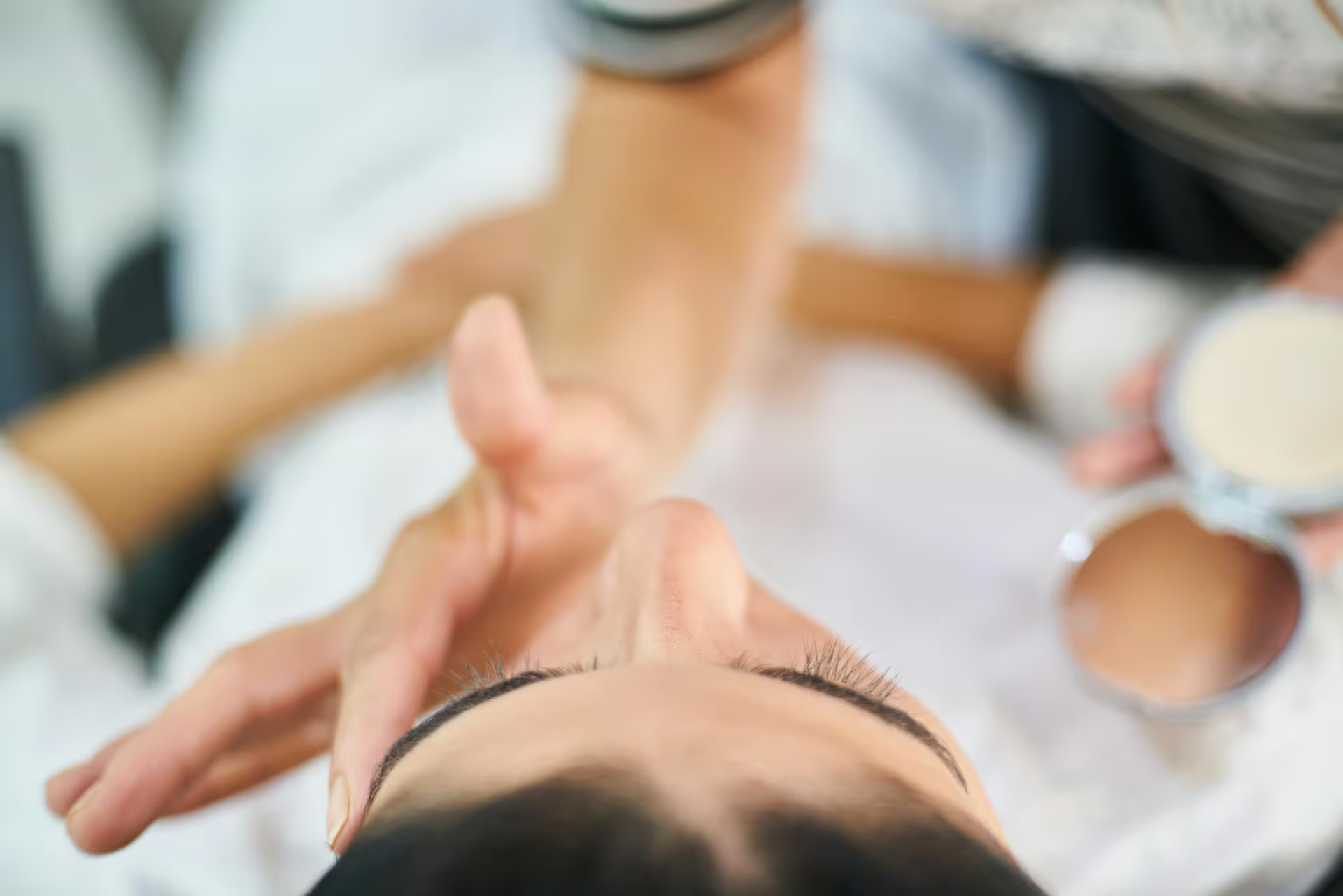
State board mandates establish strict thresholds for dermal manipulation. Non-invasive surface techniques that exclude deep muscle tissue manipulation or automated mechanical modalities operate under specific licensing exemptions in selected states. However, services like facials involving extractions, chemical peels, microdermabrasion, or the use of electrical modalities almost universally require an esthetician license. For example, performing a basic facial for personal enjoyment on friends might be different from offering it as a paid service in a business setting.
Epilation and hair removal methodologies, including eyebrow waxing, are legally classified within the regulated scope of esthetics and cosmetology, enforcing mandatory state licensure across the vast majority of jurisdictions. For instance, in Florida, waxing generally requires a cosmetology or specialty license. Conversely, specific state boards grant statutory exemptions for non-chemical, mechanical epilation techniques such as threading, requiring practitioners to reference local regulatory codes for distinct regional variations.
In many states, applying makeup for cosmetic purposes (e.g., for events, photoshoots) does not require an esthetician license. The focus here is on the artistic application of makeup rather than treating the skin. However, if your makeup services include skincare treatments or addressing skin conditions, an esthetician license might be necessary. For example, a freelance makeup artist in Texas can typically operate without an esthetician license as long as they are solely applying makeup.
The licensing of makeup artists varies across the United States:
As mentioned, many states, including California and New York, generally do not require a cosmetology or esthetician license solely for applying makeup for photographic, theatrical, or special event purposes. The focus is on artistic skill rather than skin treatment.
While artistic cosmetic application operates outside standard licensing mandates in specific territories, distinct state board regulations govern freelance makeup operations conducted within licensed salon facilities. It's always best to check with your state's cosmetology board to understand any specific rules that might apply to freelance work. For example, while Texas doesn't mandate a license for freelance makeup artists, they must often adhere to certain sanitation and safety standards if working in a licensed facility.
Similar to skincare and hair products, selling retail makeup products generally does not require a cosmetology or esthetician license. However, providing in-depth consultations that involve skincare advice might blur the lines depending on state regulations. Selling professional-grade makeup lines might also require a professional account, which sometimes necessitates a license.
Nail care services that involve significant manipulation or potential harm to the nails and surrounding skin usually require a nail technician license:
Although superficial nail polishing and non-therapeutic extremity massage exist in varying regulatory categories, performing manicures and pedicures for commercial compensation remains a strictly regulated practice under state nail technician frameworks. However, performing manicures and pedicures for compensation almost always requires a nail technician license. The use of tools, potential for infection, and work on the skin surrounding the nails necessitate proper training and licensing in most states. Offering a simple polish change to a friend might be different from operating a paid nail service.
Selling retail nail care products generally does not require a specific license. However, similar to other beauty products, providing professional advice or selling professional-grade products might have different implications depending on state regulations.
Lash extensions and brow lamination are specialized services with varying licensing requirements:
The application of individual eyelash extensions is considered a specialized skill that typically requires a cosmetology or esthetician license in most states. This is due to the delicate nature of the eye area and the potential for harm if the service is not performed correctly. Some states, like Georgia, explicitly require a license to perform lash extension services. In California, both licensed cosmetologists and estheticians can typically perform lash extensions, and there's a distinction between "licensed" and "certified" lash techs, with licensing being the legal requirement.
Services like lash lifts and tints also often fall under the scope of licensed esthetics or cosmetology due to the use of chemicals near the eye area. You'll likely need an esthetician or cosmetology license to legally offer these services in most states, including Texas and Arizona, which often have specific regulations for these treatments.
Brow lamination and tinting are newer services, and their regulation is still evolving in some states. However, due to the use of chemicals and potential skin contact, they often fall under the umbrella of esthetics or cosmetology and typically require a license. It's crucial to check your state's specific regulations, as some states like Texas and Arizona are starting to clarify their stance on these services, often requiring an esthetician or cosmetology license.
The requirements for owning a beauty business differ from those for practicing the services:
In many states, you can own a hair salon, nail salon, or spa without personally holding a cosmetology or esthetician license. The focus of ownership is on business management, not necessarily the hands-on provision of services. For example, in California, you can open a hair salon without a cosmetology license yourself, as long as all the individuals providing licensed services within the salon hold the appropriate and current licenses.
While you might not need a personal service license to own a salon, all individuals providing services that require a license within your establishment must be properly licensed. As a salon owner, you are responsible for ensuring that your staff complies with state licensing regulations.
Providing beauty services that require a license without holding the appropriate credentials can lead to serious consequences, including:
It is never worth the risk to practice without the required license. Always prioritize legal compliance.
To ensure compliance:
While the path to offering beauty services might seem complex due to varying state regulations, understanding which services you can provide without a license is a crucial first step. Remember that prioritizing legal compliance is essential for a successful and sustainable career in the beauty industry. Always research your local and state laws, and when in doubt, reach out to your state's cosmetology board for accurate and up-to-date information. By doing so, you can confidently pursue your passion while ensuring you are operating legally and ethically.
Shampooing and conditioning hair operate outside full cosmetology degree mandates in multiple jurisdictions. Selected states, such as Maryland (MD), enforce a distinct shampoo assistant registration, requiring practitioners to complete specialized facility permits rather than standard beauty credentials.
Executing permanent hair extension methodologies—including sew-ins, tape-ins, and bonding—universally requires an active cosmetology license across major markets like California (CA) due to biological hair integrity impacts. Conversely, specific state boards like Texas (TDLR) and Florida (FL) offer compressed, specialized extensionist certificates that separate structural installations from chemical styling.
State regulatory boards in California (CA) and New York (NY) fully exempt event-based, theatrical, and photographic cosmetic makeup application from licensure mandates. This legal exemption remains active provided the freelance practitioner executes zero invasive skin preparation, clinical facials, or chemical epidermal alterations.
Executing manicures, pedicures, or artificial nail applications for commercial compensation strictly mandates a state-issued nail technician or manicurist license. Because the service utilizes mechanical skin-cutting tools and chemical resins, state health boards enforce mandatory training hours and sanitation certifications to block infection risks.
Altering human hair using shears, razors, or clippers strictly requires an active cosmetology or barber license across all 50 US states. Performing structural hair cutting for financial compensation without verified state board credentials triggers immediate administrative fines and legal prosecution.
The retail distribution of wigs, hairpieces, and human hair extensions is entirely legal without a professional beauty license. Regulatory mandates only apply if an unlicensed individual cuts, colors, or chemically processes the wig framework while it is actively fitted onto a live client.
Regulatory boundaries for threading vary by territory; while traditional chemical epilation (waxing) universally mandates esthetic credentials, specific states grant statutory exemptions for mechanical threading. Beauty entrepreneurs must reference local administrative codes to verify if threading is classified as an exempt natural service in their region.