As a salon owner, you possess a distinct competitive edge: you know exactly which hair textures, scalp conditions, and styling frustrations your clients face every single day. Developing your own hair care line allows you to turn your chair-side expertise into recurring retail revenue that continues earning long after an appointment ends. However, launching a branded product line requires balancing product development, regulatory compliance, and supplier negotiations without neglecting your day-to-day salon operations.
Starting a hair product line involves identifying a high-demand hair care niche, selecting between private label and custom manufacturing, testing formulations for quality and safety, and selling directly to your salon clients and online audiences.
Quick Answer: To launch your own hair product line while running a busy salon, begin with a private label manufacturer. This allows you to launch pre-tested, FDA-compliant shampoos, conditioners, or styling oils under your own brand with low initial order minimums ($2,500–$5,000) and zero laboratory overhead.
| Production Model |
Typical Startup Cost |
Time to Market |
Best Fit For |
| Private Label (White Label) |
$2,500 – $5,000 |
4 – 8 Weeks |
Solo stylists & busy salons seeking quick launch |
| Custom Contract Manufacturing |
$10,000 – $30,000+ |
6 – 12 Months |
Established brands with proprietary formula needs |
| In-House Handcrafted |
$1,000 – $3,000 |
2 – 4 Weeks |
Small-batch organic oils & scalp butters |
Step 1: Evaluate the Pros and Cons of Starting a Hair Care Line
Launching a branded product line while running an active styling schedule requires realistic expectations regarding capital and weekly time commitments.
Advantages of Launching Your Own Line
- Higher Retail Margins: Wholesaling major third-party hair brands typically leaves salons with 40% to 50% margins. Selling your own private label line routinely delivers profit margins between 65% and 80%.
- Predictable Non-Service Revenue: Your earning capacity is no longer capped by the number of hours you stand behind the chair. Online reorders and retail add-ons generate revenue even during off-hours.
- Elevated Brand Equity: Carrying custom-branded shampoos, serums, and masks establishes your salon as an authoritative hair care studio in your regional market.
Key Challenges to Consider
- Upfront Capital & MOQs: Most manufacturers require Minimum Order Quantities (MOQs), meaning you must purchase 50 to 500 units per SKU upfront.
- Supply Chain Dependability: You depend on third-party labs for consistency in scent, viscosity, packaging availability, and lead times.
- Marketing & Retailing Effort: Products do not sell themselves sitting quietly on retail shelves; your stylists must actively educate and demonstrate products during appointments.
Step 2: Build a Financial Plan & Startup Budget
Before contacting formulation labs, outline your upfront development and ongoing operational expenses:
- Initial Inventory & Packaging: Budget $2,500 to $5,000 for your initial inventory run, including custom bottles, pumps, and waterproof label printing.
- Product Liability Insurance: Crucial for any topical cosmetic brand. General and product liability insurance protects your personal assets if a client claims an allergic reaction. Annual premiums range from $500 to $1,500.
- Business Formation & Compliance: Register your brand entity (LLC or Corporation) and ensure all product ingredient labels comply with the FDA's Modernization of Cosmetics Regulation Act (MoCRA).
- E-Commerce & Payment Processing: Set up an online storefront using Shopify, WooCommerce, or activate online retail integration directly through your salon management software.
Step 3: Choose Your Initial Product Lineup (Why Starting with Shampoo Works)
A common pitfall is attempting to release a complete 12-piece styling line immediately. Developing too many SKUs fragments your capital and leads to dead inventory. Instead, start with a focused, high-frequency collection of 2 to 3 essential products.
How to Start a Shampoo and Conditioner Line
Daily or weekly cleansing products represent the most reliable entry point. Shampoos and conditioners boast the highest purchase frequency, making them natural retail upsells at the shampoo bowl:
- Core Hydration Shampoo: A sulfate-free, color-safe cleanser suitable for daily use across multiple hair types.
- Targeted Treatment Conditioner: A rich moisture mask or reparative leave-in spray that stylists use during backbar services.
- Hero Finishing Product: A lightweight hair growth oil, thermal heat protectant, or edge control balm that visibly demonstrates immediate results in the mirror.
Step 4: Decide on Your Manufacturing Route (Private Label vs. Custom Formulation)
When determining how to make your own hair product line, you have two primary manufacturing paths:
Option A: Private Label (Recommended for Most Salons)
Private label laboratories maintain vast libraries of pre-tested, cosmetically certified formulas. You choose a proven base formula, select fragrance and active botanical notes, and apply your custom label and branding. This eliminates expensive R&D costs and clinical safety trials, allowing you to launch in weeks rather than months.
Option B: Custom Formulation & Contract Manufacturing
If you have an entirely unique ingredient philosophy or patented complex, contract manufacturing allows a cosmetic chemist to develop a formulation from scratch. However, custom formulation requires stability testing, microbial challenge tests, and minimum orders that often exceed 5,000 to 10,000 units.
Step 5: Rigorous In-Salon Product Testing
Before presenting your product line to paying clients, conduct thorough internal testing. Because your salon services clients with diverse hair densities, porosities, and chemical histories, your chair is the ultimate real-world laboratory.
- Viscosity & Pump Usability: Does the formula dispense cleanly from the bottle with wet hands? Does it clog after repeated use?
- Fragrance & Sensory Appeal: Scent is a primary purchasing driver in hair care. Evaluate client reactions to the scent profile at the washbasin.
- Performance Across Hair Types: Test formulations on virgin, bleached, coarse, and fine hair textures to verify that cleansers do not strip moisture and oils do not weigh hair down.
Step 6: Brand Identity, Packaging, and E-Commerce Setup
Packaging design directly communicates your price tier. Sleek matte bottles, minimal typography, and durable oil-resistant labels convey modern luxury and justify premium salon retail pricing.
Ensure your digital sales ecosystem works seamlessly alongside your physical stations:
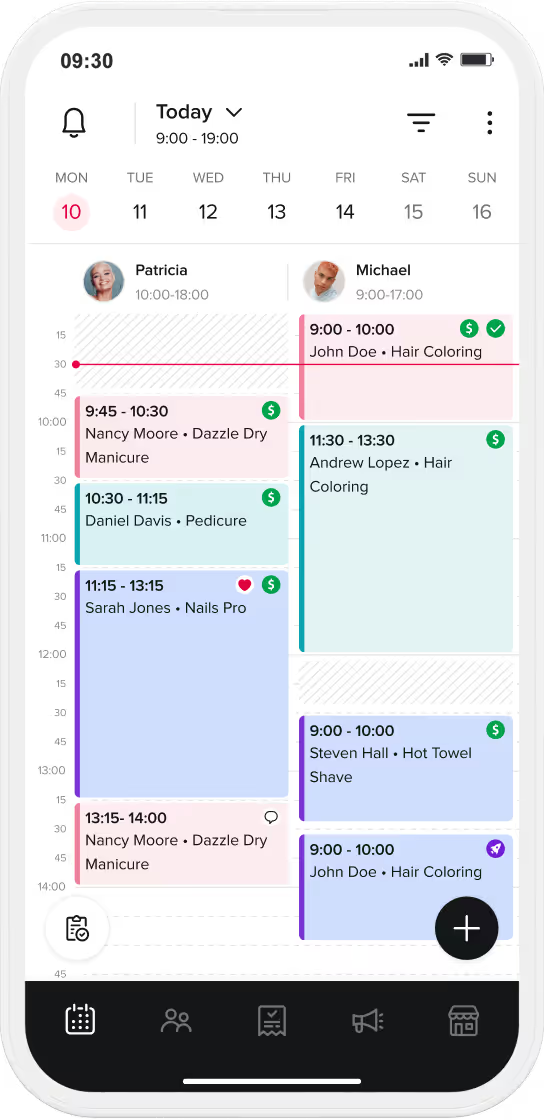
- Booksy Online Retail Integration: List your hair products directly on your Booksy profile. Clients can view product details while scheduling appointments and add home-care products to their checkout ticket directly in the app.
- Standalone E-Commerce Storefront: Build a dedicated storefront on Shopify or WooCommerce to process orders from national customers and social media followers.
- Local & Organic SEO: Publish educational hair care guides on your website targeting regional queries and specific hair care solutions (e.g., "sulfate-free shampoo for blonde balayage").
Step 7: Hair Care Pricing & Profit Margin Matrix
To ensure healthy salon profitability, calculate your unit costs including manufacturing, packaging, shipping, and payment processing fees before setting retail prices.
| Product Category |
Average Production Cost |
Recommended Retail Price |
Estimated Profit Margin |
| Daily Clarifying Shampoo (8 oz) |
$4.50 – $6.50 |
$22.00 – $28.00 |
72% – 78% |
| Deep Moisture Conditioner (8 oz) |
$5.00 – $7.20 |
$24.00 – $30.00 |
74% – 79% |
| Nourishing Hair & Scalp Oil (2 oz) |
$3.80 – $5.50 |
$26.00 – $34.00 |
80% – 84% |
| Thermal Heat Protectant Spray (6 oz) |
$4.20 – $6.00 |
$22.00 – $26.00 |
75% – 80% |
Step 8: Turn Your Stylists into Natural Brand Advocates
Your salon chair is your most powerful sales engine. Rather than using pushy sales tactics, teach your stylists to integrate product education organically into the appointment experience:
- Backbar Demonstration: Wash, condition, and style every client exclusively with your branded line. Describe the ingredients and benefits out loud while performing the service.
- Prescription Home-Care Regimens: At checkout, stylists should provide clients with personalized product recommendations to maintain their cut and color at home.
- Stylist Retail Incentives: Implement retail commissions (typically 10% to 15%) so team members are motivated to promote and explain the line during consultations.
Streamline Your Salon Retail with Booksy
Scaling a retail line alongside an active client calendar requires automated management tools. Booksy Biz simplifies product sales by consolidating appointment scheduling, inventory management, and client checkout into one intuitive platform.
Track retail stock levels in real time, view which products individual clients purchase, and allow clients to purchase home-care products directly through their Booksy booking app.
Ready to expand your salon revenue with custom retail? Start your free 14-day Booksy Biz trial today.
Frequently Asked Questions (FAQ)
How much does it cost to start your own hair care product line?
Starting a private label hair care line typically costs between $2,500 and $5,000 for an initial batch of 2 to 3 core products, including packaging, liability insurance, and basic branding. Custom chemical formulations developed from scratch generally require $10,000 to $30,000 or more.
Do I need a cosmetic chemist to create a hair product line?
No. By partnering with an established private label manufacturer, you can utilize existing, safety-tested cosmetic formulations that are already certified and compliant, bypassing the need to hire an independent cosmetic chemist.
What is the easiest hair care product to start selling first?
Shampoos, conditioners, and daily scalp oils are the easiest entry-level products. They feature high everyday consumption rates, fit universally into appointment wash routines, and offer straightforward retail demonstrations at the chair.
Do I need FDA approval to sell hair products?
The FDA does not approve cosmetic products before they go to market, with the exception of color additives. However, under the Modernization of Cosmetics Regulation Act (MoCRA), cosmetic facilities must be registered, ingredients must be fully safe, and all product labels must adhere strictly to federal packaging and ingredient disclosure regulations.
How can I sell hair products to salon clients online?
You can sell hair products by integrating retail items directly into your Booksy booking profile for convenient client add-ons at checkout, or by launching an e-commerce storefront on platforms like Shopify paired with social media commerce on Instagram and TikTok Shops.