How to Start a Home-Based Esthetician Business: Setup, Zoning & Licensing Rules
by
Booksy Team
7
minutes read
December 20, 2025
Table of Content
A home-based esthetician business is a licensed solo skincare practice operated within a dedicated residential studio space that provides professional facial treatments, chemical peels, and skin therapy while minimizing commercial real estate overhead.
Autoclave or UV sterilizer, Barbicide jars, disinfectant wipes, disposable gloves.
$150 - $300
$40 - $70
Professional Treatment Devices
Towel warmer steamer combo, wax warmer, high-frequency machine, microdermabrasion unit.
$800 - $1,500
$50 - $100 (Maintenance)
Professional Skincare Backbar
Cleansers, exfoliant enzymes, chemical peels, serums, masques, SPF moisturizers.
$600 - $1,200
$150 - $300 (Restock)
Licensing, Legal & Insurance
Home occupation permit, business license, LLC filing, esthetician liability insurance.
$300 - $650
$35 - $60 (Insurance premium)
TL;DR: Quick Summary on Home-Based Esthetician Studios
Minimize Initial Overhead: Starting a home skincare studio eliminates commercial rent, reducing upfront startup costs to between $2,345 and $4,450 total.
Verify Zoning Compliance: Local residential regulations require obtaining a Home Occupation Permit and verifying municipal zoning codes before accepting clients.
Design a Dedicated Space: Client rooms require closed-door privacy, dedicated electrical outlets, sink accessibility, and climate controls.
Secure Liability Protection: Operating at home mandates carrying professional esthetician liability insurance and registering a formal business entity (LLC).
Automate Client Management: Deploying digital scheduling tools eliminates phone coordination and manages client records effortlessly.
1. Financial Evaluation: Benefits, Costs, and Risk Metrics
Evaluating startup costs and profit margins clarifies why launching a residential facial studio provides high financial return with low operational risk.
Profit Margins and Reduced Operational Risks
Operating a skincare practice from a home studio increases profit margins by eliminating commercial lease obligations. Commercial spa rentals average $1,200 to $3,500 monthly in fixed rent. Retaining full control over pricing and client volume allows home estheticians to achieve net profit margins exceeding 65% to 80% per service.
Upfront Equipment and Supply Capital Calculations
Establishing a professional home treatment room requires purchasing essential esthetic tools, sanitary equipment, and professional-grade skincare backbar inventory:
Basic Studio Package ($495 - $800): Facial treatment table, ergonomic stool, magnifying LED lamp, and supply cart.
Specialized Esthetic Machinery ($800 - $1,500): Facial steamer, towel warmer cabinet, microdermabrasion unit, and LED light therapy panel.
Initial Skincare Backbar Inventory ($600 - $1,200): Professional cleansing gels, chemical exfoliants, treatment masques, and finishing creams.
2. Licensing, Zoning Laws, and Room Transformation Standards
Operating a residential skincare studio requires verifying municipal zoning ordinances, securing professional esthetic licenses, and configuring a dedicated treatment space to meet state board sanitary compliance.
Compliance Area
Regulatory Requirement Details
Issuing Authority
Compliance Goal
Municipal Zoning & Permits
Home Occupation Permit verifying residential business operation permissions and client traffic limits.
City / County Zoning Board
Prevents local residential land-use violations and fines.
Esthetic Professional License
Active practitioner license and residential establishment permit for skincare services.
State Board of Cosmetology
Ensures legal authority to perform invasive facial treatments.
Business Entity & Taxes
Registering a Limited Liability Company (LLC), obtaining an Employer Identification Number (EIN), and Sales Tax ID.
Secretary of State & IRS
Separates personal assets and ensures tax reporting compliance.
Professional Liability Insurance
Esthetician malpractice coverage ($1M/$3M limits) combined with general premises liability policy.
Insurance Broker / ASCP
Protects against treatment burn claims and client slip-and-falls.
Sanitation & Water Access
Hot and cold running water sink access within or adjacent to treatment room; closed storage for sterile tools.
State Health Department
Maintains hospital-grade infection control standards.
Navigating Municipal Zoning Laws and Home Occupation Permits
Operating legally mandates verifying local residential zoning codes prior to accepting commercial clients. Municipalities enforce Home Occupation Permits to regulate neighborhood parking, sign dimensions, and daily client volume. Renting residential property requires securing written landlord consent to avoid lease termination. Compare residential rules with commercial facility standards in our complete guide to opening a spa.
Converting Residential Space into a Professional Treatment Room
Creating a relaxing facial environment mandates isolating the service area entirely from household living quarters:
Privacy and Isolation: A dedicated closed-door room prevents family member interruptions and maintains client confidentiality.
Executing a structured launch strategy ensures legal compliance, streamlines financial budgeting, and establishes a steady client pipeline for residential skincare practices.
8 Essential Steps to Launching an At-Home Facial Studio
Register the Business Entity: Establish a Limited Liability Company (LLC) or Sole Proprietorship and register for an Employer Identification Number (EIN) with the IRS.
Secure Local Permits and Zoning Approval: File a Home Occupation Permit application with city authorities and confirm residential zoning allowances.
Select an Identifiable Brand Name: Choose a memorable, search-optimized business name. Explore curated naming strategies in our complete guide to esthetician business name ideas.
Establish a Dedicated Business Account: Open a business checking account to separate commercial transactions from personal finances.
Acquire Equipment and Backbar Products: Purchase facial tables, sterilizers, steamers, and professional-grade wholesale skincare inventory.
Configure the Treatment Environment: Assemble equipment, establish sanitation stations, verify climate controls, and set ambient lighting.
Set Up Digital Scheduling and Payments: Deploy online booking software to automate client appointments, collect deposits, and process card payments.
Launch Local Marketing Campaigns: Publish business listings across Google, social media platforms, and local directories to attract initial clientele.
4. Local Client Acquisition and Digital Marketing Matrix
Attracting high-value clients to a home studio without storefront foot traffic requires leveraging local search engine optimization, directory listings, and targeted social media marketing.
Marketing Channel
Strategic Implementation Tactic
Target Client Audience
Conversion ROI Impact
Google Business Profile & Local SEO
Optimize local business categories, collect verified client reviews, and embed an online booking link.
Local searchers ("facial near me")
Captures high-intent local booking demand directly.
Instagram & Social Video
Publish before-and-after skin treatment results, studio tour videos, and client educational Reels.
Visual skincare enthusiasts
Builds brand trust and showcases treatment quality.
Automated Referral Programs
Reward existing clients with $15 treatment credits for every new client referred to your studio.
Send automated re-engagement messages 30 days post-service with personalized booking offers.
Lapsed existing clients
Maximizes client lifetime value and rebooking rates.
Building Local Visibility Without Storefront Foot Traffic
Attracting consistent bookings requires optimizing digital local search profiles and deploying structured promotional campaigns. Claiming local business directory listings, maintaining active social media profiles, and collecting verified client reviews establishes market presence and drives new appointment traffic.
5. Streamlining Home Studio Operations with Booksy Biz
Managing a home skincare studio requires integrating automated appointment scheduling software to streamline client booking, eliminate manual phone coordination, and secure revenue.
Automating Client Bookings and Deposit Collection
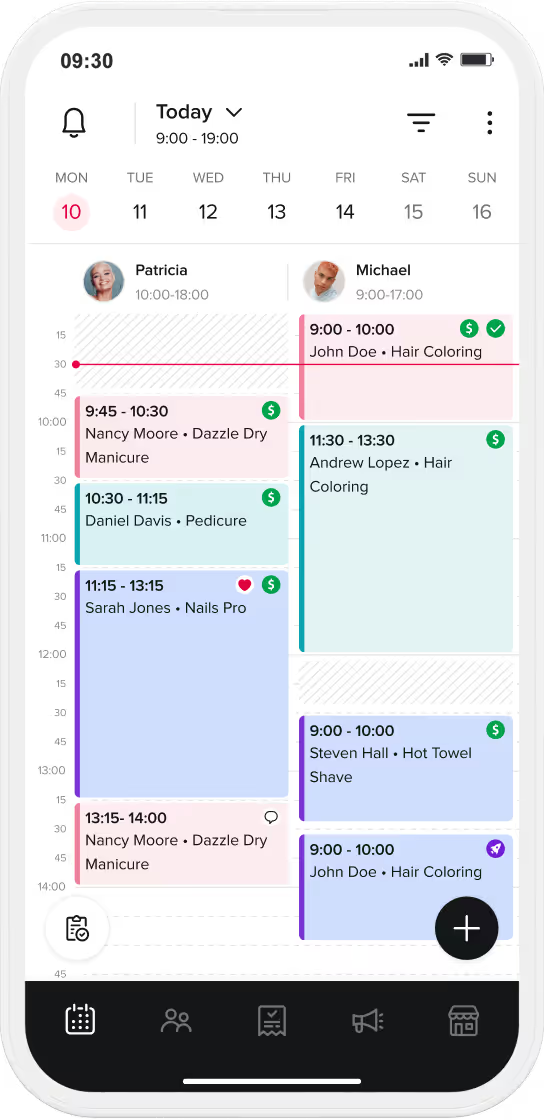
Relying on manual text messages or phone calls to manage client scheduling disrupts treatment sessions and creates schedule gaps. Deploying dedicated beauty pros software within Booksy Biz enables solo estheticians to accept appointments 24/7, collect non-refundable booking deposits, and enforce cancellation policies automatically.
Managing Client Intake Records and Automated Reminders
Maintaining accurate skincare history records and consent forms ensures safe treatment execution. Digital spa management tools store client skin profiles, allergy records, and treatment notes securely while sending automated SMS reminders 24 hours prior to appointment times to eliminate no-shows.
Frequently Asked Questions About Home-Based Esthetician Businesses
Can an esthetician legally operate a facial business from home?
Yes, an esthetician can legally operate from home by obtaining a Home Occupation Permit, securing a state esthetic establishment license, and complying with local residential zoning laws.
How much does it cost to start a home-based esthetician business?
Starting a residential skincare studio requires an average initial investment of $2,345 to $4,450 covering facial tables, sterilizers, steamers, backbar inventory, and licenses.
What room requirements are needed for a home facial studio?
A home treatment room requires a dedicated closed-door space, multi-outlet electrical surge protection, climate control, and accessible hot and cold running water.
Do home estheticians need professional liability insurance?
Yes, home estheticians mandate carrying professional liability and general premises insurance with minimum coverage limits of $1 million per occurrence.
How do home-based estheticians attract new clients without foot traffic?
Home estheticians acquire clients by optimizing Google Business Profiles for local search, publishing treatment videos on social media, and utilizing automated referral incentives.