Staffing and professional career development are critical to managing your barbershop. The relationship between the barber and the client is your most valuable asset and the primary driver of revenue in your shop.
In 2026, managing a team goes beyond simply filling chairs; it requires a sophisticated strategy for recruitment, performance tracking, and career pathing. Successful shop owners recognize that a barber’s professional journey from apprentice to master must be supported by a culture of growth, fair payment models, and the right management technology to ensure transparency and stability.
To scale a brand in a competitive market, you must move away from handshake agreements toward a structured talent management framework. This means providing data-driven performance reviews, clear commission structures, and continuous education programs that keep your team at the forefront of grooming trends.
By integrating barber software to handle complex payroll and KPI tracking, you remove the friction that often leads to staff turnover. This comprehensive guide serves as your roadmap for building a high-performance team, protecting your business from talent drain, and fostering a professional environment where top-tier barbers can thrive for the long term.
Building the Foundation: Defining Your Shop’s Culture
Before you post a job opening, you must define what it means to work at your establishment. Culture is not just the music you play or the decor on the walls; it is the operational standard and the shared values of the team. A strong culture acts as a natural filter—attracting high-performers while repelling those who don't fit your professional ethos.
Culture as a Recruitment Tool: Why Top Barbers Choose "Vibe" Over Commission
The most talented barbers in the industry often prioritize their working environment over a 5% difference in commission. Top-tier talent looks for:
- Professionalism: Organized systems, clean workstations, and zero-drama environments.
- Brand Authority: A shop that invests in its own marketing makes it easier for a barber to fill their book.
- Technological Ease: Barbers want to work in shops where integrated software handles their schedule and commissions flawlessly, allowing them to focus on the craft rather than the math.
Defining Roles: Creating a Professional Ladder
One of the primary reasons barbers leave shops is a sense that there are no opportunities for growth. By creating a structured hierarchy, you give your team a career instead of just a job.
- Apprentice/Junior: Focus on basics, shop maintenance, and building a foundation.
- Senior Barber: Consistent performers with high retention rates and a deep understanding of the shop’s service standards.
- Master Barber / Creative Director: Leaders who mentor others, set the creative tone, and command premium pricing.
The Legal Framework: Employment Contracts vs. Booth Rental
Protecting your business starts with the right legal structure. In 2026, compliance is key to avoiding costly audits and disputes.
- W2 / Employment Model: Offers the owner the most control over branding, schedule, and service quality. This is the gold standard for shops building a specific "brand experience."
- 1099 / Booth Rental: The barber is an independent contractor. While this reduces your tax burden and management overhead, it limits your control over how the business is represented and how the software is utilized.
- The Non-Compete & Data Protection: Regardless of the model, your contracts should clearly state that the client database (managed within your software) is a company asset. This prevents a departing barber from "poaching" your entire revenue stream when they move on.
Strategic Hiring: How to Attract and Vet Top Talent
In 2026, the best barbers aren't looking for jobs through generic listings; they are looking for professional homes that align with their personal brand. Hiring becomes strategic when you move beyond filling a chair and toward talent acquisition. You need a process that filters for technical skill, communication style, and cultural alignment before a barber ever touches a client’s hair.
Writing the Perfect Job Description: Attracting Professionals
A generic "Barber Wanted" ad attracts generic results. To attract high-level talent, your job description must sell the opportunity, not just the position.
- Highlight the Tech: Mention that you use integrated barber software to provide them with automated booking and transparent commission tracking. Professionals hate manual admin.
- Focus on Growth: Clearly state the path from Junior to Master barber.
- Specify the Standards: Be clear about your expectations regarding punctuality, dress code, and social media presence.
The Technical Interview: Evaluating the "Model Cut"
Never hire based on an Instagram portfolio alone—lighting and filters can hide a poor blend. A technical interview is mandatory:
- The Model Cut: Have the candidate perform a specific service (e.g., a skin fade and a beard trim) on a model you provide.
- The Soft Skill Check: Observe how they greet the model, how they handle the consultation, and if they recommend a retail product.
- The Tool Check: A professional's kit reflects their respect for the craft. Look for clean, well-maintained clippers and shears.
Onboarding for Success: The First 30 Days
Hiring ends when the barber is fully integrated, not when the contract is signed. A structured onboarding process ensures they adopt your shop’s standards from day one.
- Software Training: Spend the first day teaching them how to use your barber management system. They should know how to check their schedule, rebook a client at the chair, and track their daily earnings.
- The "Shadow" Period: Have them shadow a Senior Barber for 2–3 days to understand the shop's specific "flow" and client communication style.
- Initial KPI Review: At the 30-day mark, sit down and look at their data. How is their retention? Are they using the rebooking features? Use these early numbers to course-correct before bad habits set in.
The Economics of Staffing: Commission, Salary, and Incentives
In 2026, the traditional handshake split is being replaced by sophisticated compensation structures that reward productivity and loyalty. As an owner, your goal is to find the "Sweet Spot"—a pay structure that is high enough to retain top talent but low enough to protect the shop’s Net Profit Margin. Transparency is the key to trust, which is why utilizing integrated barber software to track every cent in real-time is non-negotiable.
Finding the Fair Split: Common Compensation Models
The way you pay your team dictates their behavior. Each model has a different impact on your bottom line:
- The Flat Commission (e.g., 50/50): Simple and common. The downside? It can demotivate high-performers who feel they’ve outgrown the standard rate.
- Tiered Commission: A "Level Up" system. For example, a barber earns 45% on the first $1,000 of weekly revenue, 50% on the next $500, and 55% on everything above that. This incentivizes them to fill their own book.
- Salary + Commission: Provides the barber with financial security (a base hourly rate) plus a "kicker" for every service or product sold. This is excellent for shops focused on high-end hospitality.
Performance-Based Bonuses: Incentivizing the Right Metrics
Don't reward being busy, reward being efficient. Use your software to pull data on indicators that grow the business:
- Rebooking Bonus: A small bonus for every client who books their next appointment before leaving the chair.
- Retail Attach Rate: Offer a higher commission percentage on product sales (e.g., 20% on retail vs. 50% on services) to encourage barbers to act as consultants.
- Request Rate: Reward barbers who have a high percentage of appointment requests. These are your most loyal (and profitable) revenue streams.
Table: Comparison of Compensation Models
| Model |
Owner Profit Potential |
Staff Retention |
Management Complexity |
Best For |
| Straight Commission |
Medium |
Medium |
Low |
New or Small Shops |
| Tiered Commission |
High |
High |
Medium (Software Required) |
Scaling/High-Growth Shops |
| Salary + Bonus |
Medium |
Very High |
High |
Premium/Luxury Grooming |
| Booth Rental |
Fixed |
Low |
Very Low |
Passive Income Shops |
Managing Tips and Gratuity: The Transparency Standard
In a digital-first world, most tips are paid via card. This can lead staff to feel anxious about when and how they will be paid their tips.
- Automated Tip Tracking: Your integrated POS will automatically attribute tips to the specific barber who performed the service.
- Instant Transparency: Give your staff access to their own staff app where they can see their daily earnings and tips in real-time. When a barber can see their success as it happens, their motivation skyrockets.
Professional Development: Training and Education
In 2026, the "Master Barber" title is earned through continuous evolution, not just years behind the chair. Professional development is the ultimate retention tool; when you invest in a barber’s skill set, you demonstrate that you value their career, not just their commission split. A culture of education transforms your shop from a place that "cuts hair" into a center of excellence.
The Apprenticeship Path: Growing Your Own Talent
The most loyal staff members are often those you trained yourself. Developing a structured apprenticeship program allows you to:
- Inculcate Standards: Teach them your shop's specific "service ritual" before they develop bad habits elsewhere.
- Control Quality: Ensure every "Junior" transition to "Senior" meets your brand’s technical benchmarks.
- Financial Scaling: Apprentices handle lower-margin tasks (shampoos, shop prep), freeing up Senior Barbers to focus on high-yield services.
Internal Workshops: The "Each One, Teach One" Model
Use the talent you already have to help improve your team:
- Peer-to-Peer Mentoring: Have your Master Barber hold monthly "look-and-learn" sessions on specific techniques, like advanced fading or straight-razor work.
- Soft Skill Training: Use your barber software data to identify who has the highest retail sales and have them run a workshop to share their approach.
- Cross-Training: Ensure every team member is proficient in all shop services, from traditional hot towel shaves to modern long-hair styling.
External Education: Staying Ahead of the Curve
To remain a market leader, your shop must stay connected to the global barbering community.
- Industry Expos and Seminars: Budget for your team to attend major events. This isn't just an educational trip; it’s a massive boost to team morale and inspiration.
- Guest Spot Invitations: Invite famous barbers to do a "Takeover Day" or a private seminar at your shop. This provides high-level training and acts as a powerful marketing event for your clients.
- Certification Milestones: Encourage barbers to get certified in specialized services (e.g., hair replacement or advanced color). Use your barber software to update their profile and pricing the moment they achieve a new certification.
The ROI of Education
Education isn't an expense; it’s a revenue driver. A barber who learns a new beard-shaping technique can justify a $10 price increase. A barber who masters retail consultations can double their product sales. By tracking these improvements in your analytics, you can see the direct correlation between training hours and increased profitability.
Retention Strategies: Keeping Your Best Barbers
High staff turnover is a silent killer of barbershop profitability. Every time a seasoned barber leaves, you lose more than just a pair of hands; you also lose historical client data, consistent revenue, and team stability.
In 2026, retention is built on three pillars: professional fulfillment, financial transparency, and digital security. By using your barber management software as a tool for empowerment rather than just surveillance, you create an environment where barbers feel like stakeholders in the shop’s success.
Career Pathing: From Job to Legacy
The most common reason high-performers leave their shop is the feeling of hitting a professional ceiling. To keep the team committed, show them a future within your brand.
- The Leadership Track: Offer senior barbers the chance to become an educator or manager.
- Equity & Profit Sharing: For long-term cornerstone barbers, consider small profit-sharing incentives based on the shop's overall performance.
- Personal Branding: Use your shop’s social media and booking app to highlight individual barbers. When you help them build their personal brand within your shop, they feel less need to strike out on their own.
Conflict Resolution: Managing Personalities and Egos
Barbershops are high-energy, high-ego environments. Unresolved tension is a primary driver of walk-outs.
- Scheduled One-on-Ones: Don't wait for a crisis. Use monthly 15-minute check-ins to discuss their data, their tools, and their headspace.
- Transparent Fair Play: Use integrated software to ensure walk-ins and high-value bookings are distributed fairly. When the system handles the queue, claims of favoritism disappear.
Avoiding the Client Drain: Protecting Your Assets
In 2026, your client list is your shop's most valuable intellectual property. You must protect it legally and technologically.
- The Digital Vault: Ensure your barber software settings prevent staff from exporting the entire database to a private file.
- Non-Compete Agreements: A well-drafted non-solicitation agreement (focusing on the shop’s data) is essential.
- Ownership of the Relationship: Use automated marketing like newsletters and SMS from the shop brand. This ensures the client feels a loyalty to the establishment, not just the individual chair.
The Burnout Shield: Managing Work-Life Balance
Even the most loyal barber will leave if they are overworked.
- Flexible Scheduling: Use your software’s staff app to allow barbers to manage their own breaks and time-off requests.
- Data-Driven Scheduling: If the data shows a barber is at 95% utilization for three months straight, they are at risk of burnout. Use this insight to suggest a price increase or an extra day off.
Managing Performance via Data: The Software Role
In 2026, the most successful shop owners manage by the numbers, not by gut feeling. Data-driven performance management created with the help of your barber management software allows you to have objective, professional conversations with your team about their growth and areas for improvement.
Tracking Key Performance Indicators (KPIs)
A barber's value isn't just in the quality of their fade; it's in their ability to build a sustainable business. Your software should track these three pillars:
- Client Retention Rate: The percentage of clients who return to that specific barber is the ultimate measure of service quality and soft skills.
- Staff Utilization: How much of their scheduled time is actually spent cutting hair? If utilization is low, they may need marketing help; if it’s too high, they are ready for a price increase.
- Retail Attach Rate: This tracks how many clients leave with a product. It identifies who is acting as more than a barber but also a consultant for the brand.
The Digital Schedule: Optimizing Time and Flow
Time is a non-renewable resource in a barbershop. Managing the schedule through integrated software ensures maximum efficiency.
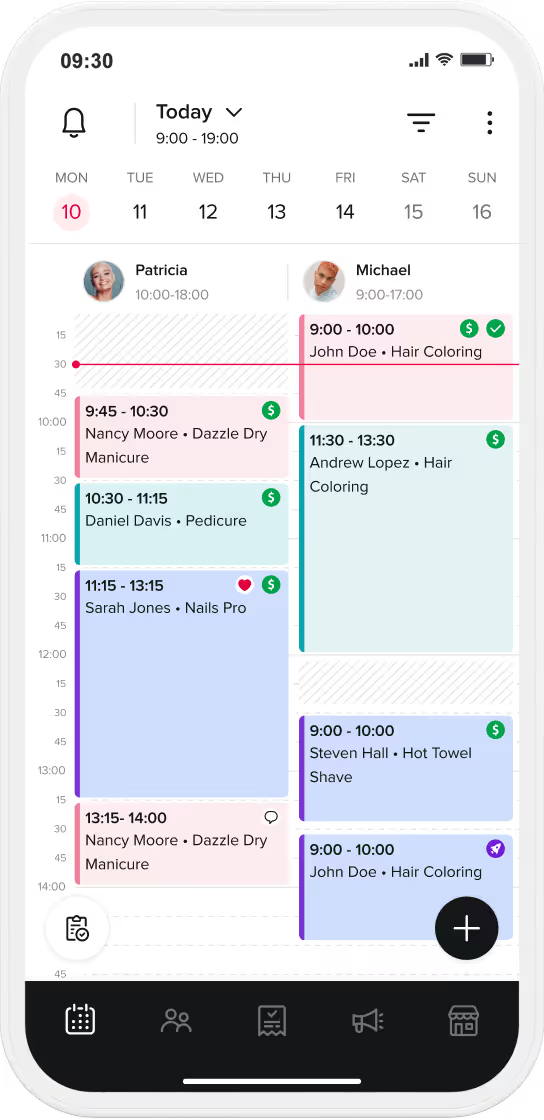
- Self-Management: Empower barbers to view their schedules on their own devices. This reduces manager friction and allows them to prepare for their day in advance.
- Gap Filling: Use automated tools to highlight gaps in a barber's schedule and send targeted last-minute booking invites to their specific client list.
- Fair Distribution: Ensure that walk-ins are distributed based on data. Consider giving new customers to the barber with the highest retention rate to ensure the client stays with the shop.
Professional Performance Reviews: Using Data to Drive Feedback
Instead of an awkward, subjective annual review, use monthly data-based check-ins.
- Visualizing Growth: Show the barber a graph of their revenue growth over the last six months. Seeing a rising line is a powerful motivator there.
- Identifying Training Needs: If a barber has a high request rate but low retail sales, you don't need to teach them how to cut; you need to teach them how to talk about products.
- Setting Transparent Goals: Use the software to set specific targets (e.g., "Let's get your rebooking rate from 40% to 50% by next month"). Because the barber can track this themselves daily, they are more likely to take ownership of the goal.
Table: Staff Performance Benchmark (KPI Focus)
| Metric |
Why It Matters |
Owner Action |
| Request Rate > 70% |
Sign of a loyal, stable book |
Promote to Senior/Master; Raise Prices |
| Low Retention (< 30%) |
Indicates service or vibe issues |
Technical shadow training; Soft-skill coaching |
| High Retail (> 20%) |
Drives high-margin passive income |
Have them lead a consultation workshop |
| Utilization < 50% |
Revenue is being lost to idle time |
Increase marketing; Check walk-in distribution |
Leadership & Motivation: Leading from the Front
In 2026, a barbershop owner must be more than just a top-tier stylist or a savvy accountant; they must be a leader who inspires loyalty and excellence. Leadership and motivation are the forces that sustain a team during slow months and keep them grounded during the holiday rush.
While your barber management software handles the logic of the business, your leadership handles the emotion. A motivated team doesn't just work for a paycheck; they work to uphold the reputation of the brand you’ve built together.
The Working Owner: Balancing the Chair and the Office
Most shop owners start as barbers, and the transition to management can be difficult.
- Leading by Example: If you expect your staff to be on time, maintain clean stations, and use the rebooking features in your software, you must do the same. Your station should be the gold standard.
- Delegating Authority: As you scale, you cannot do everything. Empower your Senior Barbers by giving them small leadership roles (e.g., Inventory Manager or Social Media Coordinator). This builds their ownership of the shop's success.
- Time Blocking: Use your digital calendar to block out "Manager Time." This ensures you aren't just "cutting hair to pay the bills" but are actually looking at the reports and planning for the future.
Team Building: Creating a Team Dynamic
A team that plays together stays together. Internal culture is built in the moments between the haircuts.
- Off-Site Events: Whether it’s a dinner, a sports outing, or a visit to a barbering expo, getting out of the shop environment breaks down hierarchies and builds genuine bonds.
- Celebrating Wins: Use your software analytics to announce "Barber of the Month" based on specific KPIs like highest retail sales or best retention. Publicly acknowledging a job well done is the most cost-effective motivation tool available.
- Daily Huddles: A 5-minute meeting every morning to discuss the day's goals, look at the booking density, and address any immediate concerns keeps everyone aligned.
Empowerment: Giving Barbers Autonomy
Professional barbers are artists, and artists need a degree of freedom.
- Creative Freedom: Encourage your team to experiment with new styles or techniques and feature their work on the shop’s primary marketing channels.
- Ownership of the Schedule: When you allow staff to manage their own breaks and time-off through their Staff App, you show them that you trust their professionalism. Trust is the foundation of long-term retention.
Scaling Your Brand Through Your People
Building a legendary barbershop brand is impossible without a dedicated team. By combining fair economic splits, continuous education, and data-driven leadership, you create a business that is resilient to competition. Your people are not just "staff"—they are the face of your brand. When they succeed, your shop succeeds.
Checklist: The Monthly Staff Health Audit
- Review KPI Trends: Are retention rates rising or falling compared to last month?
- Check-in One-on-Ones: Have you had a 15-minute private talk with every barber this month?
- Inventory Check: Are staff correctly logging back-bar usage in the software?
- Education Plan: What is the next workshop or class the team will participate in?
- Culture Check: Is the vibe in the shop positive, or is there underlying tension that needs addressing?
FAQ: Frequently Asked Questions About Barber Staffing
How do I find high-quality barbers in a competitive market?
In 2026, top-tier barbers look for professional environments that offer more than just a chair. To attract quality talent, your job offer must highlight your shop culture, career progression paths, and the technology you use. Mentioning that you provide an integrated booking and commission system shows that you respect their time and professional organization.
What is a fair commission split for a senior barber?
While a 50/50 split is the industry baseline, many successful shops move toward a Tiered Commission model. For example, a senior barber might earn 50% up to a certain revenue goal and 60% on everything above that. This rewards high productivity and ensures your most profitable barbers have a financial reason to stay with your brand rather than opening their own shop.
How can I stop barbers from taking my clients when they leave?
The best defense is a strong offense: data ownership. Ensure all bookings go through your integrated barber software. This allows the shop to maintain the primary relationship with the client through automated marketing and loyalty programs. Additionally, include non-solicitation clauses in your contracts that specifically protect the shop’s digital database.
Should I hire employees (W2) or booth renters (1099)?
If you want to build a specific brand experience and have control over quality and culture, the Employee (W2) model is superior. It allows you to set schedules and training standards. Booth rental is a more hands-off, passive income model, but it makes it much harder to implement shop-wide standards or unified barbershop marketing strategies.
How do I handle a "star barber" with a bad attitude?
No matter how much money they generate, a "culture killer" will eventually cost you more in staff turnover and bad vibes than they are worth. Use your performance data to have an objective conversation. If their attitude doesn't align with the shop's values despite their high numbers, it is often better for the long-term health of the business to let them go.
Is it worth paying for my staff’s external education?
Absolutely. Investing in education is one of the highest-ROI moves you can make. A barber who learns a new specialized service (like hair replacement or advanced coloring) can justify higher service prices, which increases the shop's overall revenue. Use your software to track the increase in their Average Ticket Value (ATV) following a training session to see the direct return on investment.
How do I manage payroll and commission splits without errors?
Manual payroll is a recipe for conflict. The most efficient way to manage earnings is through automated barber software. The system should calculate commissions, deduct back-bar fees if applicable, and attribute tips in real-time. This transparency builds trust and ensures your staff feels secure about their compensation every week.
What is the best way to increase my team's retail sales?
Stop "selling" and start "prescribing." Encourage your barbers to use products during the service and explain the benefits. To boost results, use integrated software prompts at checkout that remind the barber to ask about retail. Offering a higher commission percentage on products versus services can also provide the necessary incentive.
How do I know when it’s time to hire a new barber?
The data provides the answer. Look at your Staff Utilization rate. If your current team is consistently booked at 80-85% capacity for more than a month, you are turning away potential revenue. This is the signal that you have enough demand to support a new hire without "starving" your existing team.
How can I keep my barbers motivated during slow months?
Motivation in slow periods comes from proactive leadership. Use the extra time for internal workshops or team-building events. You can also use your software to run "Flash Sales" or targeted marketing campaigns, giving your barbers a chance to fill their chairs and see that the shop is actively working to support their income.