Barbershop management creates a system for coordinating staff scheduling, financial operations, and client acquisition to ensure the long-term profitability and scalability of a grooming business.
To go from being a great barber to a successful business owner, you need more than just the skills to make a perfect fade; you need a solid grasp of operational discipline and integrated digital systems.
Whether you are just starting out or looking to scale to multiple locations, understanding how to run a barbershop business is the difference between barely breaking even and dominating the local market.
In the modern grooming industry, accuracy in business operations is key to building trust with your team and your clientele. This guide outlines the essential pillars of a successful barbershop business model, helping with the challenges of manual scheduling, inventory waste, and client retention. By implementing these industry standards in 2026, you transform your shop from a traditional service provider into a high-performance retail and service enterprise.
Quick Summary: Key Learnings for Barbershop Management in 2026
If you only have 60 seconds, here are the non-negotiable pillars of a high-performance barbershop management strategy:
- Systems Over Chaos: Successful barber shop management relies on moving from manual paper logs to cloud-based SaaS infrastructure to automate scheduling and payments.
- Data-Driven Growth: To manage a barber shop effectively, you must track "Average Ticket Value" and "Retention Rates" rather than just total daily cash.
- The Talent Magnet: Professional barber management is about creating a tiered career path (Junior to Master) to ensure long-term staff loyalty and consistent service quality.
- Revenue Security: Protect your margins by implementing automated SMS reminders and integrated deposits to slash no-show rates by up to 75%.
- Local Dominance: Your Google Business Profile is your digital storefront; optimizing it for "barber near me" is the #1 driver of new client acquisition.
The Strategic Foundation: Defining Your Barbershop Business Model
A barbershop business model is a strategic framework that defines how a shop generates value, manages its professional team, and ensures financial sustainability. Choosing the correct model is not merely an administrative task; it is a foundational decision that dictates your operational overhead, staff retention rates, and long-term scalability. In the modern grooming industry, there are 3 primary business models, each requiring a specific approach to management and digital infrastructure.
Analyzing Revenue Structures: Booth Rental vs. Commission vs. Hybrid Models
The choice of your barbershop revenue structure impacts your cash flow and your role as an owner.
- Booth Rental Model: In this arrangement, barbers function as independent contractors, paying a flat weekly or monthly fee to rent their station.
- Commission Model: This performance-based model involves a percentage-based revenue split between the shop and the barber, typically 60/40 or 50/50.
- Hybrid Model: This approach combines a base rent with a small percentage of service or retail sales, balancing shop stability with growth incentives.
| Model Type |
Financial Risk |
Management Intensity |
Growth Potential |
| Booth Rental |
Low (Fixed Income) |
Low (Independent) |
Predictable, but capped |
| Commission |
Medium (Variable) |
High (Staff Coaching) |
Scalable with performance |
| Hybrid Model |
Low to Medium |
Medium (Coordinated) |
Dynamic and adaptable |
Financial Scalability and Overhead Projections for New Shop Owners
For your shop to be profitable, you have to move beyond vague estimates and work with real numbers. Owners who track specific data points are 30% more likely to maintain healthy profit margins within the first 12 months.
- Fixed Costs: These include rent, insurance, and utilities, which remain constant regardless of service volume.
- Variable Costs: These include professional backbar supplies and retail inventory, which change with client traffic and season.
- Labor Costs: In a commission model, these are directly tied to revenue, whereas in booth rental, labor costs are effectively zero for the shop owner.
Professional Vision Statements: Aligning Brand Identity with Business Goals
A barbershop vision statement is a strategic declaration that serves as the foundation for your brand identity and team culture. Without a clear mission, your shop is merely a collection of chairs rather than a cohesive business.
- Purpose: It provides immediate value to the client and sets the tone for your entire establishment.
- Structure: A professional vision statement is concise, removing all contextless fluff to focus on direct impact.
Examples: Successful shops use statements like, "Empowering our community through precision and world-class service standards."
Mastering Daily Barbershop Operations: A Systems-Based Approach
Barbershop operations refer to the daily activities and standard procedures that ensure consistent service, staff efficiency, and professional hygiene standards. Transitioning from manual oversight to a systems approach allows owners to maintain operational discipline, which is the primary factor that distinguishes a market-leading shop from one that barely breaks even. By using these systems, you make sure that every client receives the same high-quality experience when they visit your shop.
The Anatomy of a High-Performance Daily Workflow
A structured workflow helps to eliminate the "chaos" often found when workflows are manually managed. The best operations are built on repeatable cycles that protect your time and your profit margins.
- Opening and Closing Procedures: Having operational discipline requires a specific checklist for daily setup and closing.
- Morning Audits: Every shift begins with a 15-minute station cleanliness check and tool sterilization to meet professional hygiene standards.
- Mid-Day Adjustments: Managers must monitor booking data in real-time to make the most of staff rotations and handle walk-ins without disrupting scheduled appointments.
- Closing Protocols: Final daily tasks include financial cash reconciliation, data backup, and restocking backbar supplies for the following day.
Scientific Inventory Management: Using Data to Reduce Waste
To maintain healthy profit margins, you must track your supplies with precision. Scientific inventory management involves monitoring every consumable item used in the shop, from neck strips to premium aftershaves.
- Creating a Standardized Salon Inventory List: Use a digital inventory list to track most used high-volume supplies like shaving creams, pomades, and professional-grade blades.
- Automated Stock Alerts: Modern systems eliminate the risk of running out of essential products by triggering alerts when stock levels dip below a specific threshold.
- Waste Reduction Strategies: Every ounce of wasted product is a direct loss of profit; owners who implement strict measurement standards often reduce supply costs by 15% annually.
Legal Compliance and Barbershop Insurance: Mitigating Business Risks
Operating a grooming business without professional protection is a high-risk strategy that can lead to total loss in the event of an accident. Understanding the legal requirements is as important as mastering the craft of barbering itself.
- Barbershop Insurance: This is a financial protection product that covers liability, property damage, and professional errors.
- Professional Liability (Malpractice): This covers the specific risks associated with grooming services, such as cuts or skin reactions.
- General Liability: Protects your business assets if a client is injured on your premises (e.g., a slip and fall).
- Licensing and Compliance: Ensure all staff members have updated certifications and that the shop meets local health department regulations to avoid costly fines or closures.
Staffing and Human Resource Management: Building a Professional Team
Barbershop staffing, the model used to organize, recruit, and lead a team of professional barbers under specific legal and financial agreements, is a critical part of operations. Becoming a successful barber is your starting point, but leading others is a distinct skill set that requires transitioning from being just a service provider to also becoming a people manager. Recruiting barbers who share your work ethic and professional standards is essential for maintaining consistency across every chair in the shop.
Recruitment Strategies: How to Attract and Vet High-Caliber Barbers
To build a high-performance team, your recruitment process must be as precise as your haircuts. Professional barbers look for shops with clear standards and tools that make their client management easier.
- Developing Technical Job Descriptions: A professional job description should act as a strategic declaration of your shop's vision and expectations.
- Vetting for Consistency: Use practical trade tests during interviews to ensure every candidate can deliver the same high-quality experience regardless of the client's hair type.
- Cultural Alignment: Beyond technical skill, hire for punctuality, hygiene, and high professional standards.
Leadership and Retention: Managing Staff Commissions and Performance Metrics
Retention is driven by transparency and a culture of growth. Using automated systems to handle the complex math of staff management builds trust and reduces administrative friction.
- Commission Structures: Clearly define revenue splits (e.g., 60/40) to ensure both the shop and the barber are incentivized for growth.
- Performance Tracking: Use digital tools to monitor individual metrics such as rebooking rates, retail sales, and average ticket value.
- Automated Payouts: Implement software that automatically calculates commissions and shift rotations, ensuring accuracy and eliminating manual payroll errors.
Establishing Service Standards: Consistency, Hygiene, and Professionalism
Standardizing the client experience ensures that your brand identity remains intact, even when you are not physically present on the floor.
- Professional Hygiene Standards: Establish mandatory morning checks where every station is verified for cleanliness and tool sterilization.
- The Consultation Standard: Train every staff member to follow a 5-step client consultation process to uncover upselling opportunities and increase the average ticket.
- Ongoing Education: Encourage a culture where barbers are mentors to one another, sharing techniques to elevate the shop’s overall reputation.
Technical Infrastructure: The Role of Barbershop Management Software
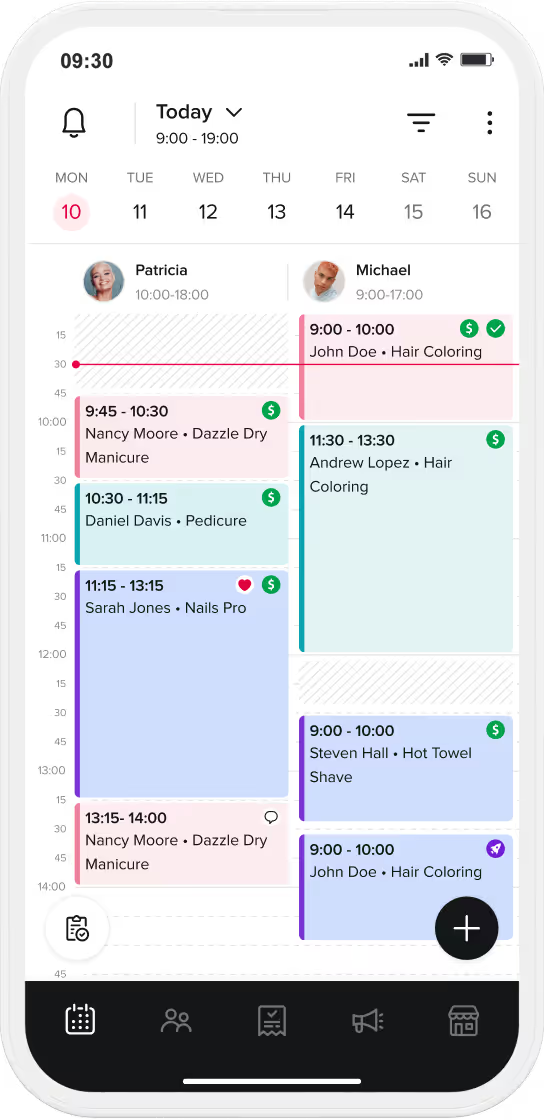
In 2026, manual scheduling and paper-based tracking can be business liabilities. Barber software is a cloud-based application designed to automate appointment bookings, reduce no-shows, and manage service capacity in real-time. Implementing a professional technical infrastructure is the primary step in transitioning from a traditional shop to a high-performance digital enterprise.
Why Cloud-Based SaaS is Mandatory for Scalability in 2026
The shift from on-premise solutions to Software as a Service (SaaS) has redefined how grooming businesses scale. Cloud-based infrastructure ensures that your business data is accessible from any internet-connected device, providing real-time synchronization between staff and clients.
- SaaS Architecture: Utilizing a cloud-based system eliminates the need for local server maintenance and manual software updates.
- Real-Time Data Sync: Every booking made via a mobile app or website is instantly reflected across all devices, preventing double bookings.
- Operating System Compatibility: Modern salon platforms function seamlessly across various operating systems, ensuring accessibility for all staff members.
Online Booking Systems: Automating Appointment Scheduling 24/7
An online booking system is a digital tool that synchronizes the salon's calendar and automates the client registration process. This technology provides immediate value to clients by delivering a seamless experience for the end-user.
- 24/7 Availability: Automated scheduling allows clients to book appointments outside of business hours, maximizing your service capacity.
- Reducing No-Shows: Integrated systems utilize automated SMS reminders and deposits to protect your revenue from uncancelled visits.
- Client CRM Integration: Every booking automatically updates the client's history, allowing barbers to provide a more personalized service based on previous preferences.
Integrated POS Systems: Processing Payments and Financial Synchronization
A barbershop POS system is a specialized transaction processing technology that integrates financial checkout processes with appointment data. This integration eliminates manual entry errors and provides absolute certainty in financial reporting.
- Seamless Payments: Integrated payment terminals automatically pull data from the booking calendar, ensuring that the service price and technician commission are calculated correctly.
- Financial Security: Using standardized POS hardware and software ensures compliance with financial regulations and protects sensitive client data.
- Hardware Requirements: A professional setup typically includes a central tablet or computer, secure card readers, and receipt printers for physical transaction records.
The Revenue Engine: Advanced Growth and Profitability Strategies
If you want a better understanding of how barbershops make money, you have to look beyond the volume of clients and focus on the "Average Ticket". Optimizing revenue in a barbershop is a strategic process of increasing the dollar value of every appointment through consistent upselling and retail education. By treating your shop as a revenue engine, you shift the focus from merely filling chairs to maximizing the profit made during every hour of operation.
Revenue Optimization: Maximizing the Average Ticket through Upselling
The fastest way to grow your business is not only finding new clients, but also increasing the spend of your current ones. Successful shop owners train their staff to identify and act on upselling opportunities with every client interaction.
- Service Upselling: Encourage barbers to suggest high-margin add-ons, such as beard trims, hot towel shaves, or specialized scalp treatments during each service.
- The Consultation Standard: A professional 5-step consultation allows the barber to uncover client needs and propose additional services that increase the total appointment value.
- Consistency Across Chairs: Standardizing the upselling process ensures that every client is offered the same opportunities for an enhanced experience, regardless of their preferred barber.
Retail Education: Turning Product Usage into Passive Income
Retail sales represent a critical component of a profitable barbershop business model. When a barber uses a product on a client, they are providing a live demonstration of that product's value.
- Explain the "Why": Barbers should explain the benefits of the specific pomade or oil being used during the service, moving from "selling" to "educating".
- Physical Interaction: Placing the product in the client's hand during the explanation significantly increases the likelihood of a purchase.
- Product Synergy: Highlighting how a specific retail item maintains the haircut's look at home provides immediate value to the client and builds long-term trust.
Client Retention and CRM: Using Data to Drive Recurring Bookings
Client retention is a metric that measures the ability of a shop to keep its customers coming back over time. Utilizing CRM (Customer Relationship Management) data allows you to move away from guesswork and toward data-driven growth strategies.
- Implementing Loyalty Programs: Create rewards for recurring bookings or referrals that actually work by incentivizing specific client behaviors.
- Data-Driven Reminders: Use your software to identify clients who haven't booked in their usual timeframe and send automated, personalized re-engagement messages.
- Tracking Preferences: Maintaining detailed client notes within your system ensures a personalized experience every time, which is the biggest driver of high retention rates.
The Revenue Engine Checklist: Weekly Audits for Growth
To ensure your revenue engine is running efficiently, implement a weekly audit of these key performance indicators (KPIs).
| Action Item |
Management Strategy |
Target Metric |
| Service Upsell Audit |
Review staff performance on add-on service bookings. |
+15% Service Revenue |
| Retail Conversion |
Compare total appointments to total retail units sold. |
20% Attachment Rate |
| Inventory Audit |
Check the salon inventory list to prevent over-ordering. |
-5% Supply Waste |
| No-Show Review |
Analyze the effectiveness of deposits and SMS reminders. |
<2% No-Show Rate |
Multi-Channel Marketing and Digital Presence for Barbershops
You can be the best barber in the world, but if nobody knows you exist, your chairs will stay empty. Barbershop marketing is a strategic business function that utilizes digital branding, social media, and local search optimization to get more bookings and attract new clientele. In 2026, a multi-channel approach is mandatory; relying on a single platform is a high-risk strategy that leaves your business vulnerable to algorithm changes.
Local SEO Mastery: Optimizing Your Google Business Profile
For a barbershop, Local SEO is the most critical driver of new client acquisition. Most potential clients start their search with phrases like "barber near me" or "best barbershop in [City]." If your shop does not appear in the top 3 results (the Local Pack), you are losing significant revenue to competitors.
- Google Business Profile (GBP): Ensure your profile is fully optimized with an accurate address, phone number, and business hours that match your website and booking software.
- Keyword Optimization: Use relevant terms in your profile description, such as "precision haircuts," "hot towel shaves," and "beard grooming," to help Google understand your specific expertise.
- High-Quality Visuals: Regularly upload professional photos of your shop's interior, your team, and your best work to build immediate trust with browsing users.
Social Media Engineering: Leveraging Reels, TikTok, and Branding Quotes
Instagram and TikTok have replaced traditional portfolios. These platforms are high-engagement tools that allow you to showcase your technical skills while building a distinct brand voice through strategic communication.
- Before-and-After Reels: Short-form video content demonstrating transformations provides concrete evidence of your expertise and encourages social sharing.
- Educational Content: Posting videos on "how to style your hair at home" positions you as an industry authority rather than just a service provider.
- Hashtag Strategy: Use a mix of broad industry tags (e.g., #barberlife) and hyper-local tags (e.g., #ChicagoBarber) to ensure your content reaches the right demographic.
- The Power of Engagement Quotes: Visuals grab attention, but the right words drive action. Integrating barbershop quotes into your captions or story slides helps define your brand's personality.
Review Generation Strategies: How to Build 5-Star Social Proof
Digital word-of-mouth is the primary factor in a client's decision-making process. A consistent stream of 5-star reviews signals to both users and search engines that your business is reliable and authoritative.
- Incentivize Reviews: Train your staff to ask clients for a review at the end of their service, especially when they express high satisfaction.
- Respond to Every Review: Engaging with both positive and negative feedback demonstrates professional accountability and improves your local search ranking.
- QR Code Integration: Place QR codes at checkout stations to make the review process as seamless as possible for the client, reducing friction and increasing the volume of feedback.
Scaling to Multiple Locations: Systems for Brand Expansion
Managing multiple locations requires a business strategy that uses centralized software to monitor performance and standardize operations across more than one shop. Expanding from a single studio to a chain requires a significant shift in leadership; you have to transition from managing people to managing systems. Without a scalable technical infrastructure, the chaos of a single shop is simply multiplied across every new location.
Standardizing Operations Across Different Branches
The primary challenge of expansion is maintaining the same quality of service and brand identity in every shop. Standardizing operations ensures that a client receives the exact same "Booksy experience" whether they are in your first location or your tenth.
- The Operational Blueprint: Every new branch must follow a documented set of opening, closing, and service procedures to ensure consistency.
- Unified Service Menus: Centralizing your service list and pricing strategies across all locations prevents brand dilution and simplifies staff training.
- Centralized Inventory Control: Use your management software to monitor supply levels globally, allowing for bulk purchasing and preventing inventory waste across the entire brand.
Centralized Reporting: Monitoring Performance Without Being on the Floor
As a multi-location owner, you cannot be physically present in every shop. Centralized reporting provides the absolute certainty needed to make high-level business decisions based on real-time data rather than guesswork.
- Global KPIs: Monitor key performance indicators such as total revenue, average ticket value, and staff retention rates for all branches from a single dashboard.
- Staff Performance Comparison: Identify your top-performing barbers across different locations to implement successful strategies throughout the entire organization.
- Financial Synchronization: Integrated systems ensure that payroll, commissions, and tax reporting are consolidated, reducing the administrative load on your management team.
Brand Consistency and Corporate Identity
A scalable brand is built on a clear barbershop vision statement that resonates across every location. Your digital presence, from your website to your booking app, must reflect a unified identity to build immediate trust with a growing audience.
Future-Proofing Your Barbershop with Integrated Systems
Building a market-leading barbershop in 2026 requires a fundamental shift from manual oversight to systems-based management. By focusing on a clear vision and leveraging the right technical infrastructure, your shop remains a pillar of the community and a highly profitable enterprise.
The 10 Essential Steps to Barbershop Dominance
To ensure your business scales effectively, follow this strategic implementation checklist:
- Define Your Model: Choose between booth rental, commission, or hybrid structures based on your growth goals.
- Establish a Vision: Craft a concise vision statement to align your team and brand identity.
- Implement SaaS Infrastructure: Deploy cloud-based management software to automate scheduling and data sync.
- Standardize Operations: Create documented daily workflows for opening, closing, and service delivery.
- Audit Inventory Weekly: Use digital tracking to reduce supply waste and protect profit margins.
- Mitigate Risks: Secure comprehensive barbershop insurance and ensure full legal compliance.
- Optimize the Average Ticket: Train your staff in consistent upselling and retail education.
- Master Local SEO: Maintain an optimized Google Business Profile to drive new client acquisition.
- Automate Client Retention: Use CRM data and SMS reminders to minimize no-shows and increase rebooking rates.
- Analyze and Scale: Monitor centralized reports to identify high-performing trends and plan your expansion.
Adhering to these principles ensures that your barbershop is not only a creative space but a robust, data-driven business capable of dominating the digital landscape.
Frequently Asked Questions (FAQ)
Is owning a barbershop profitable?
Yes, owning a barbershop can be profitable. Managing the business through a systemized operations model helps increase growth and revenue. Profitability depends on selecting the appropriate revenue structure, such as booth rental or commission, and maintaining strict control over fixed and variable overhead costs.
What is the best way to increase my shop's revenue?
The most effective strategy to increase revenue is to maximize the "Average Ticket" value of existing appointments. Begin by training staff in consistent service upselling (e.g., beard trims) and providing professional retail education during the client consultation.
Why do I need barbershop management software?
Management software is crucial for scalability because it automates appointment scheduling, staff commissions, and client communications 24/7. Using cloud-based SaaS infrastructure ensures that your business data is synchronized in real-time across all devices, reducing administrative errors and no-shows.
How do I reduce no-shows in my barbershop?
To reduce no-shows, implement automated SMS reminders and a secure deposit system. These technical features, integrated into your scheduling software, protect your revenue by ensuring clients are committed to their time slots and receive timely notifications before their appointments.
What are the benefits of an integrated POS system?
An integrated POS (Point of Sale) system synchronizes financial transactions directly with your booking data. This eliminates manual entry errors, automates commission tracking for your barbers, and provides absolute certainty in your daily and monthly financial reporting.
How do I attract and hire high-quality barbers?
Attracting high-caliber talent requires a culture of professional growth and clear operational standards. Provide technical job descriptions that reflect your shop's vision and offer tools, such as dedicated staff apps, that simplify their scheduling and client management tasks.
What is the difference between booth rental and commission models?
In a booth rental model, barbers pay a flat fee for space, offering the shop owner a stable, fixed income with low management intensity. In a commission model, revenue is split between the shop and the barber, incentivizing staff performance and offering higher overall growth potential for the brand.
How can I improve my barbershop's Local SEO?
To dominate local search, you should optimize your Google Business Profile with accurate information, high-quality photos, and consistent 5-star reviews. Regularly updating your profile and making sure your service descriptions match the search intent of your local clientele will improve your ranking in the "Local Pack".
Why is inventory management important for profitability?
Scientific inventory management is crucial because every penny saved on wasted product is a penny added directly to your profit. Tracking supply levels through a standardized digital inventory list prevents over-ordering and ensures you have the necessary backbar products to maintain service consistency.
How do I manage multiple barbershop locations?
Scaling to multiple locations requires standardized operational blueprints and centralized reporting. Using enterprise-grade software allows you to monitor performance, manage global inventory, and maintain a unified brand identity across every branch from a single dashboard.