Maximizing salon profitability in 2026 and 2027 requires moving beyond traditional, labor-intensive services toward high-margin, results-driven treatments. Modern clients increasingly prioritize hyper-personalized aesthetic solutions, advanced skin diagnostics, and non-invasive restorative procedures over generic beauty treatments.
To help beauty entrepreneurs and salon owners optimize their service menu for peak financial performance, Booksy analyzed high-demand treatment categories across hair, skin, nails, PMU, and wellness. Use this guide and profitability cheat sheet to identify high-ticket services, evaluate startup costs (CapEx), and scale your bottom line.
Before diving into individual service breakdowns, here are the key economic shifts driving salon revenue in 2026 and 2027:
Service Profitability & Margin Overview (2026–2027)
Permanent makeup continues to yield the highest return on investment (ROI) in the beauty industry due to ultra-low consumable product costs paired with high individual ticket prices.
Why it works: Clients view PMU as a long-term time-saver. By bundling initial sessions with mandatory 6-week touch-ups and annual color refreshes, salons secure predictable, recurring revenue.

Generic relaxation facials are seeing a decline in favor of targeted, results-driven skin therapies. Modern clients demand clinical-grade diagnostics and noticeable structural skin improvement.
Retail Monetization: Pair clinical treatments with customized cosmeceutical homecare regimens (retinoids, peptides, SPF). Post-care retail adds an average of $80–$150 in high-margin product sales per client visit.
Hair loss solutions represent a booming, high-ticket sector. Expanding into scalp health and non-surgical restoration opens your salon to an underserved market willing to pay premium prices.
Why it works: Scalp care bridges the gap between wellness and hair care. Utilizing microscopic scalp cameras during consultations provides visual proof of clogged follicles, making high-ticket scalp treatments an easy sell.
Nail services are shifting away from long, high-maintenance acrylic extensions toward chic, natural-length nails strengthened with structured gel (BIAB) and high-margin metallic art.
Why it works: Structured gel overlays take less chair time than full acrylic sets while delivering superior durability. Charging for nail art on a per-minute or per-nail tier system maximizes hourly earnings for nail technicians.
Low chair-time combined with rapid turnaround makes lash and brow services essential for salon profitability and daily schedule optimization.
Why it works: Dual lash and brow services allow estheticians to double their hourly earning rate without needing heavy equipment investments.
To help you prioritize your next equipment investment or staff training, this financial breakdown compares upfront capital expenditure (CapEx), profit margins, and average ticket sizes across top-performing beauty categories:
Upgrading your salon’s profitability in 2026 and 2027 isn't about working longer hours—it’s about strategically offering services that deliver superior margins per hour. By incorporating high-demand, specialized treatments like PMU, structured gel art, and clinical skincare, you position your salon as a market leader capable of commanding premium price points.
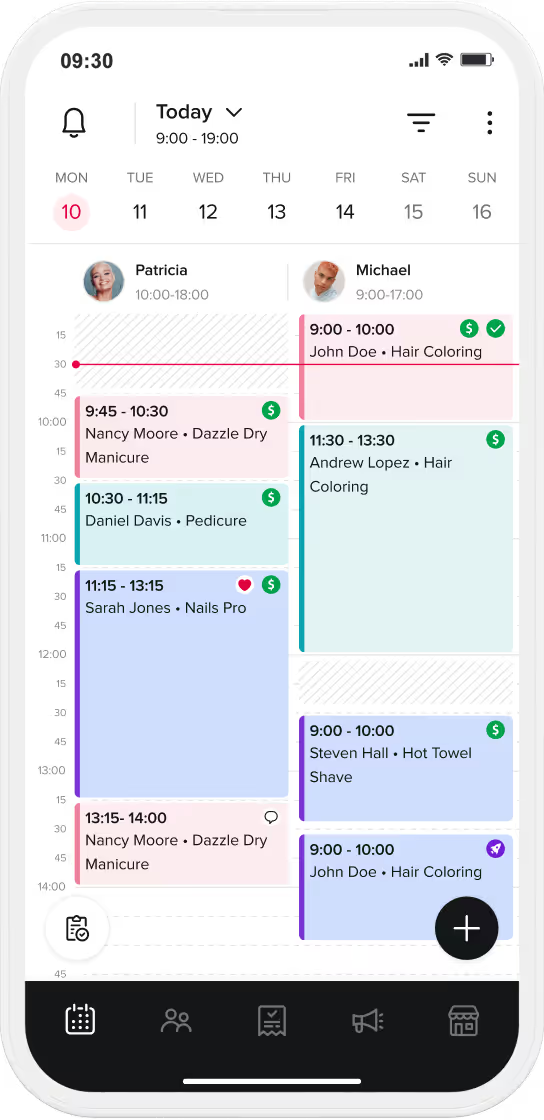
Managing these high-ticket offerings smoothly requires an automated scheduling system that handles deposits, protects against no-shows, and automatically tracks your retail inventory. With Booksy, you can manage your high-margin menu seamlessly, allowing your team to focus entirely on delivering a 5-star client experience.
The highest-margin services are Permanent Makeup (PMU) and Lash & Brow Lamination, yielding profit margins between 80% and 90%. These treatments require minimal consumable product costs relative to high individual ticket prices ($110–$750).
Salons can expand into Scalp Micropigmentation (SMP) and specialized Trichology Head Spa treatments. Investing in a trichology camera for consultations allows stylists to visually show scalp congestion, making high-ticket scalp detox treatments and SMP packages ($150–$1,500+) an easy sell.
Structured Gel (BIAB) overlays take less chair time to apply than full acrylic sets while providing superior durability. Combined with rapid 3-week fill cycles and tiered pricing for chrome or metallic nail art, nail technicians achieve higher hourly earning rates with lower material waste.
Upfront equipment investment for advanced skincare ranges from $5,000 to $25,000 for certified Microneedling RF machines or skin diagnostic devices. However, because sessions sell for $250–$600 (often in packages of 3 to 6), most clinics recoup their initial investment within 3 to 6 months.
Recommending medical-grade cosmeceutical homecare tailored to specific skin data extends treatment results and adds an average of $80 to $150 in high-margin retail revenue per client visit, significantly increasing overall client lifetime value (LTV).