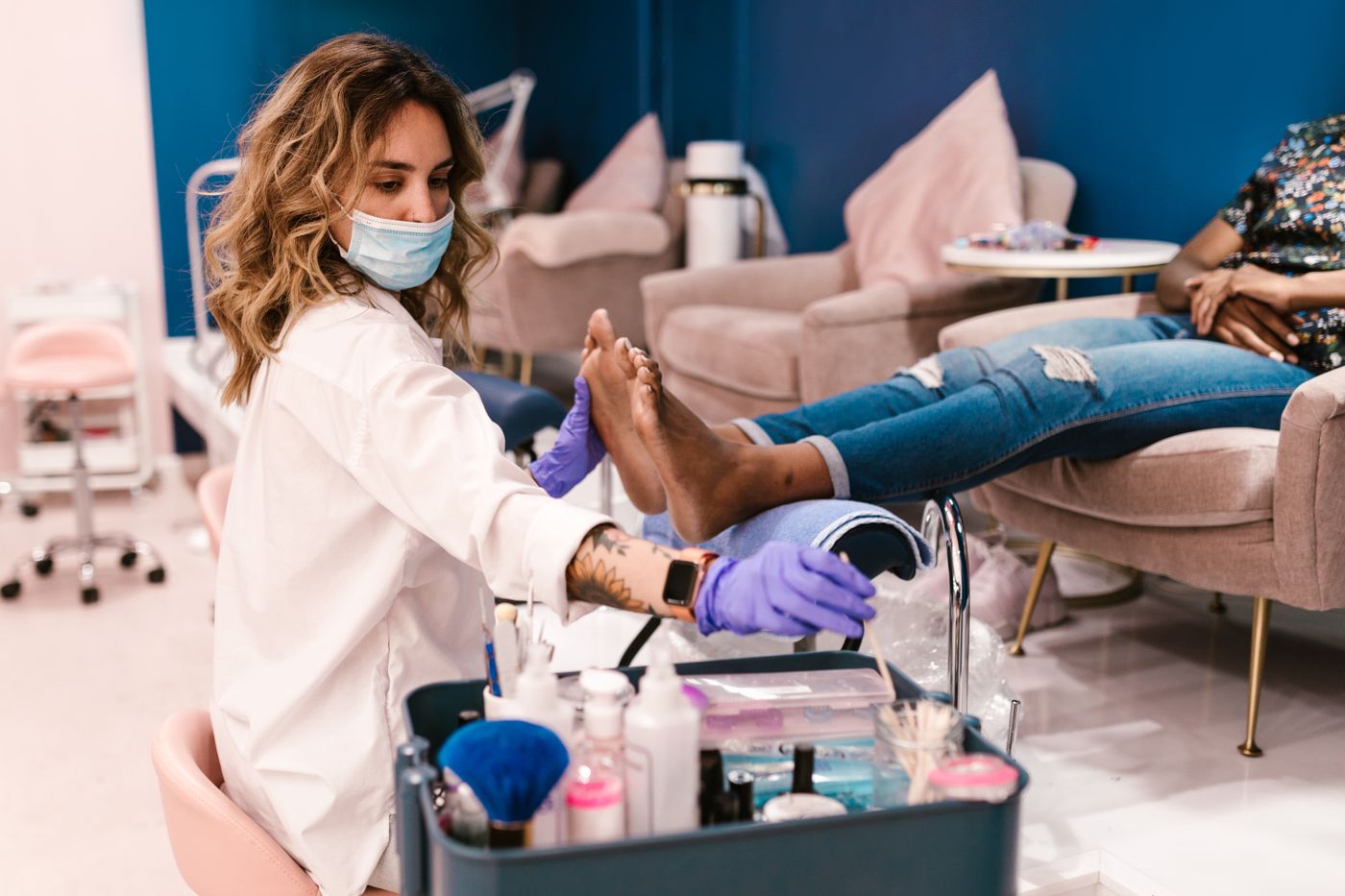
Operating a nail studio or modern nail bar presents unique challenges. Nail businesses manage rapid client turnover, technical add-on times, and persistent friction between spontaneous walk-in guests and pre-scheduled appointments. Establishing predictable systems requires balancing digital deposits, hybrid queue scheduling, and transparent staff payroll workflows.
A nail salon operations framework is an integrated management system coordinating automated booking deposits, walk-in queue management, technician tier pricing, and labor-compliant tip distribution to keep chairs full and the studio profitable.
In the beauty industry, empty chairs translate directly to lost income. Nail technicians frequently experience higher cancellation rates than hair stylists. When a client doesn’t show, particularly for longer and more technical appointments, their no-show creates an unrecoverable labor loss.
Selecting the right deposit structure depends on service tier and duration:
Manually texting clients with payment links or collecting deposits via third-party peer-to-peer payment apps wastes front-desk time and opens your business to merchant chargeback disputes. Modern nail salon software secures client credit cards directly within an encrypted, PCI-compliant checkout workflow. The deposit is deducted automatically upon confirmation, with clear digital receipts detailing non-refundable cancellation clauses.
Your studio's cancellation policy must be prominently displayed during online booking and reaffirmed via automated SMS appointment reminders. A standard, enforceable policy states: "Cancellations or rescheduling requests must be submitted at least 24 to 48 hours prior to your scheduled appointment. Late cancellations or no-shows forfeit the advance deposit, and late arrivals exceeding 15 minutes may require rescheduling to protect subsequent guest appointments."
Many traditional nail salons rely heavily on spontaneous street traffic, whereas modern boutique studios prioritize advance digital bookings. Attempting to balance both without software coordination results in frustrated walk-in guests waiting in crowded entryways while scheduled clients feel neglected. Creating a smooth hybrid workflow requires three key elements:
Replace paper clipboard sign-in sheets with a digital tablet check-in kiosk at your reception counter. When a walk-in guest arrives, they enter their name, phone number, and requested service (e.g., acrylic fill or gel pedicure). The software automatically assesses current chair occupancy, cross-references upcoming booked arrivals, and calculates an accurate, real-time wait estimate. Guests can browse local shops while tracking their queue position via automated SMS text updates.
One of the most frequent scheduling errors in nail salons is failing to account for product removal and sterilization between guests. A client booking a fresh gel set often arrives wearing old dip powder or acrylic enhancements requiring 15 to 25 minutes of soaking, e-filing, and cuticle prep before the new application can begin.
Set up automated service padding within your booking engine. If a full set requires 60 minutes of active styling, configure the system to reserve an additional 15 minutes of built-in turnaround padding. This buffer guarantees sufficient time to clean e-file carbide bits, submerge metal implements in EPA-registered hospital disinfectant, and flush pedicure foot spas in accordance with State Board of Cosmetology regulations.
In a busy nail salon, no two technicians work at the exact same velocity or possess identical technical specialties. Forcing a uniform service menu and standard pricing across a five- or ten-chair studio creates internal team dissatisfaction and misaligned client expectations. High-performing nail businesses deploy tiered service menus that reward senior craftsmanship while giving emerging artists room to build their books:
Categorize technicians into distinct tiers directly within your booking software:
Clear payroll boundaries help to prevent staff turnover. Nail salons commonly operate on tiered commission structures (e.g., 50% to 60% service payout). However, misunderstandings often arise over backbar supply fees (e.g., monomer, acrylic powder, gel pots, and sanitizers). Your employee agreements should clearly state whether commissions are paid on gross service value or if a modest backbar fee (typically $2 to $5 per set) is deducted prior to calculating commission splits, with every deduction itemized on payroll statements.
Gratuity management is a sensitive topic in nail salons, particularly when client appointments involve multiple team members (for example, an assistant performing foot soak, scrub, and cuticle prep before a senior artist executes shaping and gel polish). Failing to structure tip distribution correctly risks violating federal labor statutes:
Under federal US wage regulations, all tips paid via credit card or cash belong strictly to non-exempt service employees. Salon owners, general managers, and shift supervisors with hiring, firing, or scheduling authority are legally prohibited from retaining any portion of the employee tip pool. Attempting to withhold a credit card processing percentage from staff tips is illegal in multiple US jurisdictions (such as California and Massachusetts) unless strictly permitted and itemized by local state statute.
Structure your studio's tip distribution based on your service workflow:
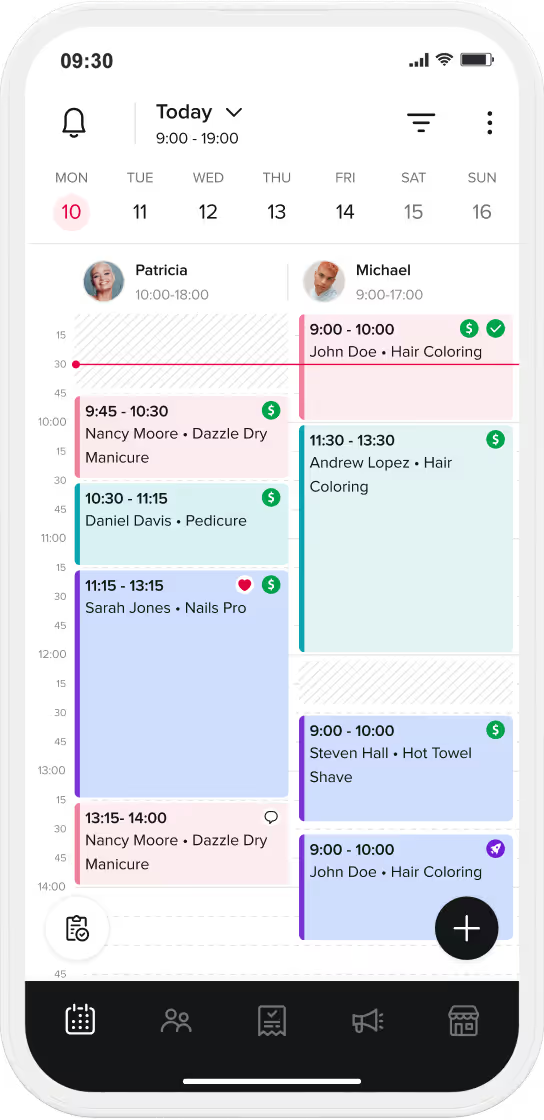
Solving for the operational complexities of a nail salon requires software engineered for multi-tech flexibility, complex service timing, and automated financial safeguards. Booksy Biz delivers targeted tools designed specifically for the unique workflows of professional nail studios:
Booksy Biz allows nail salon owners to require upfront non-refundable deposits or pre-authorized card holds on any high-value service. Clients effortlessly lock in their slots using credit cards or Apple Pay, ensuring that extended two-hour sculpting appointments are protected against last-minute cancellations.
In standard generic calendars, booking "Nail Art" fails because art can take anywhere from 10 minutes for simple stickers to 45 minutes for hand-painted French chrome designs. Booksy Biz features granular service add-ons. Clients select their base service (e.g., Builder Gel Infill - 60 min) and add custom art options (e.g., Level 2 Hand-Painted Art - +20 min / +$25). The software automatically expands the total appointment window in the technician's calendar, eliminating rushed services and schedule delays.
Do away with manual end-of-day spreadsheet calculations. Booksy Biz automatically tracks service gross billing, retail product sales, and credit card tips per technician at the moment of checkout. Business owners can pull itemized payroll summary reports in seconds, showing exact commission breakdowns and tip allocations ready for direct deposit.
Protecting your salon's client list is essential. Booksy Biz allows studio owners to provide technicians full mobile access to their personal schedules, formula notes, and client inspiration galleries while restricting access to export customer phone numbers, edit salon master pricing, or view whole-studio financial metrics.
Managing a fast-paced nail studio with paper notebooks, unlinked credit card terminals, and manual spreadsheets drains front-desk resources and invites costly errors. Moving to an integrated salon management system creates efficiency and clarity across every station:
Running your nail salon smoothly requires having predictable, repeatable processes. By using automated payment systems, organized client flows, and automated tip distribution with a salon management software system, nail business owners protect their revenue while fostering an equitable, high-retention environment for their team of technicians.
Ready to eliminate no-shows and automate your nail salon operations? Start your free 14-day Booksy Biz trial today.
Booksy Biz offers built-in deposit and no-show protection features designed for beauty studios. Nail salon owners can mandate fixed dollar or percentage-based deposits on extended services like full acrylic sets or custom nail art, securely saving client cards on file with bank-level encryption.
Nail salons manage hybrid client flow by pairing online appointment software with a digital walk-in kiosk. When walk-in guests arrive, they join a digital waitlist that automatically calculates chair availability around upcoming booked appointments, sending real-time SMS alerts to prevent reception overcrowding.
Tip splitting distributes credit card or cash gratuities among technicians and assistants who collaborate on a service (such as a prep assistant and a senior nail artist). Under the federal Fair Labor Standards Act (FLSA), all tips belong to non-exempt service staff; owners and supervisory managers are prohibited from taking a portion of the tip pool.
Yes. Many high-performing nail studios implement tiered service pricing. Junior technicians and apprentices offer lower rates with longer service buffers while building speed, whereas Master Nail Artists charge premium rates for intricate sculpting, 3D art, and specialized corrections.
Salons should utilize customizable service add-ons within their booking engine. When a client books a basic manicure or fill, they can select specific add-ons (such as a 15-minute gel soak-off or a 30-minute custom nail art tier), prompting the software to expand the technician's appointment window automatically.