Thinking about becoming a nail technician? One of the first things to understand is that there is no single nationwide nail tech license in the United States. Requirements are set at the state level, which means the training hours, exams, age requirements, renewal schedule, continuing education, and license-transfer rules can look very different depending on where you live.
In most states, if you want to provide manicures, pedicures, acrylic nails, or other professional nail services for paying clients, you need the appropriate state-issued nail technician, manicurist, nail specialist, or cosmetology license.
This guide breaks down nail tech certification and licensing requirements across all 50 states, including required training hours, examinations, renewal schedules, and important considerations if you're transferring a license from another state.
Important: Licensing laws and fees can change. Always confirm the latest requirements with your state's official cosmetology, barbering, professional licensing, or health board before enrolling in a program, applying for an exam, or offering paid services.
Nail Tech License Requirements at a Glance
Although the exact process varies, becoming a licensed nail tech usually involves:
- Meeting your state's minimum age and education requirements.
- Completing a state-approved nail technology, cosmetology or manicuring program.
- Completing the required number of training hours.
- Passing any required written and/or practical licensing exams.
- Applying for your license and paying the applicable fees.
- Renewing your license according to your state's schedule.
Some states also offer apprenticeship pathways, while others require applicants to complete their education through an approved school.
Nail Tech License Requirements by State: Quick-Reference Table
| State |
Required Training Hours |
Exam Requirement |
Typical Renewal Frequency |
| Alabama |
750 |
Written + practical |
2 years |
| Alaska |
12 (250 for advanced endorsement) |
Varies by license level |
2 years |
| Arizona |
600 |
Written + practical |
2 years |
| Arkansas |
600 |
Written + practical |
2 years |
| California |
400 |
Written |
2 years |
| Colorado |
600 |
Written + practical |
2 years |
| Connecticut |
100 |
No state licensing exam for standard pathway |
2 years |
| Delaware |
300 |
Written + practical |
2 years |
| Florida |
180 |
No state cosmetology exam for nail specialist registration |
2 years |
| Georgia |
525 |
Written + practical |
2 years |
| Hawaii |
350 |
State-required examination |
2 years |
| Idaho |
400 |
Written + practical |
2 years |
| Illinois |
350 |
Written |
2 years |
| Indiana |
450 |
State-required examination |
Periodic state renewal |
| Iowa |
325 |
Written/theory |
2 years |
| Kansas |
350 |
Written + practical |
2 years |
| Kentucky |
450 |
Written + practical |
2 years |
| Louisiana |
500 |
Written + practical |
1 year |
| Maine |
200 |
Written + practical |
1 year |
| Maryland |
250 |
Written + practical |
2 years |
| Massachusetts |
100 |
State-required examination |
2 years |
| Michigan |
600 |
Written + practical |
2 years |
| Minnesota |
350 |
Written examinations |
3 years |
| Mississippi |
350 |
State-required examination |
2 years |
| Missouri |
400 |
Written + practical |
2 years |
| Montana |
400 |
Written + practical |
2 years |
| Nebraska |
300 |
Written examination |
2 years |
| Nevada |
600 |
Written + practical |
2 years |
| New Hampshire |
300 |
Written + practical |
2 years |
| New Jersey |
300 |
State-required examination |
2 years |
| New Mexico |
400 |
State-required examination |
1 year |
| New York |
250 |
Written + practical |
4 years |
| North Carolina |
300 |
State Board examination |
1 year |
| North Dakota |
350 |
State-required examination |
1 year |
| Ohio |
200 |
Written + practical |
2 years |
| Oklahoma |
600 |
State-required examination |
1 year / multi-year options |
| Oregon |
241 |
State-required examinations |
2 years |
| Pennsylvania |
200 |
State-required examination |
2 years |
| Rhode Island |
300 |
State-required examination |
2 years |
| South Carolina |
300 |
Written + practical |
2 years |
| South Dakota |
400 |
Written + practical |
1 year |
| Tennessee |
600 |
Written + practical |
2 years |
| Texas |
600 |
Written + practical |
2 years |
| Utah |
300 |
Written + practical |
2 years |
| Vermont |
200 |
State-required examination |
2 years |
| Virginia |
150 |
Written + practical |
2 years |
| Washington |
600 |
Written + practical |
2 years |
| West Virginia |
400 |
Written + practical / state law |
1 year |
| Wisconsin |
300 |
State-required examination |
2 years |
| Wyoming |
400 |
Written + practical |
2 years |
*Training hours shown represent the standard school-based pathway and may not reflect apprenticeship or experienced-practitioner alternatives.
**Alaska is an important exception. The state has a basic manicurist pathway involving a health and safety course and a separate advanced manicurist endorsement with substantially more training. Check the Alaska Board of Barbers and Hairdressers for the license level appropriate to the services you plan to provide.
Requirements change, so use this table as a starting point and confirm current requirements directly with the licensing authority in your state.
Key Nail Tech Licensing Insights
The biggest takeaway is that becoming a licensed nail tech can look dramatically different from one state to another.
Training requirements vary widely. Alabama is among the states with the highest school-hour requirements for a dedicated manicurist license, at 750 hours. At the other end of the spectrum, Connecticut requires 100 hours, while Florida requires 180 hours for nail specialist registration. Alaska has an unusual basic manicurist pathway with significantly fewer initial training hours.
Not every state requires the same exams. Written/theory and practical examinations are common, and many states use examinations developed by or based on standards from the National-Interstate Council of State Boards of Cosmetology (NIC). However, some states use their own exams or different testing providers. California, for example, currently requires a written examination for manicurist licensure rather than a practical exam, while Florida's nail specialist pathway does not require the Florida cosmetology examination.
Renewal schedules aren't uniform either. Two-year renewal cycles are common, but some licenses renew annually, while New York's nail specialty license is issued on a four-year cycle.
Already Licensed?
Looking for Continuing Education (CEU) & Renewal Deadlines?
If you already have your license and need to know how many hours of continuing education your state requires to maintain it, check out our full renewal guide.
Read the Nail Tech License Renewal & CEU Guide →
A license does not automatically transfer to another state. If you move, the new state may offer licensure by endorsement, reciprocity, or another out-of-state applicant pathway. The board may compare your education hours, exams, work experience, and license status before approving you.
Nail Tech Certification Requirements by State
Alabama Nail Tech License Requirements
Alabama licenses nail professionals as manicurists.
- Training: 750 school hours; an apprenticeship pathway may also be available.
- Basic eligibility: Applicants must generally be at least 16 and have completed at least the 10th grade or equivalent.
- Exam: Applicable licensing examinations are required.
- Transfer: Out-of-state applicants should have their credentials reviewed by the Alabama Board of Cosmetology and Barbering.
Because Alabama requires 750 school hours, it has one of the country's more extensive nail technician education requirements.
Alaska Nail Tech License Requirements
Alaska treats manicuring somewhat differently from most states.
- Training: A basic manicurist license has a short health and safety education requirement; advanced manicuring requires additional training.
- Age/education: Requirements depend on the credential being sought.
- Exam: Requirements differ between basic and advanced credentials.
- Transfer: Out-of-state applicants should apply through the Alaska Board of Barbers and Hairdressers.
Anyone researching whether they can become a licensed nail tech online should pay particular attention to Alaska's distinction between basic and advanced services.
Arizona Nail Tech License Requirements
- Training: 600 hours.
- Basic eligibility: Applicants generally need to satisfy Arizona's age and education requirements.
- Exam: Written and practical testing is required.
- Transfer: Arizona provides a pathway for qualifying applicants already licensed elsewhere.
Arkansas Nail Tech License Requirements
- Training: 600 hours.
- Education: State-approved nail technology education is required for the standard licensing route.
- Exam: Written and practical examinations are required.
- Transfer: Licensed professionals moving to Arkansas should apply under the state's out-of-state licensing procedures.
California Nail Tech License Requirements
California licenses nail technicians as manicurists.
- Training: 400 hours.
- Exam: A written licensing examination is required.
- Practical exam: California no longer uses a practical examination for standard manicurist licensure.
- Transfer: Out-of-state education and licensing can be reviewed by the California Board of Barbering and Cosmetology.
You cannot simply complete any online nail course and begin charging clients in California. The education must satisfy California's licensing requirements.
Colorado Nail Tech License Requirements
- Training: 600 contact hours or the approved credit-hour equivalent.
- Exam: Written and practical licensing examinations.
- Transfer: Colorado provides an endorsement pathway for qualifying out-of-state professionals.
- Renewal: Generally every two years.
Connecticut Nail Tech License Requirements
- Training: 100 hours through an approved program for the standard education pathway.
- License: Nail technicians must be licensed by the Connecticut Department of Public Health.
- Exam: Connecticut's standard education pathway does not use the traditional written-and-practical state board testing structure found in many other states.
- Transfer: Connecticut provides a separate pathway for applicants holding an out-of-state license.
Delaware Nail Tech License Requirements
- Training: 300 classroom hours, with an apprenticeship alternative available.
- Exam: Nationally recognized written and practical examination requirements apply.
- Transfer: Delaware offers reciprocity pathways depending on the applicant's previous training and licensing standards.
- Renewal: Typically biennial.
Florida Nail Tech License Requirements
Florida uses the title registered nail specialist.
- Training: 180 school hours.
- Minimum age: Generally at least 16, or applicants may qualify through the state's education provisions.
- Exam: Florida does not require the cosmetology licensing examination for nail specialist registration.
- Transfer: Endorsement may be available when another state's requirements are equal to or greater than Florida's.
Florida is therefore one of the faster school-based routes to becoming legally registered to perform nail services.
Georgia Nail Tech License Requirements
- Training: 525 hours in an approved program; an apprenticeship pathway may also be available.
- Basic eligibility: Generally at least 17, with applicable education requirements.
- Exam: Written and practical examinations.
- Transfer: Georgia may license qualifying out-of-state professionals by endorsement.
Hawaii Nail Tech License Requirements
- Training: 350 hours, with an apprenticeship route also available.
- Basic eligibility: Age and education requirements apply.
- Exam: Applicants must satisfy Hawaii's examination requirements.
- Transfer: Out-of-state applicants should submit credentials to Hawaii's Professional & Vocational Licensing Division for review.
Idaho Nail Tech License Requirements
- Training: 400 school hours or an approved apprenticeship alternative.
- Exam: State-required licensing examinations.
- Transfer: Idaho provides an endorsement pathway for applicants licensed in another jurisdiction.
- Renewal: Follow the current Idaho licensing schedule.
Illinois Nail Tech License Requirements
- Training: 350 hours.
- Minimum age: Generally 16 or older and beyond compulsory school age or possessing the required education credential.
- Exam: Applicants must pass a state-authorized examination.
- Transfer: Previous education from another state may be credited toward Illinois requirements.
Indiana Nail Tech License Requirements
- Training: 450 hours.
- Exam: Applicants must meet Indiana's examination requirements.
- Transfer: An out-of-state license may qualify for endorsement depending on equivalency.
- Renewal: Check the Indiana Professional Licensing Agency for the current renewal cycle.
Iowa Nail Tech License Requirements
Iowa generally uses the title nail technologist.
- Training: 325 hours.
- Exam: Written/theory examination requirements apply.
- Renewal: Biennial, with continuing education requirements.
- Transfer: Iowa provides an endorsement route for qualifying license holders from other states.
Kansas Nail Tech License Requirements
- Training: 350 hours.
- Exam: Written and practical examinations.
- Renewal: Generally every two years.
- Transfer: Applicants already licensed elsewhere should apply through the Kansas Board of Cosmetology's reciprocity/endorsement process.
Kentucky Nail Tech License Requirements
- Training: 450 hours.
- Education: Applicants must meet Kentucky's education requirements.
- Exam: Written and practical examinations.
- Transfer: Kentucky has an out-of-state licensing process for eligible nail technicians.
Louisiana Nail Tech License Requirements
Louisiana generally licenses nail professionals as manicurists.
- Training: 500 hours.
- Minimum age: Generally 16 or older.
- Exam: Written and practical/state board requirements apply.
- Renewal: Generally annual.
- Transfer: Applicants licensed elsewhere should request reciprocity through the Louisiana State Board of Cosmetology.
Maine Nail Tech License Requirements
- Training: 200 school hours, with an apprenticeship route available.
- Exam: Written and practical licensing examinations.
- Renewal: Generally annual.
- Transfer: Maine provides a pathway for applicants already licensed in another jurisdiction.
Maryland Nail Tech License Requirements
- Training: 250 hours, with an apprenticeship option available under state rules.
- Exam: State licensing examinations are required.
- Renewal: Typically every two years.
- Transfer: Maryland may recognize qualifying out-of-state credentials through endorsement.
Massachusetts Nail Tech License Requirements
- Training: 100 hours.
- Exam: Applicants must satisfy Massachusetts examination requirements.
- Renewal: Typically every two years.
- Transfer: Out-of-state applicants can apply for reciprocal or equivalent licensing where eligible.
Michigan Nail Tech License Requirements
- Training: 600 hours.
- Exam: Written and practical testing requirements apply.
- Renewal: Typically every two years.
- Transfer: Michigan evaluates applicants already licensed in other states under its endorsement process.
Minnesota Nail Tech License Requirements
- Training: 350 hours.
- Minimum age: Generally 17.
- Exam: Minnesota requires board-approved written examinations, including theory, written practical, and state law/rules components.
- Renewal: Generally every three years.
- Transfer: Out-of-state applicants must demonstrate that their education and examination history satisfies Minnesota requirements or complete deficiencies.
Mississippi Nail Tech License Requirements
- Training: 350 hours; an approved apprenticeship route may also be available.
- Minimum age: At least 16 under current licensing provisions.
- Exam: State licensing examination requirements apply.
- Transfer: Out-of-state license holders should apply through the Mississippi State Board of Cosmetology.
Missouri Nail Tech License Requirements
Missouri generally uses the term manicurist.
- Training: 400 school hours, with an apprenticeship pathway available.
- Basic eligibility: Applicants generally must meet minimum age and education requirements.
- Exam: Written/theory and practical examinations.
- Transfer: Reciprocity may be available for qualifying out-of-state professionals.
Montana Nail Tech License Requirements
- Training: 400 hours.
- Exam: Written and practical licensing requirements apply.
- Renewal: Generally biennial.
- Transfer: Montana may license qualifying out-of-state applicants by endorsement.
Nebraska Nail Tech License Requirements
- Training: 300 hours.
- Minimum age: Generally 17.
- Education: A high school education or equivalent is required.
- Exam: A written examination is part of Nebraska's licensing requirements.
- Transfer: Nebraska may credit qualifying professional experience toward deficiencies when evaluating an out-of-state applicant.
One important Nebraska distinction: the state's definition of nail technology does not regulate every natural-nail service in exactly the same way as many other states, so check the Nebraska Department of Health and Human Services for the scope of practice.
Nevada Nail Tech License Requirements
- Training: 600 hours.
- Exam: Written and practical examinations.
- Renewal: Generally every two years.
- Transfer: Nevada provides an out-of-state/endorsement pathway for qualifying license holders.
New Hampshire Nail Tech License Requirements
- Training: 300 hours.
- Exam: Written and practical examinations.
- Renewal: Generally biennial.
- Transfer: Applicants licensed elsewhere should apply through New Hampshire's Office of Professional Licensure and Certification.
New Jersey Nail Tech License Requirements
- Training: 300 hours.
- Exam: State examination requirements apply.
- Renewal: Generally every two years.
- Transfer: New Jersey evaluates qualifying out-of-state licenses under its endorsement/reciprocity procedures.
New Mexico Nail Tech License Requirements
New Mexico licenses nail professionals as manicurist/pedicurists.
- Training: 400 hours under current licensing rules.
- Basic eligibility: Age and education requirements apply.
- Exam: State-required examinations apply.
- Renewal: Generally annual.
- Transfer: Applicants licensed in another jurisdiction should use New Mexico's reciprocity/endorsement process.
New York Nail Tech License Requirements
For anyone specifically searching for a New York nail license, New York calls the credential a Nail Specialty License.
- Minimum age: 17.
- Training: 250 hours through an approved course of study.
- Exam: Both New York State written and practical examinations.
- Additional requirement: A health certification is required as part of the application.
- Renewal: Four years.
- Transfer: New York provides several licensing pathways for applicants with qualifying education or professional experience from another jurisdiction.
North Carolina Nail Tech License Requirements
If you're searching for an NC nail tech license, North Carolina licenses the profession as manicurist.
- Training: 300 hours at an approved cosmetic art school.
- Exam: Passage of the State Board examination is required.
- Apprenticeship: North Carolina does not offer a standard manicuring apprenticeship pathway.
- Transfer: Licensed professionals moving from another state can use North Carolina's license-transfer process.
North Dakota Nail Tech License Requirements
- Training: 350 hours.
- Exam: State examination requirements apply.
- Renewal: Generally annual.
- Transfer: Reciprocity/endorsement may be available for qualifying applicants.
Ohio Nail Tech License Requirements
- Training: 200 hours.
- Exam: Written and practical licensing requirements apply.
- Renewal: Generally every two years.
- Transfer: Applicants licensed elsewhere should apply through Ohio's out-of-state licensing pathway.
Oklahoma Nail Tech License Requirements
- Training: 600 hours.
- Exam: State licensing examinations are required.
- Renewal: Oklahoma offers renewal according to schedules established by its cosmetology board.
- Transfer: Reciprocity may be available to nail technicians with qualifying out-of-state licenses.
Oregon Nail Tech License Requirements
- Training: Oregon's nail technology curriculum is structured differently from many states and totals approximately 241 curriculum hours under the standard pathway.
- Exam: State licensing examinations are required.
- Renewal: Generally every two years.
- Transfer: Oregon provides pathways for practitioners holding equivalent credentials elsewhere.
Pennsylvania Nail Tech License Requirements
- Training: 200 hours.
- Exam: Applicants must satisfy Pennsylvania's examination requirements.
- Renewal: Generally biennial.
- Transfer: Reciprocity or endorsement may be available depending on the applicant's original state and qualifications.
Rhode Island Nail Tech License Requirements
- Training: 300 hours.
- Exam: State licensing examination requirements apply.
- Renewal: Generally every two years.
- Transfer: Rhode Island evaluates qualifying out-of-state licenses for endorsement.
South Carolina Nail Tech License Requirements
- Training: 300 hours.
- Exam: Written and practical examination requirements apply.
- Renewal: Generally biennial.
- Transfer: Applicants licensed elsewhere may qualify for endorsement depending on education, exams, and license status.
South Dakota Nail Tech License Requirements
- Training: 400 hours.
- Exam: Written and practical examinations.
- Renewal: Generally annual.
- Transfer: Reciprocity is available in qualifying circumstances.
Tennessee Nail Tech License Requirements
- Training: 600 hours.
- Exam: Written and practical licensing examinations.
- Renewal: Generally every two years.
- Transfer: Tennessee offers reciprocity/endorsement procedures for applicants already licensed elsewhere.
Texas Nail Tech License Requirements
Texas licenses nail technicians as manicurists.
- Training: 600 hours at a Texas-licensed barbering/cosmetology school for the standard education pathway.
- Exam: Written and practical licensing examinations.
- Renewal: Generally every two years.
- Transfer: Applicants trained or licensed outside Texas can apply through the state's equivalence process.
Texas also offers a combined Manicurist/Esthetician license for professionals who want a broader scope of practice.
Utah Nail Tech License Requirements
- Training: 300 hours.
- Exam: Written and practical examination requirements apply.
- Renewal: Generally every two years.
- Transfer: Utah provides an endorsement pathway for qualifying out-of-state professionals.
Vermont Nail Tech License Requirements
- Training: Approximately 200 hours under the current standard licensing pathway; always verify the current curriculum directly with Vermont's Office of Professional Regulation.
- Exam: State licensing requirements apply.
- Renewal: Generally every two years.
- Transfer: Endorsement may be available for licensed professionals moving to Vermont.
Virginia Nail Tech License Requirements
- Training: 150 hours.
- Exam: Written and practical licensing examinations.
- Renewal: Generally every two years.
- Transfer: Virginia may issue a license by endorsement when another jurisdiction's requirements are substantially equivalent or the applicant otherwise qualifies.
Washington Nail Tech License Requirements
Washington uses the professional title manicurist.
- Training: 600 school hours; apprenticeship pathways may have different hour requirements.
- Exam: Written and practical examinations.
- Renewal: Generally every two years.
- Transfer: Applicants licensed in another state can apply through Washington's reciprocity process when requirements are met.
West Virginia Nail Tech License Requirements
- Training: 400 hours.
- Basic eligibility: State age and education requirements apply.
- Exam: Examination and West Virginia law requirements may apply depending on the applicant's pathway.
- Renewal: Generally annual.
- Transfer: Requirements depend partly on which examinations the applicant completed in their original state.
Wisconsin Nail Tech License Requirements
Wisconsin commonly uses the credential manicurist.
- Training: 300 hours.
- Exam: State licensing examination requirements apply.
- Renewal: Generally every two years.
- Transfer: Endorsement may be available for applicants with equivalent out-of-state credentials.
Wyoming Nail Tech License Requirements
- Training: 400 hours.
- Exam: Written and practical examinations.
- Renewal: Generally every two years.
- Transfer: Wyoming provides an endorsement/reciprocity process for qualifying out-of-state applicants.
Can You Become a Licensed Nail Tech Online?
One of the most common questions from aspiring nail technicians is: Can you become a licensed nail tech online?
Usually, not entirely.
Online nail courses can be useful for learning theory, nail art, sanitation concepts, business skills, or advanced techniques. However, an online certificate is not automatically the same thing as a state-issued nail technician license.
Most states require you to complete training through a school or program approved by the state licensing authority. Many programs also include hands-on practical education that cannot simply be replaced by watching online classes at home.
Some state-approved schools may offer part of their theory curriculum online, but that does not mean you can complete any online nail certification and automatically qualify for a license.
Before paying for an online program, ask:
- Is this school approved by my state's licensing board?
- Will these hours count toward my state's nail tech license?
- Are hands-on training hours required?
- Does the program prepare me for my state's licensing exam?
- Will I receive the documentation my state requires when I apply?
Can You Get a Nail Tech License Without School?
Sometimes — but only when your state specifically provides another approved pathway.
Several states allow apprenticeships in which aspiring nail technicians train under licensed professionals instead of completing the standard school program. Apprenticeship programs typically require considerably more hours than classroom-based programs.
Other states do not offer an apprenticeship alternative for nail technicians.
That means there is no universal way to obtain a nail tech license without school. You need to follow the pathway authorized by the state where you plan to work.
How Long Does It Take to Get a Nail License?
It depends largely on your state's required training hours and whether you attend school full-time or part-time.
With state requirements ranging from around 100–200 hours in some states to 600–750 hours in others, one nail technician might complete the education requirement in a matter of weeks or a few months, while another may need six months or longer.
After school, you may also need time to:
- Schedule your licensing exams.
- Receive your exam results.
- Submit your application.
- Complete background or health requirements where applicable.
- Wait for your state board to issue your license.
So when asking how long does it take to be certified as a nail tech, remember that completing school and receiving your legal license are two different milestones.
How Much Is Nail Tech School?
There is no nationwide price for nail tech school.
Your total cost can depend on:
- Your state's required number of hours.
- Whether you attend a private beauty school, technical school, or community college.
- Tuition and registration fees.
- Nail kits, tools, books, and supplies.
- State application fees.
- Written and practical exam fees.
- License fees.
Before choosing a school based on price alone, make sure it is approved for licensing purposes in your state. A cheaper course that doesn't count toward your state license can ultimately cost you more.
What Do I Need to Do Nails Professionally?
If you plan to perform nail services professionally for compensation, start by checking the rules where you will physically provide the service.
You may need:
- A nail technician, manicurist, nail specialist, or cosmetology license.
- State-approved education or apprenticeship training.
- Required licensing examinations.
- A salon or establishment license if you operate your own location.
- Local business licenses.
- Zoning or home-occupation approval if you work from home.
- Health, sanitation, or facility inspections.
- Business registration and applicable tax accounts.
Remember that your individual nail tech license and your salon business license are not the same thing.
Your professional license gives you permission to perform regulated nail services. A salon or business license gives the business permission to operate. Depending on your location and business model, you may need both.
Is It Illegal to Do Nails Without a License?
In most states, performing regulated nail services for compensation without the required professional license can violate state licensing law.
This applies whether you're working:
- In a traditional nail salon.
- As an independent nail technician.
- From a salon suite.
- As a mobile nail technician.
- From your home.
A home-based business does not automatically exempt you from professional licensing requirements.
The penalties for doing nails without a license depend on the state and circumstances but may include:
- Fines.
- Administrative penalties.
- Cease-and-desist orders.
- Difficulty obtaining a future professional license.
- Disciplinary consequences for a salon that allows unlicensed work.
- Business closure or other enforcement action in serious cases.
The safest rule is simple: before charging anyone for nail services, verify the professional licensing requirements in your state.
Can You Charge for Nails Without a License?
If the services you're providing fall within your state's regulated scope of nail technology, manicuring, or cosmetology, you generally cannot legally charge clients until you have the required license or registration.
Being talented at nails, completing an informal course, practicing from home, or receiving an online nail certificate does not automatically authorize you to provide regulated services for money.
There can be limited exceptions for services that a particular state does not regulate, but these vary considerably. Check your state's official licensing authority before accepting paying clients.
Nail Tech License vs. Nail Certification: What's the Difference?
These terms are frequently used interchangeably online, but they can mean very different things.
A nail certification or course certificate generally shows that you completed training offered by a school, academy, brand, or educator.
A nail technician license is a government-issued credential that legally authorizes you to perform services within the license's scope of practice.
Completing a nail certification course does not necessarily make you a licensed nail tech.
For anyone researching how to become a certified nail tech, the important question isn't only whether a course gives you a certificate. Ask whether that course satisfies the licensing requirements of the state where you plan to work.
Can I Do Nails at Home Without a Cosmetology License?
Working from home does not normally remove state licensing requirements.
If your state requires a nail technician or manicurist license to provide a service in a salon, the same professional licensing rule generally applies when you're providing that regulated service from home.
However, you may not need a full cosmetology license. Many states offer a dedicated nail technician, nail specialist, or manicurist license with significantly fewer training hours than a full cosmetology program.
Your home itself may also need to comply with:
- Salon establishment regulations.
- Local zoning laws.
- Sanitation standards.
- Separate entrance or workspace requirements where applicable.
- Local business licensing.
- Inspections.
Check both your state professional licensing rules and your local home-business regulations before opening a home nail studio.
Can You Transfer a Nail Tech License to Another State?
Often, yes — but professional licenses do not automatically transfer when you move.
Depending on the state, the process may be called:
- Reciprocity.
- Endorsement.
- Licensure by credentials.
- Out-of-state licensure.
- License transfer.
The new state may look at:
- Whether your existing license is active and in good standing.
- How many training hours you completed.
- Whether you passed written and/or practical exams.
- How long you've worked professionally.
- Whether your original state's standards are substantially equivalent.
- Whether you need to pass a state law or sanitation exam.
Before moving, contact the licensing board in your destination state. Don't assume that an active license in one state automatically allows you to begin taking clients in another.
Do You Need a Separate Business License for a Nail Salon?
Your personal nail technician license is only one part of opening your own nail business.
Depending on your state, city, and county, a salon owner may also need:
- A salon or establishment license.
- A general local business license.
- Business registration.
- An Employer Identification Number (EIN), where applicable.
- Sales tax registration where required.
- A Certificate of Occupancy.
- Building and zoning approval.
- Fire or health inspections.
- Additional permits for a home-based salon.
Requirements can vary even between two cities in the same state, so check with both your state board and your local government.
Frequently Asked Questions
Do you need a license to do nails?
In most states, yes. If you perform regulated nail services for compensation, you generally need a nail technician, manicurist, nail specialist, or cosmetology license issued or recognized by the state where you work.
How do I get a nail tech license?
Most applicants complete a state-approved training program, pass any required written and/or practical examinations, apply to the state licensing authority, pay the required fees, and receive their license before beginning professional work.
How hard is it to get a nail tech license?
The process is achievable with proper training, but the difficulty depends on your state's requirements. Programs can range from roughly 100 hours to 750 hours, and many states require both theory and practical testing.
Can I become a nail technician from home?
You can practice skills and complete certain educational components at home, but most states do not allow an unlicensed person to simply take an online course and begin accepting paying clients. Your training must satisfy your state's licensing rules.
Can you become a licensed nail tech online?
Usually not 100% online. Some approved programs may provide online theory education, but many states still require approved practical training and/or licensing examinations.
Can I get a nail tech license without school?
Only in states that authorize an alternative such as an approved apprenticeship or another qualifying pathway. In states without such an option, completing approved education is mandatory.
How long does it take to get a nail license?
It depends on the state, your school's schedule, and the licensing process. Required education can range from relatively short programs to 600–750 hours or more under certain pathways.
Is it illegal to do people's nails without a license?
If your state regulates the services you're performing and requires a professional license, providing those services for compensation without that license may violate state law.
What happens if you do nails without a license?
Potential consequences vary by state but can include fines, orders to stop providing services, disciplinary action against the salon, or other regulatory penalties.
Do you need a cosmetology license to do nails?
Not necessarily. Many states offer a separate nail technician, nail specialist, or manicurist license, meaning you don't have to complete the much longer education required for a full cosmetology license.
Can I do nails at home without a license?
Working from home generally does not exempt you from professional licensing requirements. You may also need a salon establishment license, zoning approval, local business permits, or an inspection.
Is a nail certificate the same as a nail license?
No. A certificate usually proves completion of a particular training course. A license is issued by a government licensing authority and gives you legal permission to perform regulated professional services.
From Licensed Nail Tech to Growing Your Business
Getting your nail tech license is the first step. Building a business clients return to is the next.
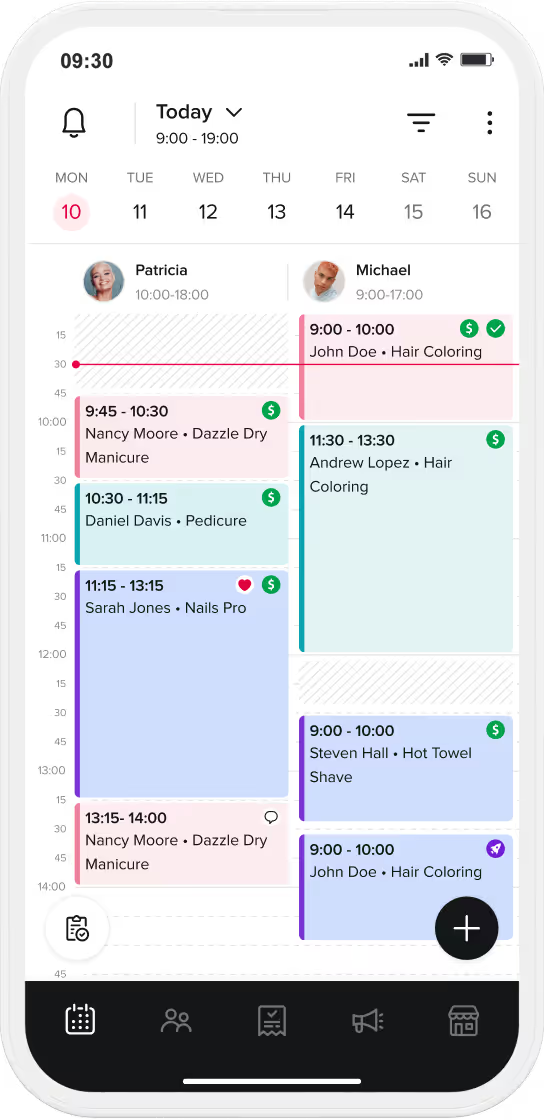
Once you're licensed and ready to start taking clients, staying organized becomes just as important as perfecting your technique. Online scheduling, client management, automated reminders, payments, marketing, and a professional booking profile can help turn your skills into a more sustainable nail business.
With Booksy, nail professionals can manage appointments, showcase their work, communicate with clients, and keep more of the day-to-day business in one place.
Before you start taking paying clients, confirm your state's current licensing requirements. Then, once you're ready to grow, put systems in place that let you spend less time managing your calendar and more time doing the work your clients come to you for.
*Sources:
Cosmetology Exam Prep — Nail Technician Requirements by State
Board of Cosmetology — Nail Tech License Requirements by State
NIC — State Regulatory Agencies Directory
NIC — Examination Types