A hairdresser occupational health strategy is an integrated ergonomics and injury prevention protocol combining biomechanical workstation adjustments, contact dermatitis barriers, ventilation safety controls, and automated shift scheduling to mitigate musculoskeletal disorders (MSDs) among salon professionals.
Static standing for continuous 8-to-10-hour shifts exerts hydrostatic pressure on lower limb circulatory systems, leading to chronic venous insufficiency and joint inflammation.
Standing on unpadded salon tile causes micro-tearing in the plantar fascia tissue connecting the heel bone to the toes. Implementing footwear equipped with medical-grade longitudinal arch supports stabilizes the heel cup. Combining custom orthotic insoles with 3/4-inch closed-cell polyurethane anti-fatigue mats dissipates gravitational impacts across the footbed.
Gravity-induced blood pooling in the lower legs damages venous valves during static standing. Wearing 15-20 mmHg gradient compression stockings promotes venous return to the heart, minimizing edema and varicose vein formation. Alternating foot placement on elevated stool rungs during long cutting sessions relieves unilateral lumbar loads.
Repetitive wrist extension, thumb abduction, and elevated elbow posture during shearing and blow-drying compress the median nerve, accelerating upper extremity musculoskeletal disorders.
Conventional straight-handled scissors force stylists to abduct the shoulder and flex the wrist at 40-to-50-degree angles during blunt cutting. Utilizing crane-handle or swivel-thumb shears maintains a neutral wrist orientation, dropping the elbow toward the torso. Reducing wrist deviation below 15 degrees eliminates median nerve compression within the carpal tunnel channel.
Operating heavy professional blow-dryers (exceeding 600 grams) with outstretched arms induces rotator cuff tendonitis and lateral epicondylitis (tennis elbow). Transitioning to brushless motor dryers weighing under 400 grams decreases muscle strain across the deltoid and trapezius complexes. Alternating holding hands during rough-drying phases distributes load symmetry across non-dominant shoulders.
Daily handling of alkaline oxidizers, permanent hair dyes, and chemical straightening formulas dissolves protective epidermal skin lipids, triggering chronic occupational skin disorders.
Immersing hands in water and shampoo solutions for more than 2 cumulative hours per day disrupts skin barrier function. Wearing powder-free nitrile gloves during hair washing and color rinsing prevents chemical penetration. Applying ceramide-rich barrier creams before shifts restores lipid layers, preventing chronic irritant contact dermatitis.
Evaporated chemical vapors from keratin smoothing treatments and permanent wave solutions settle within enclosed breathing zones. Installing local exhaust ventilation hoods at mixing stations captures volatile organic compounds (VOCs) at the source. Maintaining HVAC filtration standards prevents airborne asthma triggers from circulating through styling stations.
Optimizing daily service schedules prevents physical and chemical overexposure. Explore specialized management features in our guide to the best software for hair stylists and hairdressers.
Sustained spinal flexion, asymmetrical torso twisting, and improper hydraulic chair height adjustments accelerate intervertebral disc compression and chronic lumbar strain.
Operating on clients without adjusting styling chair elevation forces stylists into chronic forward torso bending. Adjusting hydraulic styling pumps elevates the client's head to mid-chest level, eliminating lumbar curvature. Integrating ergonomic saddle stools during extended coloring sessions maintains an open 135-degree hip-to-thigh angle, preserving natural lumbar lordosis and reducing spinal disc pressure by 35%.
Bending over low shampoo bowls subjects cervical vertebrae to sustained forward loading. Utilizing front-wash hydraulic tilting basins or recliners allows technicians to maintain an upright, neutral spinal alignment. Instructing clients to lean fully back against cushioned neck rests prevents upper back strain and eliminates wrist hyperextension during scalp massages.
Preventing cumulative trauma disorders mandates combining structured micro-stretching routines with automated appointment schedule load balancing.
Executing targeted 60-second micro-stretches between client appointments resets muscle spindle tension. Performing forearm wrist flexor stretches, chest-opening door stretches, and shoulder blade retractions restores blood flow to ischemic muscle tissue. Continuous intra-shift movement counters static muscle fatigue accumulated during long cutting blocks.
Unmanaged physical injuries shorten career longevity, leading to forced medical leaves and lost commission income. Evaluating industry income standards highlights the financial importance of maintaining physical health. Review detailed compensation data in our breakdown on how much do hair stylists earn.
Preventing physical burnout and managing recovery from occupational injuries mandates automating schedule rotation, pacing high-impact services, and eliminating shift over-booking.
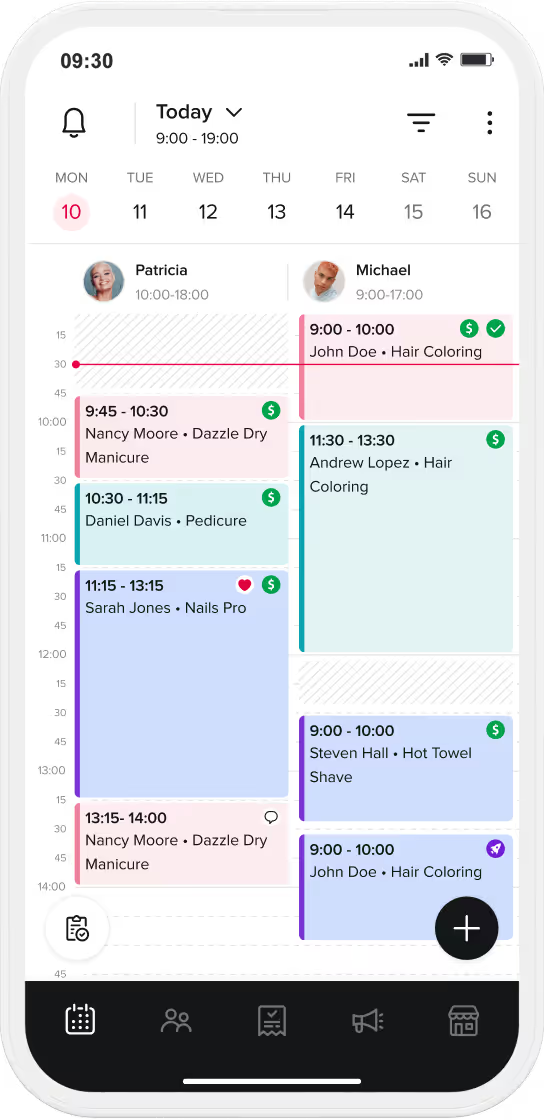
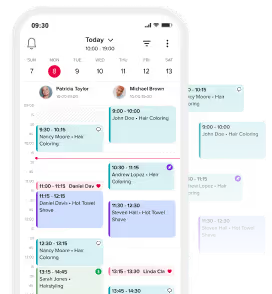
Back-to-back high-strain appointments (e.g., consecutive 3-hour balayage or extension transformations) accelerate muscular ischemia and joint inflammation. Utilizing hair salon software like Booksy Biz enables studio managers to enforce mandatory padding time between labor-intensive treatments.
Configuring automated 10-to-15-minute buffer intervals between chemical services ensures stylists execute inter-service micro-stretches, hydrate, and rest upper extremities without disrupting client arrival flows.
Stylists recovering from carpal tunnel strain or lumbar injuries require modified service distribution to prevent permanent disability. Implementing Booksy Biz allows salon owners to tag specific service categories to designated staff profiles.
Restricting heavy chemical or blowout services for injured team members while capping daily booking limits balances physical strain across the entire salon team, maintaining steady revenue while protecting long-term career longevity.
The most common occupational injuries among hairdressers are musculoskeletal disorders (MSDs) such as carpal tunnel syndrome, plantar fasciitis, lumbar disc strain, varicose veins, and occupational contact dermatitis.
To prevent severe foot and leg pain, wear flat orthotic shoes with firm longitudinal arch support, install 3/4-inch high-density polyurethane anti-fatigue mats at workstations, and wear 15-20 mmHg gradient compression socks.
Shears designed to reduce wrist and thumb strain include crane-handle and swivel-thumb shears, which maintain a neutral wrist position below 15 degrees of deviation and keep elbows close to the torso.
Salon professionals reduce chemical risks by wearing single-use powder-free nitrile gloves during color mixing, applying barrier creams, and utilizing local exhaust ventilation to extract volatile organic compounds (VOCs).
Salon scheduling software like Booksy Biz prevents burnout by automating mandatory rest buffers between long services, capping maximum daily appointment hours, and balancing service types across the team.